

What is Chiropractic? It is a regulated health profession focused on diagnosing, treating, and preventing musculoskeletal disorders, primarily through manual spinal manipulation. It restores nervous-system function and physical freedom without relying on invasive surgical procedures or medication. Patients across Sydney utilise this non-invasive approach to resolve spinal discomfort and improve daily movement patterns. Before you book, the practical questions are whether hands-on spinal care fits your goals, what a first visit involves, how long results take, and when another path is safer.
Key Takeaways:
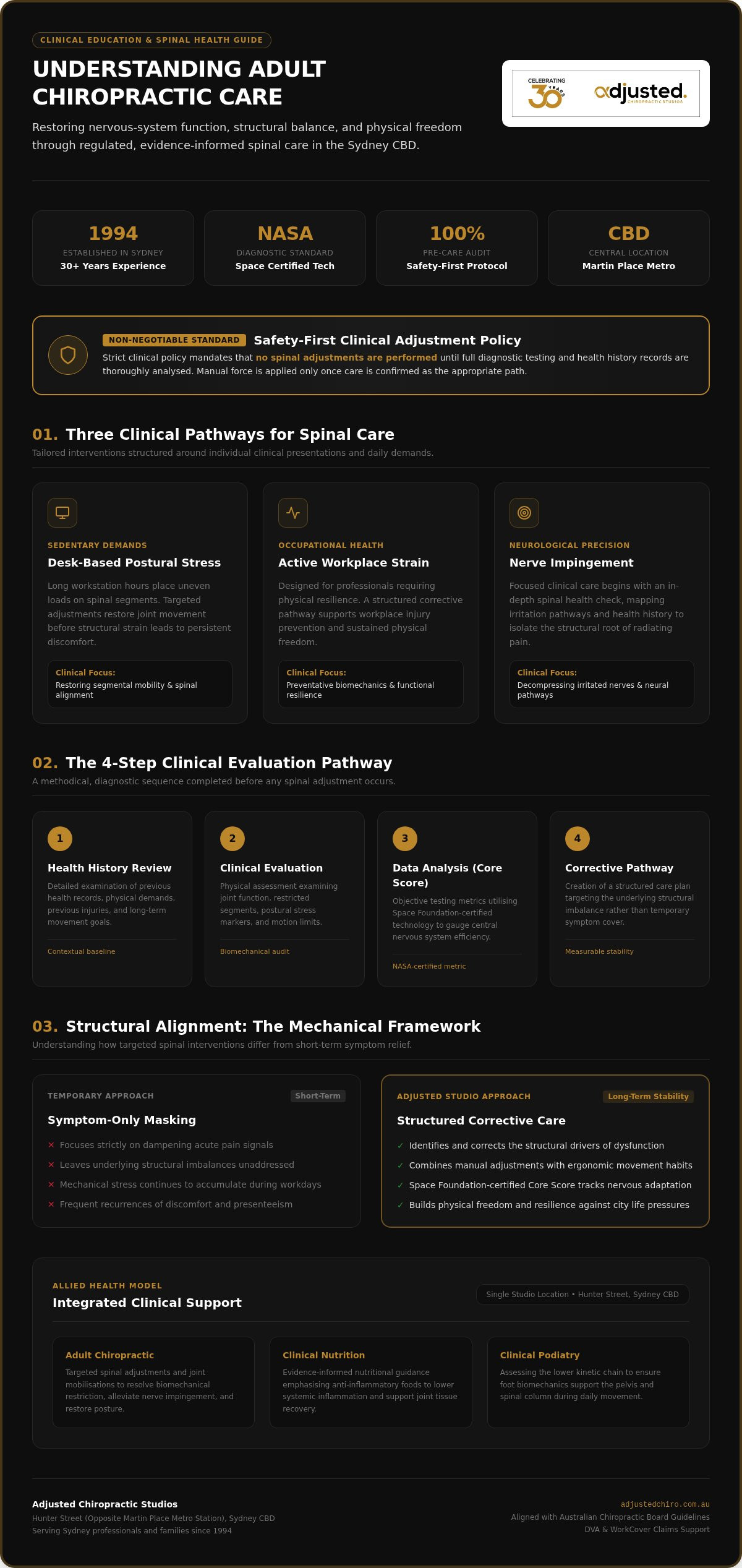
- Strict safety policy requires full diagnostic analysis before any adjustments occur.
- Integrated clinical nutrition coordinates care with chiropractors to support joint recovery and reduce inflammation.
- Personalised corrective care addresses underlying structural imbalances to restore pain-free movement.
3 Clear pathways for individuals who need chiropractic care
Different health goals require targeted, individualised care plans. Three situations come up often in clinic, and each points to a concrete next step drawn from how care is already delivered:
- Desk-based postural stress: long hours at a workstation load the spine unevenly; targeted spinal care aimed at restoring joint movement helps you keep daily comfort before pain dictates your routine.
- Active professionals and workplace strain: a structured corrective pathway supports workplace injury prevention and long-term physical freedom rather than short-term symptom cover.
- Pinched nerve (nerve impingement): specific neurological focus starts with an initial consultation (spinal health check) that reviews your complete past medical records (health history) so care targets the true source of pain.
For adult chiropractic needs, the team focuses on correcting structural imbalances. A plain-language walkthrough of how adjustments work shows how hands-on care restores mobility. Your spine is like a building’s frame: minor shifts affect everything above and below it. Personalised assessment guides recovery so stability returns in a measured way. More on this: What is a Chiropractic Adjustment.
How chiropractic care restores movement and nervous-system function
Chiropractic care focuses on assessing and improving how your spine and nervous system support your body’s overall movement. Practitioners work on structural balance to reduce postural stress, supporting long-term stability rather than temporary symptom relief. Care involves manual adjustments, targeted joint mobilisations, and corrective strategies designed to restore movement.
Your journey starts with your past medical records so goals and limits are clear from the outset. A practical overview of your first visit shows how initial evaluations are structured. Clinicians screen for a pinched nerve and structural imbalance before any hands-on work begins.
Think of your spine like a complex mechanical watch where one stuck gear disrupts the entire mechanism. Restoring movement in the restricted segment gives you back physical freedom, and hands-on adjustments sit alongside customised lifestyle and movement habits so change holds during ordinary Sydney workdays. Comfort stays in view at every step of that process.
What should I expect during an appointment with a chiropractor?
Your visit focuses on identifying the root cause of your discomfort through a structured assessment. The clinic maintains a strict policy: no adjustments are performed until results are fully analysed and chiropractic care is confirmed as the appropriate path for your specific needs.
Long hours at a desk can create postural stress that quiet diagnostic testing reveals well before physical pain appears.
- History review: Your past medical records are examined to understand lifestyle, daily strain, and health goals.
- Clinical evaluation: Your practitioner conducts a thorough physical assessment of movement patterns and joint function.
- Data analysis: Objective testing metrics, such as your Core Score, help gauge nervous system efficiency.
- Treatment planning: A structured corrective care pathway is built to support long-term stability and movement.
Tailored Adult Chiropractic, Adjusted Studio sessions are designed to fit busy Sydney CBD schedules.
Tip: Always ensure your clinic conducts a full diagnostic review before applying manual force to your spine.
Among Google reviews for the practice, a long-term patient (5★) wrote:
"I’ve been going to to Adrian and the team at Ajusted Chro for 18 years and have always received excellent treament. The ongoing plan keeps me moving well and feeling comfortable, not just focused on pain prevention. Thanks for everything you do for me. Pete"
That account shows how continuous corrective care can support active movement and daily comfort across many years, not only short flare-ups.
Realistic timelines: care durations and success rates
Recovery timelines depend on your condition’s severity, baseline function, and consistency with your structured corrective pathway.
During clinical consultations, patients who achieve stronger outcomes pair hands-on adjustments with targeted daily ergonomic habits. Clear progress tracking keeps recovery measurable at every stage.
Situation → solution → result: Dr Eloise Henderson, a structural engineer and lifelong lover of movement, spent years battling persistent knee pain that stopped her running more than five kilometres at a time. At the practice, a chiropractor assessed her body as a whole and provided a focused chiropractic care plan aimed at the underlying structural drivers of her symptoms. She became pain-free and went on to run her first half marathon. Lasting change came from addressing those drivers rather than masking day-to-day symptoms.
| Care Goal | Care Focus | Typical Timeline |
|---|---|---|
| Initial Relief | Reducing acute pain and postural stress | 2 to 4 weeks |
| Structural Correction | Improving joint mobility and alignment | 6 to 12 weeks |
| Long-Term Stability | Maintaining function and preventing recurrence | Ongoing supportive care |
Young family members can also receive tailored support, such as Kids Chiropractic, Adjusted Studio, to build physical resilience early. Care begins with an initial consultation to review your past medical records and set clear milestones.
Are chiropractic treatments effective?
Chiropractic treatments address back pain, neck discomfort, and postural stress by improving joint function and nervous system communication. Clinical evidence supports targeted adult chiropractic care for relieving biomechanical issues without relying on invasive options.
Through thirty years of clinical experience in Sydney, practitioner observations show that sustained desk work often creates marked physical limitation as poor movement habits gradually restrict joints. Your complete health history (past medical records) is assessed alongside precise spinal checks so root causes are targeted. Rather than a temporary patch, care follows a structured corrective pathway.
That approach helps resolve a pinched nerve while improving physical freedom. Active treatment suits professionals seeking long-term functional stability, whereas simple rest suits only brief, acute strains. Your tailored care plan is built around how your body actually responds.
Safety first: evidence, risks, and clinical standards
Spinal manipulation is a safe, evidence-informed intervention when delivered by qualified health professionals after a comprehensive clinical evaluation. Minor side effects such as temporary stiffness or soreness usually resolve within twenty-four hours, much like a post-workout recovery phase. Professional care relies on recognised educational requirements and thorough diagnostic protocols to protect patient health.
From clinical practice, thorough health history screening remains essential before any manual intervention. Underlying postural stress from desk setups often triggers surface muscle soreness after your initial consultation, which is why findings are reviewed before force is applied. Practitioner skill and that diagnostic gate keep risk low; serious complications remain rare.
Your personal stability and physical comfort form the foundation for each corrective pathway.
When chiropractic is not the right choice for you
Chiropractic care is not suitable for every health condition or individual back issue.
Certain red-flag symptoms require immediate medical intervention rather than spinal adjustments. These include sudden unexplained weight loss, severe night pain, or progressive numbness in both legs. Acute fractures, severe osteoporosis, and active joint infections also mean manual therapy is unsafe. From clinical observations, seeking a medical review first is vital when structural instability exists.
Your past medical records help determine whether spinal care aligns with your current safety needs. When a patient presents with structural issues such as advanced adhesive capsulitis (frozen shoulder) alongside severe inflammation, direct referral is the sound path. You are promptly referred to appropriate medical specialists whenever manual care poses any risk.
How nutrition support works alongside spinal care
Targeted nutrition supports joint recovery and reduces systemic inflammation, which helps your nervous system stay balanced. What you eat acts like internal support for your spine: choosing anti-inflammatory foods can speed muscle recovery and protect spinal joints from daily wear.
The clinical nutritionist collaborates with the chiropractors so your dietary plan supports nervous-system function and tissue recovery while mechanical care addresses movement. In clinical practice, patients often progress more steadily when internal cellular health is considered alongside external mechanical care, because nourished tissues respond more readily to manual work.
This combined approach targets contributors to discomfort rather than offering a short-lived fix. It suits Sydney professionals building resilience against daily desk strain. Integrated allied-health care keeps recovery consistent and complete across both nutrition and spinal work.
Referrals, rebates and credentials without the admin stress
Planning your visit to a Sydney practitioner need not create administrative burden. Australian chiropractic care is directly accessible without a medical doctor’s referral. Most private health funds offer instant extras rebates on the spot. DVA and WorkCover claims are also supported for structured workplace injury prevention pathways.
Recovery tends to run more smoothly when administrative steps are transparent from the first call. When choosing a clinic, confirm that your practitioner maintains Australian Chiropractic Board alignment and registered credentials. You can bring your past medical records to your initial consultation. Tailored individual assessments replace generic routines in a sound corrective pathway, and a studio with integrated allied-health support keeps long-term stability the priority.
If you want figures matched to your situation, contact the team for a personalised quote on your care plan.
Frequently asked questions
What is a chiropractor?
A chiropractor is a university-educated health professional focusing on the relationship between your spine, nervous system and overall body movement. They evaluate mechanical health issues to help improve your physical freedom without resorting to invasive options. At Adjusted Chiropractic Studios, an integrated allied-health team works alongside practitioners, including clinical nutritionists, to coordinate your physical well-being.
Do I need a referral for a chiropractor?
You do not need a GP referral to see a primary health practitioner for chiropractic care in Australia. Anyone experiencing postural stress or back pain can book directly for an initial consultation. If you plan to claim care under WorkCover or DVA, a referral may be necessary for administrative purposes.
What questions should I ask a chiropractor?
Ask your practitioner about their diagnostic methods, proposed corrective pathway and clinical experience with your specific issue. Inquire about safety protocols, including whether same-day adjustments happen before diagnostic findings are fully reviewed. Under the safety-first clinical adjustment policy used at Adjusted Chiropractic Studios, adjustments are never performed until results are thoroughly analysed and care is confirmed as appropriate.
What should I tell my chiropractor before treatment?
Share details about past physical traumas, daily habits, work setup and your complete past medical records. Be upfront about any nerve impingement (pinched nerve) symptoms, current medication or recent health changes. Clear goals help your practitioner tailor a clinical routine safely to your body.
How do I find a registered chiropractor?
Use the official Ahpra online register to confirm that your practitioner holds current registration in Australia. Look for practitioners who demonstrate a commitment to evidence-informed methods and collaborative care. Real recovery accounts can help you judge fit, including how Dr Eloise Henderson became pain-free and ran her first half marathon after structural issues were addressed in care.
Summary: Understanding What is Chiropractic Care
What is chiropractic care at its core? It is an evidence-informed approach to health that focuses on your spine and nervous system. The decision thread running through this guide is practical: whether corrective spinal care matches your goals, what the first assessment involves, how timelines and safety standards work, and when referral elsewhere is wiser. In 2026, the Adjusted Chiropractic Studios team continues to draw on over 30 years of clinical experience to support Sydney professionals and families. The clinical team includes practitioners such as Dr Adrian Couzner and Mandy Rancev, a Nutritional Medicine Practitioner, Massage Therapist, and Yoga Teacher. An integrated allied-health approach sits behind a safety-first clinical adjustment policy. Addressing the root cause of your discomfort helps build long-term stability and physical freedom. When you are ready to take that structured first step, book your spinal health check. More on this: Adjusted Studio.



