

What if an anti-inflammatory diet plan for joint pain is less about cutting out favourite foods and more about building a balanced pattern you can maintain? It’s understandable to feel unsure when online advice ranges from miracle ingredients to restrictive meal plans. A realistic approach focuses on your overall eating habits, not a single food or quick fix.
This guide explains how food choices can support general wellbeing, while being clear about what diet can’t do: cure arthritis or replace appropriate assessment and care. You’ll find practical ways to include vegetables, fruit, whole grains, legumes and suitable protein sources, along with guidance on assessing claims about foods to avoid.
You’ll also see how to build flexible meals that suit your preferences and routine without following a rigid menu. At Adjusted Chiropractic Studios in Sydney CBD, nutrition advice can be personalised around your health history and daily life as part of a broader approach to wellbeing. The aim is steady, practical changes that fit alongside appropriate care.
Key Takeaways
- Build an anti-inflammatory diet plan for joint pain around regular, balanced meals rather than strict food rules.
- Use vegetables, fruit, whole grains, legumes, nuts, seeds and suitable protein sources to add variety and nourishment.
- There’s no universal list of foods everyone with joint pain needs to avoid. Personal needs and reactions differ.
- Plan a flexible week by choosing meals, adding varied produce, including satisfying protein and preparing ahead where it helps.
- Personalised nutrition advice can help you adapt changes to your health history, food preferences and daily routine.
What an anti-inflammatory diet plan for joint pain can, and cannot, do
Joint pain can make everyday movement harder, and planning meals may feel like another task competing for your energy. A realistic anti-inflammatory diet plan for joint pain is not a strict menu or a promise that food will remove discomfort. It’s a way to make supportive food choices more often, while recognising that pain can have different causes and deserves appropriate assessment.
Featured definition: An anti-inflammatory eating pattern prioritises a variety of nutrient-rich, minimally processed foods, such as vegetables, fruit, whole grains and legumes. It can support general wellbeing, but it isn’t a prescribed treatment or a cure for joint pain.
What does anti-inflammatory eating mean?
The focus is on an overall pattern, rather than treating any one ingredient as a switch that turns inflammation off. Systemic inflammation means inflammation affecting the body broadly, rather than only one local tissue. Joint symptoms can arise from changes or irritation in a particular joint, and don’t by themselves show whether systemic inflammation is present. A broad overview of the anti-inflammatory diet can provide background, but it isn’t an individual treatment plan.
This approach can sit alongside the Australian Dietary Guidelines’ general advice to enjoy a wide variety of nutritious foods. There’s no single official anti-inflammatory menu that everyone needs to follow. Your meals can reflect your culture, preferences, health needs and what’s practical in your household. Consistency with a balanced pattern matters more than trying to eat a so-called miracle food every day.
Can food alone resolve joint pain?
No. Joint pain may relate to osteoarthritis, inflammatory arthritis, an injury or another health issue, and each has different considerations. Changes in eating habits may support general health, but their effect on pain can vary and they can’t identify the underlying cause. Even if you notice a change after adjusting your meals, that alone doesn’t establish why your joint hurts or what care it needs.
Food changes don’t replace diagnosis, prescribed treatment or clinical advice. Don’t stop or alter prescribed medicines because of a diet plan, and be cautious of claims that one food or supplement can reverse joint damage. If pain is persistent, worsening or limiting daily activities, seek an appropriate clinical assessment rather than relying on dietary changes alone.
It’s sensible to discuss substantial changes with a health professional, particularly if you have a health condition, take prescribed medicines, have allergies or are considering eliminating whole food groups. Your health history can affect what’s suitable. A nutrition professional can help shape changes around your needs and routine, while your treating clinician can advise on care for the cause of your symptoms. Food can be one supportive part of your plan, not the whole plan.
Which anti-inflammatory foods belong in a balanced joint-friendly pattern?
Once you know the approach is about a pattern rather than a cure, food choices can become more straightforward. You don’t need special ingredients or a perfect menu. Build meals from familiar foods, then add variety over the week in ways that work for your appetite, preferences and routine.
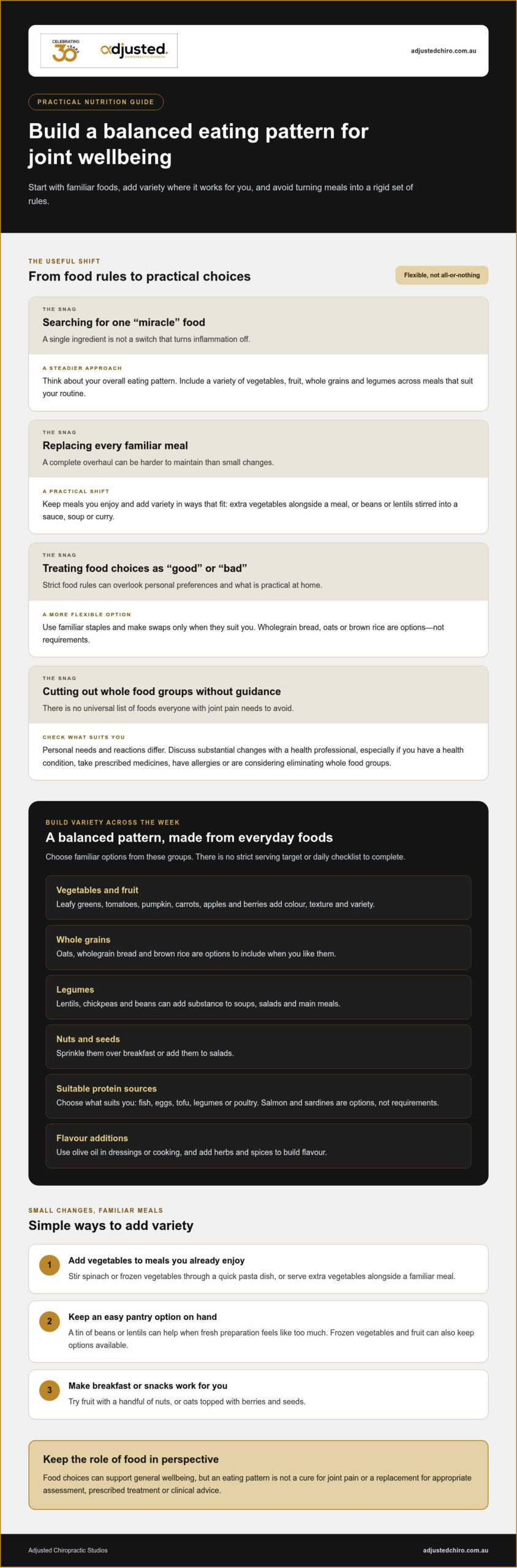
A balanced pattern centres on vegetables and fruit, whole grains, legumes, nuts and seeds, and suitable protein sources, with olive oil, herbs and spices adding flavour.
Food groups to prioritise across the week
Think about what each group brings to everyday meals. Vegetables and fruit add colour, texture and variety. Try leafy greens, tomatoes, pumpkin, carrots, apples or berries. Oats, wholegrain bread and brown rice are whole-grain options, while lentils, chickpeas and beans can add substance to soups, salads and main meals.
Nuts and seeds can be sprinkled over breakfast or added to salads. For protein, choose options that suit you, such as fish, eggs, tofu, legumes or poultry. Oily fish, including salmon and sardines, is one option, not a requirement. Olive oil can be used in dressings or cooking, while herbs and spices help build flavour. Aim for variety rather than a strict serving target or a checklist you must complete every day.
Everyday swaps that keep meals familiar
Small adjustments can be easier to maintain than replacing your usual meals. Add beans or lentils to a mince-based sauce, soup or curry, or serve extra vegetables alongside a meal you already enjoy. Stir spinach or frozen vegetables through a quick pasta dish. Choose wholegrain bread, oats or brown rice when you like them. If you prefer other staples, work with those rather than forcing a swap that won’t last.
For snacks or breakfast, try fruit with a handful of nuts, or oats topped with berries and seeds. A tin of beans or lentils can be a useful pantry addition when fresh preparation feels like too much. Frozen vegetables and fruit can also make it easier to keep options on hand. These choices aren’t about labelling foods as “good” or “bad”. They’re practical ways to include more minimally processed ingredients when they suit your day.
An anti-inflammatory diet plan for joint pain should leave room for personal preference. If you’re unsure how to make these ideas work around your health history or routine, personalised nutrition advice can help you shape a practical approach without treating food as a guaranteed remedy.
Do you need to avoid certain foods for joint pain?
Advice to cut out whole food groups can sound convincing, especially when pain is persistent. But joint pain doesn’t mean you need to follow a universal avoid list. An anti-inflammatory diet plan for joint pain should account for your individual health needs, not add unnecessary rules or anxiety around eating.
Some eating patterns encourage reducing ultra-processed foods, such as packaged snacks, fast food and sugary drinks, particularly when these crowd out more nourishing choices. That’s a general pattern to consider, not a reason to feel guilty about an occasional convenience meal. Focus on what you can include regularly, and make realistic changes that fit your life.
Nightshades, gluten and dairy: what should readers know?
There’s no sound basis for recommending that everyone with joint pain avoid nightshade vegetables, gluten or dairy. These foods may be unsuitable for someone with a diagnosed allergy, coeliac disease or another specific medical need, but that doesn’t make them a problem for everyone. Joint symptoms alone can’t confirm a food intolerance.
If you suspect a particular food affects you, keep a simple record of what you ate, when symptoms occurred and other relevant factors, such as changes in activity or sleep. A pattern in a diary may help guide a conversation, but it doesn’t prove cause and effect. Discuss restrictive changes with a qualified clinician, particularly before removing several foods or entire food groups. If you have a known allergy, follow your clinician’s advice rather than testing the food yourself.
How to assess popular diet claims calmly
There’s a meaningful difference between choosing a varied, minimally processed eating pattern to support general health and claiming that a diet cures arthritis. The first is a practical lifestyle approach. The second promises a treatment effect that food alone cannot guarantee. Testimonials and dramatic before-and-after stories may feel persuasive, but they don’t establish that a diet caused someone’s change or that it will work for you.
Before adopting a popular plan, consider whether its claims align with credible health guidance, whether it asks you to stop prescribed treatment and whether it removes foods without a clear medical reason. Restrictive diets can make it harder to meet nutritional needs and may be difficult to sustain. Your health history, diagnosed conditions, allergies and medicines all matter when deciding what is appropriate.
Dietary support can be one part of wellbeing, but it isn’t a substitute for assessment or established care for the cause of joint pain. If you’re considering a major change, discuss it with a qualified health professional who can help you weigh possible benefits against your individual needs. A measured approach is more useful than treating every food claim as a rule.
How to build a flexible seven-day anti-inflammatory meal plan
A week of meals can feel easier to manage when you plan a few building blocks rather than follow a rigid menu. Use the ideas below as a flexible template: swap meals between days, repeat favourites and adjust for your appetite, household routine and food preferences.
Build each meal around a familiar dish, add varied produce, include a satisfying protein choice, then prepare a few ingredients ahead.
A simple structure for meals and snacks
For your anti-inflammatory diet plan for joint pain, combine produce, a protein choice and a whole-grain or legume option where they suit the meal. Here’s a seven-day starting point, not a prescription. Swap ingredients freely and use leftovers when that makes the week simpler.
- Monday: Oats with fruit for breakfast; a bean and vegetable wrap for lunch; fish, rice and greens for dinner.
- Tuesday: Wholegrain toast with eggs; leftover fish or tofu with salad; lentil curry with rice.
- Wednesday: Yoghurt with berries and seeds; lentil soup with bread; chicken or chickpeas with roast vegetables.
- Thursday: Oats with nuts; a leftover curry or soup; pasta with tomato, vegetables and beans.
- Friday: Eggs with spinach on toast; a chickpea salad; salmon or tofu with potatoes and vegetables.
- Saturday: Fruit and oats; a vegetable omelette with toast; a family favourite with extra vegetables or legumes added.
- Sunday: Wholegrain toast with avocado or eggs; leftovers or a simple salad; a bean, vegetable and grain bowl.
Snacks are optional and depend on hunger and individual needs. If you’d like one, fruit with nuts, yoghurt with berries or hummus with vegetables are simple options. You can also skip snacks if they don’t suit your routine.
Make the plan practical to maintain
Keep preparation manageable. Choose a few meals to plan ahead, then reuse ingredients across different dishes. Roast vegetables once to serve with dinner and add to lunch the next day. Cook extra rice or lentils for another meal, or keep tinned beans and frozen vegetables handy for busy evenings. Convenient ingredients can make a balanced choice more achievable.
- Choose a few breakfasts, lunches and dinners you already enjoy, rather than starting with an entirely new menu.
- Add different vegetables or fruit across the week, using fresh, frozen or tinned options that suit the dish.
- Include a protein choice, such as eggs, fish, poultry, tofu, beans or lentils, and add whole grains where they work for you.
- Prepare ahead only where it helps, such as washing produce, cooking a batch of grains or setting aside leftovers.
Start with one or two manageable changes, then adapt the plan as you learn what fits. For support tailoring food choices to your health history and routine, explore personalised nutrition support.
How personalised nutrition advice can support your next steps in Sydney
General meal ideas can be a useful starting point, but they may not account for allergies, dietary restrictions, a health condition or the practical realities of your week. If changes feel hard to sustain, personalised nutrition advice can help turn broad guidance into manageable steps that reflect your food preferences, health history and daily routine.
At Adjusted Chiropractic Studios, nutrition advice is offered as personalised support for whole-person wellbeing, not as a cure for joint pain or a substitute for diagnosis and appropriate care. The Sydney CBD studio has supported local professionals and families since 1994, with nutrition, chiropractic and podiatry available as part of a multidisciplinary approach.
When a tailored plan may be more useful than a generic menu
A generic menu may not suit shift work, family meals, cultural preferences, limited preparation time or a condition that affects what you can eat. Tailored nutrition advice can help you identify realistic changes, consider relevant health history and plan around foods you enjoy. It can support your eating habits, but it doesn’t diagnose or treat the cause of joint pain.
You might find individual guidance useful if you:
- Need to work around allergies, intolerances or medical dietary requirements.
- Are unsure how to adapt general advice to your usual meals and preferences.
- Have tried restrictive plans that were difficult to maintain.
- Want to make gradual changes that fit your household and work routine.
The aim is a practical approach you can adjust, rather than a rigid set of rules. A nutrition professional can help you consider which changes are appropriate and how to keep meals satisfying and manageable. If your symptoms are persistent, worsening or affecting everyday activities, nutrition advice should sit alongside assessment and care for the joint problem itself.
Connect nutrition with broader musculoskeletal wellbeing
Food is one part of wellbeing. Movement, rest and the demands of daily life also shape how you feel and function. Nutrition support can sit alongside appropriate clinical care without implying that one approach suits every cause of pain. For spinal concerns, a separate assessment can help clarify what care may be appropriate; nutrition advice doesn’t replace that process.
Adjusted Chiropractic Studios is on Hunter Street in Sydney CBD, opposite Martin Place Metro station and near Wynyard and Barangaroo. If you’d value support shaping food choices around your needs and routine, explore personalised nutrition advice at the studio. Take it one considered step at a time.
Take a steady next step towards eating well
Before making another change, decide what you’d like help understanding. You might want to sort reliable nutrition guidance from bold online claims, or work out which questions to raise about your current eating habits. Having a clear question can make your next conversation more focused and useful.
You could jot down what’s been confusing, what you’ve already tried and what you’d like to feel more confident about. This gives you a practical starting point without turning your wellbeing into another demanding project.
For personalised nutrition advice in Sydney CBD, book a consultation with Adjusted Chiropractic Studios. A thoughtful conversation can help you decide what feels appropriate to explore next.
Frequently Asked Questions
Is an anti-inflammatory diet plan suitable for every type of joint pain?
It can offer general food ideas, but whether dietary changes are relevant depends on your circumstances. If you have a diagnosis, ask the clinician overseeing your care whether nutrition has a role alongside your current plan. Bringing a short list of your usual meals, medicines and questions can make that discussion more specific. This helps keep food choices connected to your care rather than treating a general meal plan as individual advice.
Can I eat nightshade vegetables on an anti-inflammatory diet?
Yes, if you enjoy them and they suit you. Nightshades can be ingredients in familiar meals: add tinned tomatoes to a bean stew, roast capsicum alongside dinner or serve baked potato with a filling you like. There’s no special preparation needed to make these vegetables part of a balanced meal. Choose the forms and recipes that work for your tastes, cooking habits and household routine.
Do I need to take supplements with an anti-inflammatory meal plan?
No, a meal plan doesn’t automatically require supplements. Before taking one, consider why you’re thinking about it and whether a clinician has identified a particular need. This is especially useful if you take regular medicines or plan to use several products, as the combination may need review. Keep the packaging or ingredient list available when seeking advice, and follow the recommended directions rather than assuming a larger amount will be more helpful.
Should I avoid gluten or dairy if my joints hurt?
Don’t remove gluten or dairy solely because your joints are painful. If coeliac disease is being considered, speak with your clinician before changing your gluten intake, as dietary changes may affect the assessment process. If you’ve been advised to avoid dairy, plan suitable alternatives that meet your needs rather than simply dropping it from meals. A clinician or qualified nutrition professional can help you make those changes thoughtfully.
How long does it take to notice a change after changing your diet?
There’s no set timeframe, and joint symptoms may not change after a dietary adjustment. Rather than judging the plan by one meal or one difficult day, agree on a review point with your health professional before you start. Consider what outcome you’re monitoring, such as how comfortably you manage a usual daily task. This gives you a clearer basis for deciding whether the change is workable and worth continuing.
Can an anti-inflammatory eating plan be vegetarian?
Yes. A vegetarian approach can be planned around the foods you already enjoy and the type of vegetarian diet you follow. If you eat no animal products, ask a qualified nutrition professional to review whether your usual food choices meet your nutritional needs, including vitamin B12. This can be especially helpful when you’re also managing allergies, a medical condition or other dietary restrictions, so changes remain suitable for you.
Can food reverse arthritis or repair joint damage?
No, food can’t reverse arthritis or repair damaged joints. Ask your treating clinician what progress could reasonably look like for your situation, rather than judging a diet by a promise of structural repair. You might discuss goals such as managing everyday activities or maintaining a routine that supports your broader health. Keep follow-up care centred on your diagnosis and function, not claims made about particular foods.



