
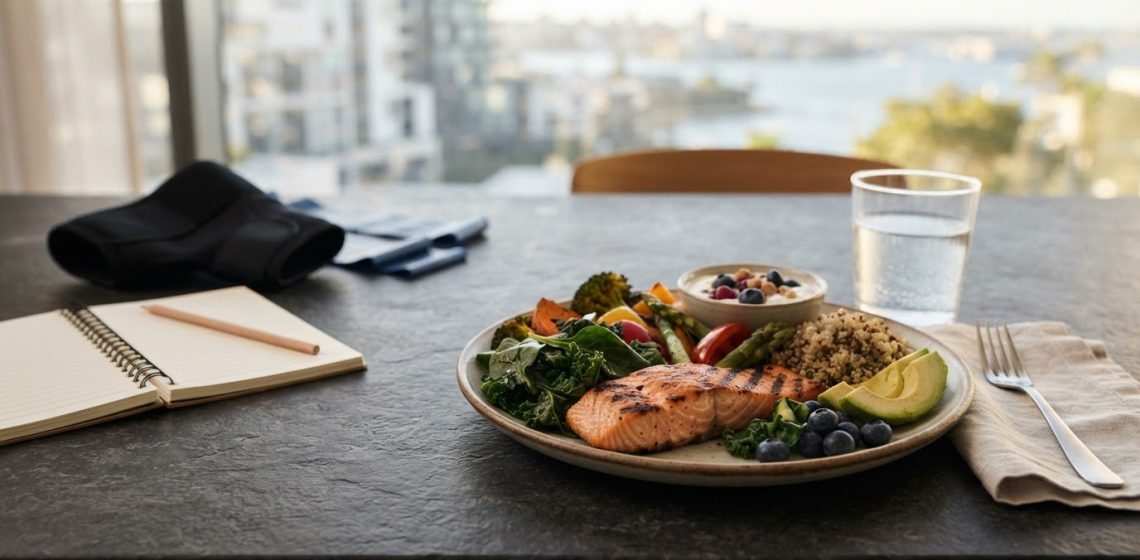
Eating less because you’re moving less may not be the right response to an injury. A change in activity can affect your appetite and routine, but your body still needs nourishment while you follow your rehabilitation plan. Nutrition for injury recovery is about making practical, balanced choices, not following strict rules or relying on a single “healing” food.
If you’re unsure how much protein to eat, whether to change your usual portions, or which advice about anti-inflammatory foods and supplements to trust, you’re not alone. This guide explains what to prioritise, how to build everyday meals that support your general nutritional needs, and when individual nutrition guidance may be useful.
You’ll learn how energy, protein and a varied range of foods can fit into your routine during recovery. Nutrition supports rehabilitation, but it does not replace injury care. For people in Sydney, personalised nutrition consultations at Adjusted Chiropractic Studios can be part of a broader approach to health and recovery.
Key Takeaways
- Nutrition for injury recovery can support rehabilitation, but food works alongside injury care rather than replacing it.
- A sharp cut in food when activity drops may not suit your body’s changing needs.
- Prioritise protein, energy and balanced meals without rigid targets or a prescribed menu.
- Anti-inflammatory foods can fit into an overall eating pattern, but supplements aren’t automatically necessary.
- Personalised nutrition guidance in Sydney may help you make choices that suit your circumstances.
Nutrition for injury recovery: what food can and cannot do
An injury can disrupt more than movement. Pain, appointments and changes to work or exercise can affect your appetite and daily routine. If you’re less active, it may seem obvious to eat much less. But your body still needs nourishment to maintain tissue and meet its everyday needs. It’s understandable to feel uncertain about what to change.
Nutrition can support your body during recovery, but it cannot diagnose or treat an injury, replace rehabilitation, or guarantee a particular result. Nutrition for injury recovery means eating in a way that supports your general needs while appropriate injury care and rehabilitation continue. Food is one part of the picture, alongside a suitable assessment and an individual plan for restoring function.
How nutrition fits alongside injury care
Recovery involves more than waiting for the injured area to feel better. Your body needs materials to maintain and repair tissues, while changes in movement can affect muscle use and everyday routines. For example, someone temporarily avoiding weight-bearing activity may have different meal patterns from someone continuing gentle movement as part of rehabilitation.
That doesn’t mean a special food can mend a ligament or that a dietary change can replace an assessment. An appropriate care plan considers the injury and your rehabilitation needs. Food helps meet general nutritional needs as that plan progresses. General sports nutrition principles for injury recovery cover topics such as protein, vitamins and minerals, but they provide background information, not an individual treatment plan.
Why one recovery diet does not suit everyone
Your needs may be shaped by the type of injury, how much you can move, your appetite, age, food preferences and health history. Medication, other health conditions, work and family responsibilities can also affect what is realistic. A plan that suits an athlete preparing to return to sport may not translate neatly to someone managing an everyday injury while working at a desk.
Research focused on athletes can offer useful insights, but the setting and participants matter. Training loads, performance goals and rehabilitation support may differ from your circumstances. Treat broad nutrition principles as a starting point, not a prescription or a reason to copy an athlete’s eating plan.
A useful first step is to notice what has changed. Are you skipping meals because your routine is disrupted, eating less because you’re worried about reduced activity, or finding that discomfort affects your appetite? These observations can help you identify where practical support may be useful. The aim isn’t perfection or rigid food rules. It’s a steady approach that fits your health, preferences and rehabilitation, with personalised advice if general guidance leaves questions unanswered.
How energy, protein and carbohydrates support injury rehabilitation
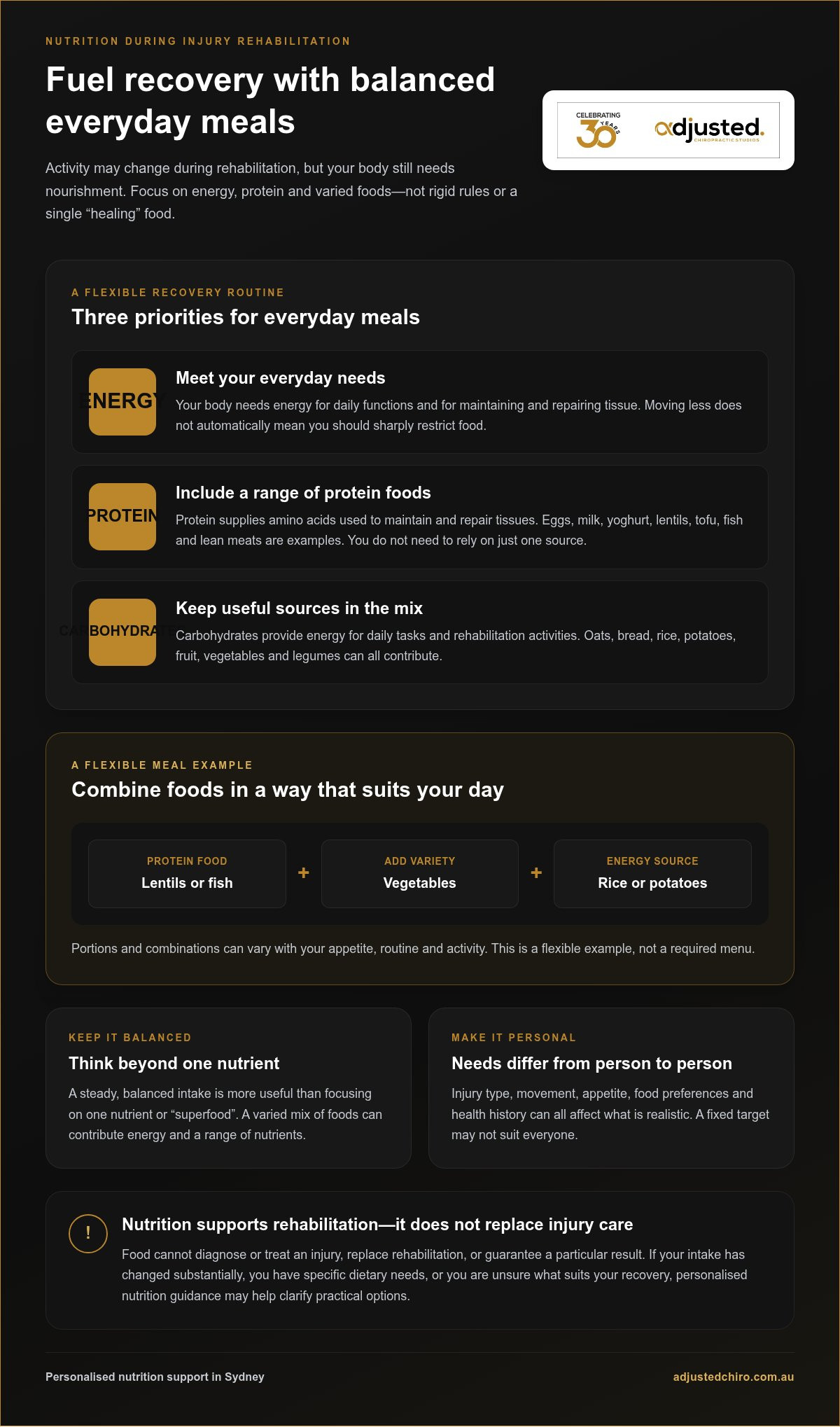
Your activity may change during rehabilitation, but your body still needs energy for everyday functions and the work of maintaining and repairing tissue. Your needs depend on your circumstances, so reduced movement doesn’t automatically mean you should sharply restrict food. Eating too little can make it harder to meet nutritional needs and maintain muscle while your usual routine is disrupted.
Protein and energy both matter, but neither works in isolation. A steady, balanced intake is more useful than focusing on one nutrient or “superfood”. Think of meals as a combination of building materials, fuel and a range of nutrients. Adjust choices to your appetite and daily demands rather than following a strict recovery diet.
Protein supplies amino acids, which the body uses to maintain and repair tissues. Protein is found in a range of foods, including eggs, milk, yoghurt, legumes such as lentils, tofu, fish and lean meats. You don’t need to rely on one source. Including a protein food in meals and snacks can make it easier to include protein in your usual routine.
Needs differ, and a fixed target may not suit everyone. Injury type, food preferences, appetite and health history all matter. The Gatorade Sports Science Institute discusses how reduced activity can affect the body and nutrition needs in its guide to nutritional support during reduced activity for injury recovery. It offers useful context, not a personalised prescription.
Carbohydrates provide energy for daily tasks and rehabilitation activities. They don’t become irrelevant simply because you’re temporarily doing less exercise. Oats, bread, rice, potatoes, fruit, vegetables and legumes can all contribute carbohydrates. Many also provide fibre and other nutrients. Pairing these foods with protein and other meal components can help create satisfying, varied meals.
For example, a meal might combine lentils or fish with vegetables and rice or potatoes. Portions and combinations can vary with your appetite, routine and activity. This is a flexible example, not a required menu. If pain, stress or changes to daily life are affecting your appetite, notice whether you’re missing meals or finding it difficult to eat enough.
There’s no need to compensate for reduced activity with a severe diet. If your intake has changed substantially, you have specific dietary needs, or you’re uncertain what suits your recovery, personalised nutrition guidance can help clarify practical options. A nutrition consultation in Sydney can provide individualised support as part of your broader health care.
Food-first choices or supplements: what deserves priority?
With so much advice about powders, capsules and “recovery foods”, it can be hard to know where to start. A varied food pattern is a practical foundation for most people. Everyday meals can provide energy and a range of nutrients. Supplements have a more specific role and aren’t automatically needed because you’re injured.
Supplements aren’t automatic substitutes for balanced meals. Start with your overall eating pattern, then consider individual needs. Nutrition for injury recovery isn’t about labelling foods as good or bad or following strict rules. It’s about making nourishing choices you can sustain while rehabilitation continues.
Building a varied pattern with anti-inflammatory foods
Include a range of familiar foods across meals: vegetables and fruit, legumes, wholegrains, nuts and seeds, and fish if you eat it. These anti-inflammatory foods can contribute different nutrients within an overall eating pattern. Variety is useful because relying on one food can’t provide everything your body needs. For instance, add vegetables to a meal, choose wholegrain bread, or include beans in a soup.
| Choice | Purpose | Limits and considerations |
|---|---|---|
| Food-first pattern | Builds meals from a range of everyday foods. | Needs to suit your appetite, preferences and dietary requirements. |
| Supplement | May help address a specific nutritional need. | May be unnecessary, and suitability depends on your circumstances. |
These foods don’t switch inflammation off or cure an injury. You don’t need to remove a food or food group just because it has been labelled inflammatory. If you suspect a particular food affects you, consider your overall diet and health rather than making restrictive changes based on a general claim. A balanced pattern matters more than searching for one ingredient with a promised effect.
When a supplement needs individual consideration
A supplement may be considered when a specific need has been identified, but more isn’t necessarily better. Your health history, medicines and existing conditions can affect whether a product is appropriate. Advice also needs to account for what you already eat and any other supplements you take. Avoid starting a product or choosing a dose based only on a recovery claim or someone else’s routine.
If you’re eating a varied diet and have no identified nutritional concern, a supplement may not add anything useful. If restrictions, low appetite or a health condition make it difficult to meet your needs, personalised guidance can help you work out what is relevant. This keeps the focus on practical food choices first, with supplements considered thoughtfully rather than treated as a shortcut.
How to organise meals and hydration during injury recovery
An injury can disrupt work, movement and the routines that usually make meals straightforward. A flexible plan can help you eat regularly without turning food into another task to manage. Use the framework below as a guide, then adjust it to your appetite, schedule and preferences.
A simple meal-planning sequence for recovery
Start with meals that feel manageable rather than aiming for a perfect menu. If preparing food is difficult, convenience is a reasonable part of planning. A simple combination of a protein food, a carbohydrate-rich food and a fruit or vegetable can bring variety to a meal. Choose options you enjoy and can access.
- 1. Check in with your appetite. Notice whether you’re hungry at your usual times, less interested in food, or finding larger meals uncomfortable. This can help you choose meal sizes that feel realistic.
- 2. Plan around your day. Choose meal times that fit work, appointments and rehabilitation. If your routine is unpredictable, keep a simple snack available for when a meal is delayed.
- 3. Build a flexible plate. Add a protein-containing food, a carbohydrate source and vegetables or fruit where suitable. For example, a sandwich with a filling you enjoy and salad, plus fruit, can make a practical lunch.
- 4. Make preparation easier. Batch-cook when you have the energy, use suitable leftovers, or keep easy options such as yoghurt, tinned legumes or prepared vegetables on hand. Small steps count.
There’s no need to copy an athlete’s meal plan or follow a fixed schedule. Nutrition for injury recovery should work with your actual day, including cultural food preferences, household responsibilities and changes in mobility. If standing to cook is uncomfortable, a meal that needs little preparation may be more manageable than making everything from scratch.
Hydration, appetite and day-to-day adjustments
Keep drinks accessible and have them regularly through the day, using thirst, weather and your usual routine as practical prompts. Hydration supports normal body function, but drinking extra isn’t a proven way to speed injury healing. Needs vary, so avoid forcing fluids or treating a set amount as right for everyone.
Appetite can shift with pain, stress, medication or changes to routine. If a full meal feels difficult, smaller meals or snacks may be easier to manage. On a day with less movement, stay flexible rather than automatically skipping meals. Adjust portions according to hunger and comfort. If appetite changes persist or your dietary needs are complex, personalised support can help you find an approach that fits.
Recovery support is different from workplace injury prevention, which focuses on reducing the risk of injury before it occurs. A Sydney workplace injury prevention programme addresses prevention, while meal planning here focuses on supporting you during rehabilitation. For individualised nutrition guidance that takes your routine and needs into account, you can also read about nutrition consultations.
Personalised nutrition for injury recovery in Sydney
General guidance can be a useful starting point, but it may not answer what to do when your appetite has changed, your diet is restricted or your usual routine no longer fits. Individual advice can make nutrition for injury recovery more relevant to your circumstances, without adding unnecessary food rules or promising a particular result.
What personalised nutrition guidance can consider
A nutrition consultation can take account of your goals, health history, food preferences, work and home routine, and the demands of your current recovery. For example, someone who avoids certain foods may need different meal ideas from someone whose main challenge is finding time to prepare meals during a busy working week. Changes in appetite or activity can also shape what feels practical.
Rather than prescribing one set menu, personalised guidance can help you identify manageable options and adjust them as your circumstances change. You might discuss planning meals around appointments, adapting meal size when appetite is low, or finding alternatives that suit your dietary needs. The aim is to make everyday choices clearer and more sustainable, not to create another source of pressure.
Nutrition advice is one part of broader care. It doesn’t replace an injury assessment or a tailored rehabilitation plan, and it shouldn’t be treated as a stand-alone treatment. Keeping those roles clear helps you use food to support your general needs while your injury care and rehabilitation address movement and function.
Taking a considered next step in Sydney CBD
If you’re unsure what applies to you, an individual conversation can help turn broad principles into practical next steps. Adjusted Chiropractic Studios offers personalised nutrition consultations in Sydney CBD, alongside chiropractic and podiatry services in the same studio. If musculoskeletal care is also part of your needs, adult chiropractic care in Sydney CBD can be part of this broader approach.
Before a consultation, consider writing down what has changed since your injury. You could note shifts in appetite, foods you avoid, questions about meals, or parts of your routine that make eating well difficult. These details provide a useful starting point for discussing advice that fits your life rather than relying on generic targets.
Personalised support can help you make sense of your needs and build a workable approach. Explore personalised nutrition support in Sydney and consider how it may fit alongside your broader care and personal goals.
Take a considered next step in your recovery
Your next step doesn’t need to be a complete change to the way you eat. Choose one practical adjustment that feels manageable, then notice how it fits your appetite, routine and rehabilitation. If questions remain, personalised guidance can help you shape an approach around your needs rather than relying on rigid rules.
Adjusted Chiropractic Studios has supported Sydney professionals and families since 1994, building longstanding relationships with thousands of people. Nutrition for injury recovery can be part of a broader, individual approach to wellbeing, with advice shaped around your circumstances and goals.
If you’d like support making everyday food choices clearer, book a personalised nutrition consultation with Adjusted Chiropractic Studios. A thoughtful plan can give you a steadier way to care for yourself as rehabilitation continues. Take it one practical step at a time.
Frequently Asked Questions
Can nutrition help with injury recovery?
Yes, nutrition for injury recovery can help you meet your body’s general needs while you follow appropriate injury care and rehabilitation. For example, if appointments or discomfort have disrupted your routine, planning a simple meal can help you avoid guesswork each day. Food cannot identify the cause of an injury or guarantee how quickly you recover. Individual guidance can help if you’re uncertain about your needs.
What foods should I eat when recovering from an injury?
There isn’t one menu that suits everyone, so choose familiar foods that fit your appetite and preferences. If cooking is difficult, you might combine a ready-to-eat protein food with bread, fruit or prepared vegetables, or use leftovers for lunch. The aim is a workable pattern, not a perfect plate. Consider allergies, cultural preferences and dietary restrictions when deciding what feels suitable.
Should I eat less if I am less active because of an injury?
Not necessarily. Even with less movement, your body still needs energy for everyday functions, and rehabilitation activity may change over time. Avoid making a large cut to your usual intake based only on reduced exercise. If you’re worried about appetite, weight changes or how much you’re eating, make a brief note of your usual meals and concerns to discuss during personalised guidance.
How much protein do I need during injury recovery?
There’s no single protein target that’s appropriate for every injured person. Needs can depend on your overall diet, health, activity and recovery circumstances, so athlete-focused numbers may not suit your situation. Rather than starting a supplement or following a figure from someone else’s plan, consider whether your usual meals include protein foods. A nutrition professional can help assess your needs in the context of your health history and preferences.
Are anti-inflammatory foods useful for injury recovery?
Anti-inflammatory foods can be part of a varied eating pattern, but they don’t cure an injury. Consider the overall mix of foods you eat rather than expecting one ingredient to affect recovery on its own. You don’t need to remove foods or follow a strict elimination diet without a clear reason. If you have a concern about a particular food, seek advice that suits your circumstances.
Do I need supplements to recover from an injury?
No, supplements aren’t automatically needed during recovery. Before taking one, consider whether there’s a specific nutritional need and whether the product is suitable alongside your medicines and health circumstances. Also consider whether other products you take already contain the same nutrient, as this can affect your total intake. Avoid choosing a supplement based on a broad recovery claim. Seek individual advice if you’re unsure.
When should I seek personalised nutrition advice during injury recovery?
Consider personalised advice if a restricted diet, ongoing appetite change or disrupted routine makes it difficult to work out what suits you. Before a consultation, note what you typically eat, foods you avoid and any questions about meals or supplements. This can make the discussion more specific to your needs. Adjusted Chiropractic Studios offers nutrition consultations that can complement, but don’t replace, injury assessment and rehabilitation care.



