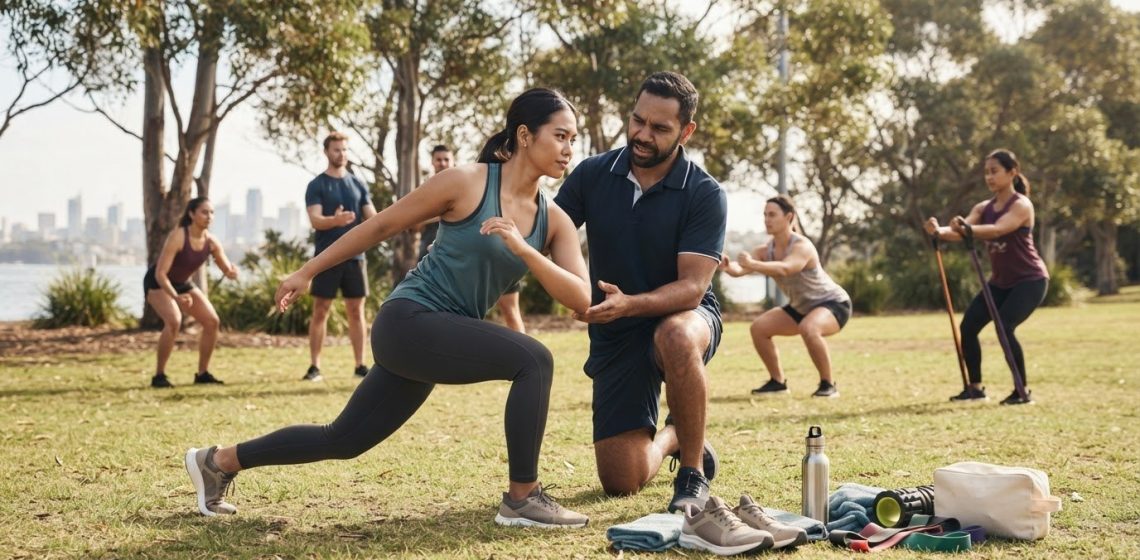
Safer training starts with a plan that fits your sport, current ability and everyday demands. Useful sports injury prevention tips bring preparation, appropriate challenge and recovery into one routine, rather than treating each session in isolation. The aim is to keep you participating while responding thoughtfully when your body’s needs change.
There isn’t one routine that suits every athlete. Someone returning to exercise after a break has different needs from a person preparing for regular competition, while a growing young player needs a plan suited to their development. Consider the demands of your sport, how your body feels afterwards and whether your routine allows you to adjust. These details turn general sports injury prevention tips into practical choices.
This guide covers ways to make those choices, from preparing for a session to supporting recovery afterwards. Review your routine, notice where it may need adjustment and build a steady approach to sport. If pain or restricted movement is already affecting activity, pause and seek appropriate advice instead of pushing through.
Key Takeaways
- Drink water before, during and after exercise, and adapt your clothing and activity when heat or humidity rises.
- Build training gradually, practise sound technique and choose equipment that fits your sport and ability.
- Use a structured warm-up with light cardio and dynamic movement, then cool down with gentle activity and stretching.
- Before play, scan the surface and check footwear and protective gear for hazards, damage or poor fit.
- Support recovery with balanced meals, adequate sleep and rest; stop and reassess pain that goes beyond ordinary muscle fatigue.
1. Hydration and clothing in hot weather
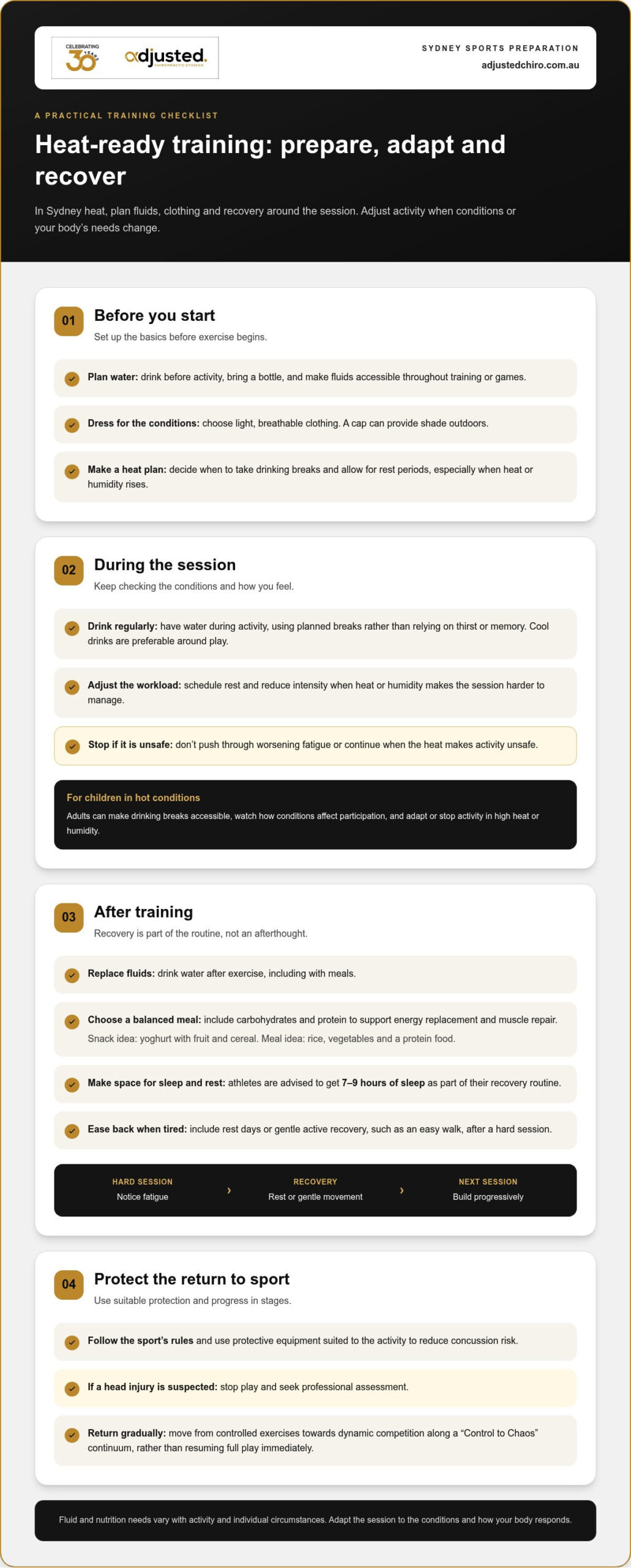
In Sydney heat, plan fluids and clothing before exercise starts. Drink water before, during and after activity, rather than waiting until thirst prompts you. Cool drinks are preferable around play. Bring a bottle, use planned breaks to drink, and refill it between sessions. For young athletes, parents and coaches can make fluids accessible throughout training and games, not only at the finish.
Heat and humidity can make a session harder to manage. Schedule rest periods and reduce intensity when conditions are demanding. Stop if the heat makes it unsafe to continue. Wear light, breathable clothing, such as a shirt and shorts that allow heat to escape. A cap can provide shade outdoors, but clothing does not replace drinking, taking breaks or adjusting the session.
Hydration supports joint lubrication, muscle elasticity and coordination between the nerves and muscles. These functions matter during repeated movements, quick turns and changes of pace. Dehydration can affect physical and cognitive function, influencing both movement and decision-making. Notice how you feel during exercise, and don’t push through worsening fatigue in hot conditions. Plan fluid breaks before demanding stretches instead of relying on memory mid-session.
Recovery also depends on what you eat after training. A balanced meal containing carbohydrates and protein can support energy replacement and muscle repair. For a practical post-training snack, try yoghurt with fruit and cereal; a later meal could include rice, vegetables and a protein food. Water with meals helps restore fluid after exercise. Nutrition and fluid needs vary according to activity and individual circumstances.
Sleep and rest allow the body to recover between sessions. Athletes are advised to get 7-9 hours of sleep as part of their recovery routine. Include rest days or gentle active recovery, such as an easy walk, when a hard session leaves you tired. If training demands rise suddenly without enough recovery, repeatedly loading the same muscles can contribute to overuse.
For children exercising in the heat, adults can plan drinking breaks and watch for signs that conditions are affecting participation. Reduce or stop activity in high heat or humidity, and choose light clothing. Rest periods during games and practice also support recovery. Coaches can adapt sessions to the conditions rather than expecting every player to maintain the same intensity.
To reduce concussion risk, follow the sport’s rules and use protective equipment suited to the activity. If a head injury is suspected, stop play and seek professional assessment. Return to sport gradually, progressing from controlled exercises towards dynamic competition along a “Control to Chaos” continuum rather than resuming full play immediately.
2. What Is Injury Prevention in Sports?
Sports injury prevention means using strategies that reduce avoidable risks during physical activity and competition. It is not a promise that injuries can always be avoided. Instead, it helps athletes prepare for their sport, recognise changes in their body and make sensible decisions about training. For example, a bowler can practise a controlled delivery before adding speed and repeated overs.
Good technique helps distribute effort across the muscles and joints involved in a movement. A coach can observe how you land, turn, lift or throw, then offer a cue to improve control. In the gym, that might mean reducing the weight until each repetition is steady. Practise the corrected movement at a manageable pace before attempting it under fatigue or competitive pressure.
Sport-specific technique matters because each activity places different demands on the body. A swimmer’s shoulder movement differs from a runner’s foot strike or a netball player’s landing. Break a complex skill into smaller movements, practise each with control, then combine them as your confidence and fitness develop. If your technique changes as fatigue builds, pause or reduce effort instead of repeating a poorly controlled movement.
Strength, balance and flexibility exercises can prepare the body for sporting demands. Strength work supports the muscles used in play, balance practice develops control during unstable movements, and comfortable mobility exercises help maintain range of motion. For example, a basketball player can practise controlled single-leg landings before adding faster changes of direction. Choose exercises suited to your sport and current ability.
Early warning signs include pain beyond usual muscle fatigue, persistent tendon or joint discomfort, swelling, reduced movement or repeated symptoms in one area. Stop exercising if pain develops, especially if it changes how you move or worsens with continued activity. Rest from the movement that aggravates it, and seek professional advice if symptoms persist, worsen or interfere with daily tasks.
In Australia, follow the rules and safety procedures for your sport, and use coaching guidance to practise skills safely. Soccer players can consider FIFA 11+, a programme focused on strength, balance and agility. Coaches can adapt drills to participants’ abilities and monitor changes in workload, particularly for children returning after time away from sport.
Review your approach when your sport, playing surface or training demands change. Someone moving from social play to competition may need to build speed, decision-making and movement under pressure progressively. Keep notes on recurring discomfort and the drills that trigger it. Sharing these details with a coach or health professional can help tailor technique and training to your sport and injury history.
3. Warm-ups and cool-downs
Set aside at least 10 minutes before exercise to prepare your body for movement. Begin with gentle cardio, such as brisk walking or light jogging, then add dynamic movements that take your joints through comfortable ranges. Leg swings, arm circles and walking lunges can prepare the muscles used during training without starting at full intensity.
Build your warm-up in stages. Start with easy movement to raise your heart rate, add mobility work, then practise the session’s actions at a lower speed. A basketball player might move from jogging to controlled side steps, then practise gentle changes of direction. A runner could progress from walking to easy jogging before faster intervals.
Choose warm-up movements that match the activity ahead. For tennis, include shoulder circles and controlled lateral steps; for football, rehearse short accelerations and changes of direction. A tailored sequence prepares you for the demands of your sport instead of relying on the same routine for every activity. Increase effort gradually and keep each movement controlled.
Dynamic stretches are useful before activity because they move muscles through a range rather than holding one position. Try arm circles, leg swings or gentle walking lunges, keeping the movement comfortable. Save longer static stretches for after training, when your muscles are warm. Stretching can support flexibility, but don’t force a joint into pain or bounce at the end of its range.
After exercise, cool down with light activity and stretching. Walk at an easy pace until your breathing settles, then stretch the muscles used in the session. A swimmer might walk briefly and gently stretch their shoulders; a runner could walk before stretching their calves and thighs. Light movement helps lower heart rate and supports circulation, while stretching may ease stiffness.
After a child’s match, a gradual cool-down can help breathing and heart rate return towards resting levels. Keep the pace easy and stretches comfortable. Coaches can build this routine into training plans, helping young athletes finish sessions with the same care they use to start them.
Adjust the sequence when fitness, weather or the session changes. After time away from training, start with easier movements and build towards sport-specific drills. If an exercise causes sharp or increasing pain, stop rather than stretching through it. A warm-up should prepare you for activity, not conceal discomfort or replace recovery from an existing injury.
4. Checking sports surfaces and equipment for hazards
Before each game or training session, check the playing area for hazards. Look for holes, loose debris, foreign objects, wet patches and damaged fixtures. On a football field, inspect the goal area and running paths; on a court, look for slippery spots or raised edges. Remove hazards where possible, or keep players away from unsafe sections. A brief inspection can prevent avoidable falls, sprains and collisions.
Check equipment before wearing or using it. Look for cracked helmets, loose straps, worn soles, damaged guards and frayed fastenings. Repair or replace faulty items before play rather than relying on them for protection. Shoes should suit the sport and surface: running shoes and court shoes are designed for different movements and grip. A good fit helps support stability during turns, landings and sudden stops.
- Fit: Check that helmets sit securely and guards stay in place during movement.
- Condition: Inspect straps, padding, fastenings and soles for wear or damage.
- Suitability: Match footwear and protective gear to the sport and playing surface.
- Movement: Test that equipment allows comfortable running, bending and turning.
Children need equipment suited to their size and ability. A helmet that shifts, oversized footwear or loose shin guards can interfere with movement and protection. Parents and coaches can supervise a simple check before play: secure the fit, test comfortable movement, then recheck fastenings after warm-up drills. As children grow, reassess the fit rather than assuming last season’s gear still works.
Protective equipment needs vary by sport. Soccer players may use shin guards and ankle strapping; hockey players may need a mouthguard and shin guards. Depending on the activity, protection may also include eyewear, wrist, elbow, knee or shin guards, helmets, tape and braces. Match each item to likely contact or impact, and make sure it does not restrict movement or conceal an injury.
Rugby illustrates why protective equipment habits matter. A study of rugby players found that 55% of players in schoolgirl’s grade wore mouthguards, compared with 73% in Senior A competition. A mouthguard is one part of preparation; players also need suitable footwear, correctly fitted protective gear and a clear playing surface.
After an injury, strapping or a brace may provide extra support and stability once rehabilitation is complete. It should complement a return-to-play plan, not replace recovery or compensate for unsafe equipment. Check the affected area and your gear before resuming, especially if discomfort returns during running, landing or contact.
5. Nutrition for injury prevention and recovery
Training places demands on muscles, tendons and bones, so everyday eating habits matter throughout a sporting season. A balanced diet provides energy for exercise and nutrients that support tissue repair. For example, a meal of rice, vegetables and chicken combines carbohydrates, micronutrients and protein. No single food prevents strains or overuse injuries; consistent meals and training-day nutrition support recovery.
After training, include protein and carbohydrates in a recovery meal or snack within 30 minutes. A practical example is yoghurt with fruit and cereal, or eggs with toast. Athletes are advised to consume 20-30 grams of protein after training to support muscle recovery. The amount an athlete needs depends on their overall diet, activity and personal nutrition requirements.
Carbohydrates help replenish energy used during exercise, while protein provides building blocks for muscle repair. Combining them after a demanding session can make recovery easier to plan. For example, a young footballer could have a banana and yoghurt after practice, followed by a balanced dinner. Children need enough food to support both growth and sport, not restrictive eating plans.
Vitamin D and calcium are nutrients athletes may consider as part of a balanced diet. These figures are not a substitute for individual nutrition advice. Food sources, supplements, age, health and training demands all affect a person’s needs. Avoid starting supplements simply because a team-mate uses them.
Hydration works alongside food during recovery. Drink water around exercise and include fluids with meals and snacks. Sweating in hot conditions or after a long session affects fluid needs. A recovery routine can pair a drink with a meal containing carbohydrates and protein, rather than relying on sugary drinks or alcohol to replace food and fluids.
Plan meals around your training calendar. During a busy competition season, regular meals and planned snacks can help maintain energy between school, work and practice. Rest days still call for nourishing food because the body continues its repair processes. If appetite, fatigue or recurring soreness changes as training increases, review your schedule and eating routine.
A sports dietitian can tailor meal planning to an athlete’s goals, sport and needs. This can be especially helpful when a child’s growth, food preferences or competition schedule make planning more complex. Keep a simple record of training, meals and recovery for several days. It can help identify patterns to discuss during personalised nutrition support.
Adjusted Chiropractic Studios: Adult Chiropractic
Adjusted Chiropractic Studios provides Adult Chiropractic for adults managing musculoskeletal discomfort that affects training, movement or recovery. If pain keeps returning, limits your range of motion or changes how you exercise, an individual assessment can help clarify possible contributing factors and appropriate care. When clinically suitable, Spinal Adjustments may form part of care, alongside practical guidance tailored to your symptoms and activity goals. Chiropractic care is not a substitute for medical assessment of a suspected concussion, severe injury or other urgent concern. For ongoing musculoskeletal issues, discuss your health history, symptoms and training demands during an appointment so your care can be tailored to your needs. You’re welcome to contact Adjusted Chiropractic Studios or visit adjustedchiro.com.au to learn more.
Build a training routine you can sustain
Lasting progress comes from noticing how your body responds, not simply following a fixed plan. Track changes in comfort, movement and energy across training sessions. If recurring pain or restricted movement starts affecting everyday activities, an individual assessment can help clarify what support may suit you. Sports injury prevention tips work best when they reflect your sport, health history and training demands, rather than becoming another generic checklist.
Adjusted Chiropractic Studios offers Adult Chiropractic, Spinal Adjustments and Core Score Testing as part of its care options. A conversation about your symptoms and movement goals can help establish a considered next step. For guidance that takes your circumstances into account, contact Adjusted Chiropractic Studios.
With steady attention to your body and a plan suited to your needs, you can keep working towards confident, sustainable movement.
Frequently Asked Questions
What Is Injury Prevention in Sports?
Injury prevention in sport means making choices that reduce avoidable risks during training and competition. This includes matching activity to your current ability, following sport rules and responding early to discomfort. For example, a tennis player returning after time away can practise controlled rallies before playing full matches. The goal isn’t to eliminate every possible injury, but to support safer participation through preparation, sensible decisions and attention to changing symptoms.
What are the most effective ways to prevent sports injuries?
Effective sports injury prevention tips combine gradual training, sport-specific conditioning, recovery and attention to pain, rather than relying on one measure. A runner might alternate running days with low-impact activity and add strength work for areas their routine underuses. Keep a simple training log of your activity and how your body feels afterwards. If the same discomfort returns or starts affecting daily tasks, pause the aggravating activity and seek an appropriate assessment.
How should athletes warm up and cool down to reduce injury risk?
Start with easy movement, then rehearse actions from your sport at lower intensity before progressing to full effort. A netball player, for instance, could begin with brisk walking, practise controlled footwork, then add faster changes of direction. After the session, gradually reduce effort with light movement. Keep stretches comfortable and specific to the muscles used. If movement causes sharp pain, stop rather than forcing your way through the warm-up or cool-down.
How should athletes increase training intensity and volume safely?
Safe sports injury prevention tips include increasing one training demand at a time, such as adding a session or making existing work harder, while monitoring recovery. Avoid suddenly combining longer sessions, faster efforts and more competition in the same period. A beginner might first establish a repeatable routine, then adjust it in response to fatigue, soreness and performance. Persistent pain, declining sleep or unusual whole-body fatigue are reasons to reduce the load and seek clinical advice.
How can athletes choose and maintain sport-specific protective equipment and footwear?
Choose equipment designed for the sport, playing surface and athlete’s size, then check the fit while moving. A helmet should stay secure during head turns, and shoes should feel stable during the turns and stops typical of the sport. Follow the maker’s care instructions, dry equipment after use and inspect it for loose fastenings, cracks or worn soles. Replace damaged protective items rather than relying on them during contact or impact.
What are common sports injury risks for children, older adults and beginners?
Children may face greater injury risk in higher-contact sports, and growth spurts can bring discomfort as bones, tendons and muscles develop at different rates. Older adults and beginners should consider their current fitness, previous injuries, balance and the demands of their chosen activity when planning participation. Starting with manageable movements and gradually increasing the challenge helps reveal how the body responds. Persistent pain or reduced movement deserves timely attention.
How do hydration, nutrition and sleep affect sports injury prevention?
Hydration supports physical and cognitive function, while balanced meals provide energy and nutrients for training and tissue repair. Sleep and recovery time give the body an opportunity to adapt between sessions. In practice, plan drinks around exercise, eat regular meals with varied foods and protect a consistent sleep routine. If heavy training coincides with poor sleep, unusual fatigue or recurring soreness, review your overall workload and recovery habits.
What are the Australian sports injury prevention guidelines and resources?
In Australia, follow your sport’s rules and safety procedures, use coaching guidance, and build training gradually with suitable equipment, warm-ups and recovery. Soccer players can consider FIFA 11+, which focuses on strength, balance and agility; seek professional advice for pain or restricted movement.