
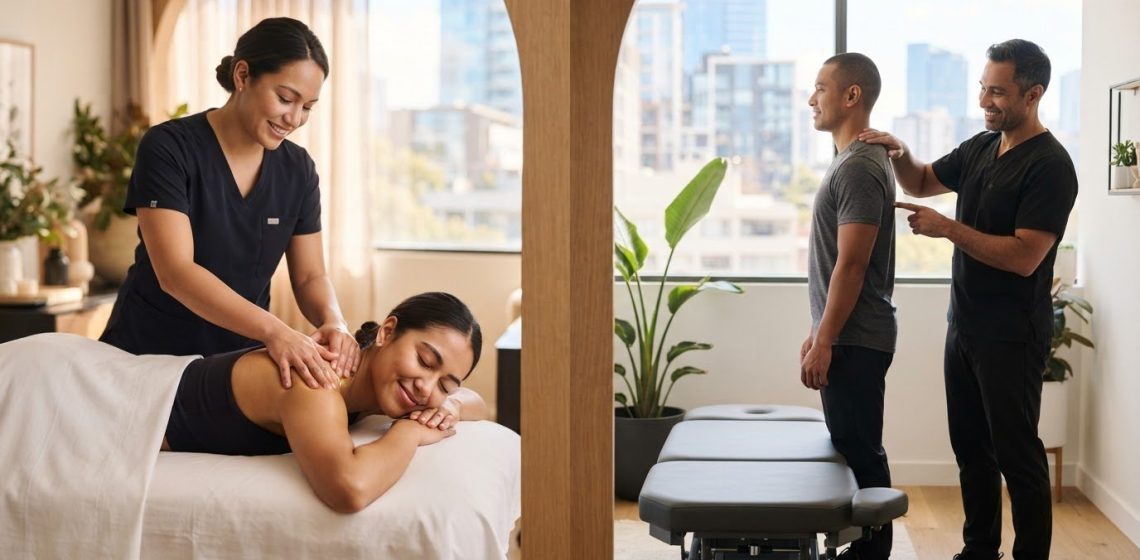
When weighing up chiro vs massage for muscle knots, the right next step may depend less on the tender spot and more on what could be contributing to your symptoms. Persistent tightness can make turning, reaching or getting through a workday uncomfortable. Knowing what each approach focuses on can help you decide what to ask about.
Massage therapy focuses on soft tissues such as muscles, while chiropractic care may include an assessment of your spine, joints and movement. Neither approach is automatically right for every knot, and the cause of discomfort can’t be confirmed by feel alone. Discuss the type and pressure of any hands-on care with your practitioner, especially if you’re concerned about discomfort.
This article explains what each approach may address, where its limits lie and how to choose a sensible next step based on your symptoms and health history. You’ll also learn why persistent tightness may warrant a broader musculoskeletal assessment, and when symptoms such as worsening pain, numbness or weakness should be discussed with a health professional. The aim is to help you make an informed choice, not assume one treatment fits everyone.
Key Takeaways
- A “muscle knot” describes a tender or tight spot, but it doesn’t confirm what’s causing the discomfort.
- In the chiro vs massage for muscle knots decision, consider whether your priority is soft-tissue attention or a broader review of movement and musculoskeletal health.
- Compare each option by its focus, assessment process and fit with your preferences; neither is automatically right for everyone.
- Before discussing care, note when the tightness began, what affects it and whether it changes your movement or daily activities.
- A personalised assessment can help guide a suitable next step based on your health history, symptoms, goals and clinical findings.
Chiro vs massage for muscle knots: what might the tightness mean?
A tender spot in your neck after a day at a desk, or a tight area in your back that makes turning uncomfortable, can be frustrating. The phrase “muscle knot” gives a name to what you feel, but it doesn’t explain the cause. Similar sensations can have different contributing factors, so choosing between chiro vs massage for muscle knots starts with describing your symptoms rather than assuming every tight spot needs the same approach.
What do people mean when they describe a muscle knot?
People often use “muscle knot” to describe a local area that feels tight, tender or sensitive when touched or moved. The phrase is sometimes linked with myofascial trigger points, but describing a knot doesn’t confirm that a trigger point, or any particular condition, is present.
A reported knot is a description of a sensation. A clinician’s assessment considers that sensation alongside your health history, other symptoms and relevant examination findings.
That context matters when deciding what to do next. A practitioner may ask when the tenderness began, whether it changes with movement or rest, and whether you’ve noticed other symptoms. Work habits, posture, recent activity and changes to everyday movement can also help clarify what needs to be assessed. For example, note whether the tightness is more noticeable after sitting at your desk or when reaching, rather than trying to diagnose the cause yourself.
When should a persistent tight spot be assessed?
Consider arranging an assessment if the tightness persists, keeps returning or starts interfering with normal activities, such as working comfortably, exercising or turning your head. You don’t need to wait until movement is severely limited to ask for guidance. A suitable health professional can consider your symptoms and health history and discuss whether further assessment is appropriate.
Seek prompt assessment for symptoms that are severe, unusual, worsening or concerning to you. If symptoms feel urgent, contact an appropriate urgent medical service rather than assuming the issue is simply a muscle knot. The right next step depends on the full picture, not just where the area feels tender. This helps keep the focus on your needs and safety before considering hands-on care.
How massage and chiropractic care approach muscle tightness differently
Massage therapy and chiropractic care involve different areas of focus. Massage generally uses hands-on techniques directed at soft tissues, including muscles. Chiropractic care involves assessing the musculoskeletal system, with attention to the spine, joints and movement. Neither is automatically the better choice for a tight or tender area. Your symptoms, health history, preferences and an appropriate assessment all matter.
What does massage therapy generally aim to address?
A massage therapist may use hands-on soft-tissue work in response to areas of tension or sensitivity. The approach can vary, so ask what techniques may be used, how the practitioner will check your comfort and whether the approach is suitable for you. Discuss any health concerns or preferences before treatment begins, including what pressure feels comfortable.
A change in how an area feels after hands-on care doesn’t, by itself, explain why symptoms keep returning. If tightness recurs or affects your movement, consider whether you need an assessment that looks beyond the local area as well.
What does a chiropractic assessment consider?
A chiropractor considers your health history, symptoms, movement and relevant examination findings before discussing care. The Better Health Channel’s overview of chiropractic care offers further information about the profession. An assessment may help determine whether chiropractic care is suitable, or whether another type of health support is more appropriate.
Spinal adjustments are not the same as massage, and they shouldn’t be described as a direct way to “release” a knot. Whether an adjustment is considered depends on the assessment and your individual circumstances. If you’d like to understand more about the approach, read this guide to spinal adjustments in Sydney or learn about adult chiropractic care in Sydney.
Adjusted Chiropractic Studios provides chiropractic care, not massage therapy. If you’re weighing up chiro vs massage for muscle knots, consider what you want help with: hands-on attention to soft tissue, or an assessment of movement and broader musculoskeletal factors. Either way, explain what feels comfortable and ask questions before agreeing to care. If a broader review feels relevant, you can explore adult chiropractic care at Adjusted Chiropractic Studios as one option.
Chiro vs massage for muscle knots: compare your options
A tight spot doesn’t automatically mean massage is the only relevant option. If it’s accompanied by restricted movement or spinal discomfort, a broader assessment may help clarify what support is suitable. In the chiro vs massage for muscle knots decision, compare each approach with your symptoms and goals rather than relying on the word “knot”.
| Consideration | Massage therapy | Chiropractic assessment |
|---|---|---|
| General focus | Hands-on care directed towards soft tissues such as muscles. | Assessment of relevant musculoskeletal concerns, including spinal health and movement. |
| Assessment | Ask how the practitioner considers your health history, comfort and preferences when planning care. | A chiropractor considers your health history, symptoms, movement and examination findings before discussing suitable options. |
| May suit your preference if… | You’re seeking hands-on soft-tissue care and feel comfortable with the proposed approach. | Your tightness occurs alongside movement or spinal concerns, and you want those assessed. |
| Questions to ask | What techniques may be used? How can I communicate if the pressure feels uncomfortable? | What did the assessment find? What options are suitable, and are there reasons to seek further assessment? |
The best next step depends on your assessment and goals, not the label “knot”. Neither option guarantees a particular result, and a local tight spot alone can’t establish what’s causing it.
When might someone consider massage first?
You might explore massage if you’re seeking hands-on soft-tissue care. Before proceeding, discuss your health history, preferred pressure and any concerns with the provider. Massage may affect how an area feels, but that experience doesn’t establish the cause of persistent or recurring symptoms. If the tightness keeps returning or affects daily activity, consider seeking an assessment suited to the wider picture.
When might a chiropractic assessment be worth considering?
A chiropractic assessment may be worth discussing if tightness comes with difficulty moving, spinal concerns or changes to everyday tasks. A chiropractor should explain relevant findings and suitable options before care begins. A chiropractic adjustment is one form of care, not a guaranteed knot-release technique; its suitability depends on individual findings. If concerns fall outside the clinic’s scope, referral for further assessment may be appropriate. If you’d like to explore this option, learn about adult chiropractic care at Adjusted Chiropractic Studios.
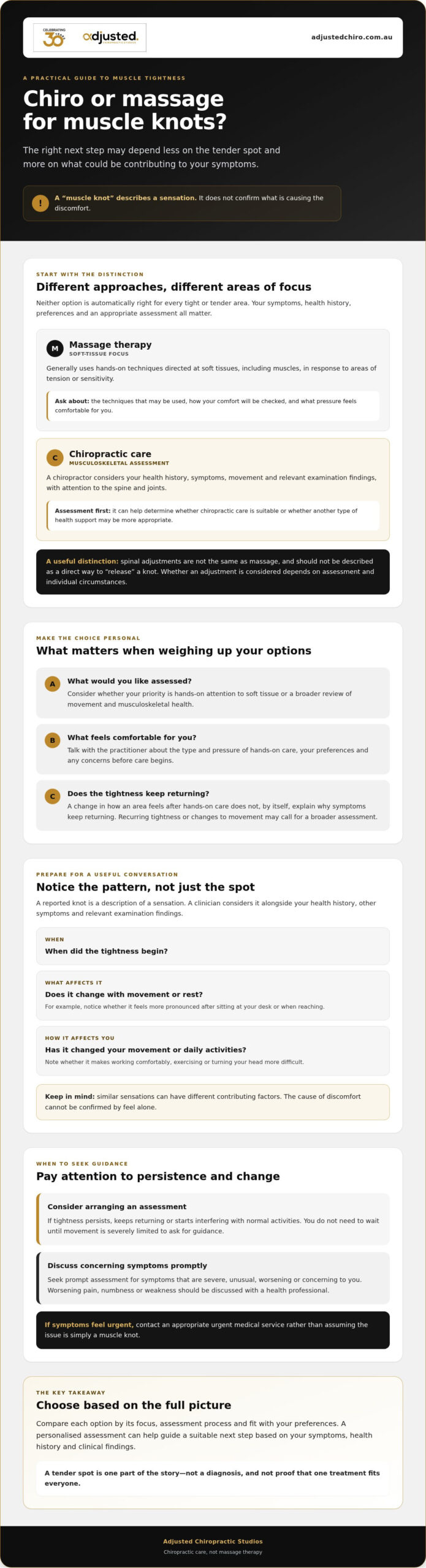
How to choose your next step for a muscle knot in Sydney
Choosing between massage and chiropractic care doesn’t need to start with a diagnosis. A few clear notes about what you’re experiencing can help you explain your needs and decide which kind of assessment or hands-on care to explore. This makes the chiro vs massage for muscle knots decision more considered and useful, whether you’re seeking care in Sydney CBD or elsewhere in Sydney.
- Note your symptoms. Record where the tightness is, when it began and whether it’s constant or comes and goes.
- Consider your goal. Are you looking for soft-tissue care, help understanding changes in movement, or guidance about recurring discomfort?
- Think about relevant health history. Be ready to share previous or current concerns that could affect what care is suitable.
- Discuss options with a qualified provider. Ask how they’ll assess your situation and how their approach relates to your goals.
Include practical details such as whether the discomfort changes with activity, rest, posture or work habits. For example, note if reaching overhead, turning your head or sitting through a workday has become more difficult. If you work at a desk in the Sydney CBD, consider whether the tightness changes during or after your usual workday. Describe what you notice without trying to diagnose the cause yourself.
Questions to ask before choosing massage or chiropractic care
It’s reasonable to ask what an assessment involves and how its findings inform the proposed approach. You might also ask what alternatives could be considered if the first option doesn’t suit you, and how you and the provider will review your progress. Share your health history, concerns and comfort preferences, including any hands-on techniques you’re uneasy about. Clear answers can help you make an informed choice.
What information can help guide an initial assessment?
Think about the location and pattern of the tightness, when you first noticed it and whether it has changed your usual movement or daily tasks. Recent changes in exercise, work setup, posture or activity may also be useful context. These details help a provider understand your experience without assuming that one symptom points to a particular cause.
If you’re considering chiropractic care and want to understand spinal adjustments specifically, read the Sydney spinal adjustment clinical guide. You can then discuss whether that type of care is suitable for your circumstances with a qualified provider.
Seek appropriate medical assessment for symptoms that are severe, worsening, unusual or concerning to you. If you’re in Sydney CBD and would like to discuss whether a chiropractic assessment may be relevant, contact Adjusted Chiropractic Studios about adult chiropractic care.
How Adjusted Chiropractic Studios assesses muscle tightness in Sydney CBD
Persistent tightness can be distracting, especially when it affects work, exercise or everyday movement. At Adjusted Chiropractic Studios in Sydney CBD, an assessment begins by listening to what you’ve noticed and what you’d like to do more comfortably. The practice has more than 30 years of experience delivering chiropractic care in Sydney. Its approach is individualised, with the aim of understanding your situation before discussing whether chiropractic care is appropriate.
What a patient-centred assessment may involve
Your health history, symptoms and goals help shape the conversation. You may be asked when the tightness started, whether it changes with particular movements, and how it affects your routine. The chiropractor may consider relevant movement and musculoskeletal findings as part of the assessment. Adjusted Chiropractic Studios also uses Core Score scanning during the assessment phase where appropriate. These findings are considered alongside your wider circumstances, rather than treating a scan or a tight spot as a diagnosis on its own.
There’s no assumption that a tight spot automatically calls for a spinal adjustment. Any recommendation depends on the findings, your circumstances and whether the proposed care is suitable. Options can be discussed with you before care begins. If assessment suggests your concerns need attention beyond the clinic’s scope, another next step or referral may be appropriate.
A considered path towards better movement
Where relevant, care planning may take account of practical factors such as posture, movement patterns, activity and workplace habits. For someone who spends long periods at a desk, discussing how sitting or regular tasks affect movement may help put symptoms in context. Adjusted Chiropractic Studios also offers corporate health training focused on workplace ergonomics and employee spinal health. This isn’t about assuming one habit explains everything; it’s about considering the factors that matter to you.
Corrective care means an individualised plan guided by assessment and clinical judgement. It isn’t a promise of lasting relief or a fixed approach for every person. Your goals and response can inform discussions about suitable next steps over time. If you’d like more detail about the service, explore adult chiropractic care in Sydney.
In the chiro vs massage for muscle knots decision, a careful assessment can help clarify whether chiropractic care fits your symptoms and goals. If you’d like to discuss your concerns with the team, you can book an appointment with Adjusted Chiropractic Studios.
Choose a next step that fits your symptoms
A “muscle knot” describes a sensation, not a confirmed diagnosis, so it doesn’t automatically point to one treatment. Massage focuses on hands-on soft-tissue care, while chiropractic care may assess spinal and movement concerns. The right direction in the chiro vs massage for muscle knots question depends on your symptoms, health history, preferences and goals.
If the tightness persists, recurs or affects daily movement, note when it began and what changes it, then discuss your options with a qualified provider. Ask what their assessment involves, how they’ll decide whether an approach is suitable, and what alternatives may be considered. Seek appropriate medical assessment for symptoms that are severe, worsening, unusual or concerning.
Adjusted Chiropractic Studios provides personalised chiropractic care in Sydney CBD and has more than 30 years of experience in the area. If you’d like to discuss whether an assessment may suit your needs, book an appointment with Adjusted Chiropractic Studios.
Frequently Asked Questions
Is massage or chiropractic care better for muscle knots?
Neither is automatically better; the right option depends on your symptoms, goals, preferences and assessment. Massage focuses on hands-on soft-tissue care, while chiropractic care may assess spinal and movement concerns. The chiro vs massage for muscle knots choice isn’t determined by the label “knot” alone. If discomfort keeps returning or affects daily activities, discuss your health history and options with a suitably qualified provider.
Can a chiropractor help with muscle tightness?
A chiropractor can assess muscle tightness alongside your movement, spinal concerns, health history and other symptoms. The assessment helps determine whether chiropractic care is suitable and what options may be appropriate. An adjustment isn’t simply a technique to release a knot, and it may not be recommended for everyone. Ask the chiropractor to explain their findings, the reasoning behind any proposed care and whether another next step would suit you better.
Can massage get rid of a muscle knot permanently?
Massage can’t be assumed to remove a muscle knot permanently. “Knot” describes a sensation, not a confirmed diagnosis, and how an area feels after hands-on care doesn’t establish why discomfort began or keeps returning. If tightness recurs, consider whether factors such as activity, posture or movement may be relevant and discuss them with a qualified provider. They can help you decide whether an assessment of persistent symptoms is appropriate.
How do I know whether a muscle knot needs professional assessment?
Consider arranging an assessment if the tightness persists, returns repeatedly or interferes with movement, work, exercise or ordinary tasks. Before speaking with a provider, note when it began, where you feel it, what changes it and how it affects your routine. This information can help guide a discussion without you needing to identify the cause. Seek prompt medical assessment if symptoms are severe, worsening, unusual or concerning to you.
What should I expect at a chiropractic assessment for muscle tightness?
A chiropractic assessment generally begins with discussion of your health history, symptoms and goals. The chiropractor may also consider relevant movement and musculoskeletal findings. They should explain what the assessment suggests and discuss whether chiropractic care is suitable before any care is provided. At Adjusted Chiropractic Studios in Sydney CBD, recommendations are guided by individual findings and clinical judgement. The practice has more than 30 years of experience delivering chiropractic care in Sydney.
When should I seek medical assessment for a painful or tight muscle?
Seek medical assessment if muscle pain or tightness is severe, worsening, unusual, persistent or concerning, particularly if it substantially affects your normal activities. Don’t assume a painful area is simply a knot, as that description alone can’t confirm the cause. If symptoms feel urgent, contact an appropriate urgent medical service. A health professional can assess your circumstances and advise what further care or assessment may be needed.



