

What if the right choice depends less on a professional title and more on how a practitioner assesses your needs and explains your options? If you’re weighing up chiropractic vs osteopathy australia, it’s understandable to want clear answers about training, treatment and which approach may suit your situation.
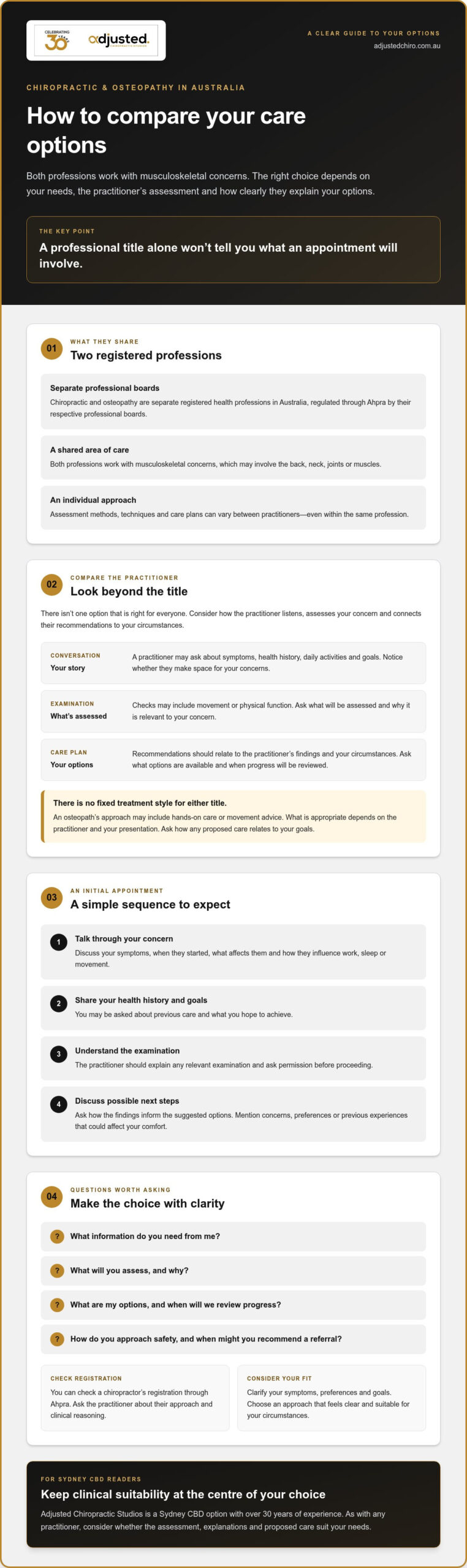
Both chiropractors and osteopaths are registered health professionals in Australia, regulated through Ahpra under separate professional boards. They both work with musculoskeletal concerns, but their assessment methods, techniques and care plans can vary. There isn’t one option that’s right for everyone, and a professional title alone won’t tell you what an appointment will involve.
This guide outlines the key similarities and differences, what to ask before booking, and when further clinical assessment or referral may be appropriate. You’ll be better placed to consider your symptoms, preferences and goals, then choose a practitioner whose approach feels clear and suitable for you.
Key Takeaways
- In chiropractic vs osteopathy australia, a professional title alone won’t tell you exactly how a practitioner will assess or treat your concern.
- Compare how each practitioner listens, explains their clinical reasoning and plans care around your goals.
- Before booking, check the practitioner’s registration and ask about treatment options, safety and when they would recommend a referral.
- Clarify what you need, ask questions and consider whether the practitioner’s approach feels right for you.
- For a Sydney CBD option, learn about Adjusted Chiropractic Studios, a practice with over 30 years of experience, while keeping clinical suitability central to your choice.
Chiropractic vs osteopathy: what’s shared in Australia?
If discomfort or restricted movement is affecting work, sleep or everyday activities, choosing where to seek care can feel uncertain. The question of chiropractic vs osteopathy australia can sound like a choice between two fixed treatment styles. In practice, both professions work with musculoskeletal concerns, while each practitioner’s assessment and approach can vary.
In Australia, chiropractic and osteopathy are separate registered health professions, regulated through Ahpra by their respective professional boards. Neither title guarantees one specific assessment or treatment method. Your practitioner should explain their reasoning and discuss whether their proposed care is appropriate for your circumstances.
Both chiropractors and osteopaths may assess concerns involving the back, neck, joints or muscles. They may ask how symptoms affect daily life, examine movement and function, and discuss care options. But shared areas of practice don’t mean identical methods, or that either profession is automatically the better fit. Your health history, preferences and clinical needs all matter.
What does a chiropractor do in Australia?
A chiropractor assesses and provides care for relevant musculoskeletal concerns, which can include back or neck discomfort and movement limitations. Recommendations should reflect your health history, an appropriate examination and your circumstances, rather than a standard plan applied to everyone. Chiropractic is regulated in Australia, and you can check a practitioner’s registration through Ahpra. For historical context, Chiropractic is a form of alternative medicine, though a broad description cannot tell you how a particular registered practitioner will assess or care for you.
Ask what the assessment involves, which options may be considered and how progress will be reviewed. A clear explanation helps you make an informed decision before agreeing to care.
What does an osteopath do in Australia?
Osteopathy is a registered profession concerned with the assessment and care of musculoskeletal problems. Depending on the practitioner and your presentation, an approach may include hands on care or movement advice. These are possibilities, not a guarantee of what every appointment involves. Ask the osteopath to explain their assessment, the options they recommend and how those choices relate to your goals.
The professional title is only one part of the decision. A useful conversation should leave you understanding the reasoning behind a proposed plan, what it may involve and when another type of assessment or referral might be more suitable.
How chiropractic and osteopathy assessments and treatments may differ
Even practitioners with the same professional title can have different appointment styles and make different recommendations. When comparing chiropractic vs osteopathy australia, look beyond a technique’s name and consider how the practitioner reaches their clinical decisions.
The practitioner’s assessment and reasoning matter more than a technique label. An initial appointment should help you understand what they’ve found, why they’re suggesting a particular option and how you can take part in decisions about your care.
| Aspect | Chiropractic | Osteopathy | Questions to ask |
|---|---|---|---|
| Conversation | May cover symptoms, health history, daily activities and goals. | May cover similar details, including how movement and symptoms affect daily life. | What information do you need from me? |
| Examination | May include relevant checks of movement or physical function. | May include relevant checks of movement or physical function. | What will you assess, and why? |
| Care plan | Should relate recommendations to your findings and circumstances. | Should relate recommendations to your findings and circumstances. | What are my options, and when will we review progress? |
What might happen during an initial appointment?
The practitioner will usually begin by asking about your symptoms, when they started, what affects them and how they influence work, sleep or movement. They may ask about your health history, previous care and what you hope to achieve. Next, they’ll explain any relevant examination and ask permission before proceeding. Their findings should inform a discussion about possible next steps.
Before treatment begins, mention any concerns, preferences or previous experiences that could affect your comfort. You can ask for an explanation at any point. Chiropractors are regulated in Australia, and the Chiropractic Board of Australia provides information about professional standards. Registration is one useful check, alongside the clarity of the practitioner’s communication.
How can hands on care and exercise advice vary?
Depending on your presentation and preferences, a practitioner may discuss hands on care, movement advice or other options. Some may consider joint movement, soft tissue techniques or exercises, but no single technique belongs exclusively to one profession. Don’t assume a particular method will be used.
Ask what a proposed approach is intended to address, what benefits and risks are relevant to you, and whether alternatives are available. A sound plan should be open to review as your response becomes clearer, rather than continuing unchanged without discussion.
If you’re considering chiropractic care in Sydney, you can read about adult chiropractic at Adjusted Chiropractic Studios to learn about the practice and prepare questions for a conversation with a practitioner.
Chiropractor or osteopath: how to compare your options fairly
Choosing between a chiropractor and an osteopath isn’t a contest between professional titles. The more useful question is whether a practitioner understands your concern, explains their reasoning and offers an approach that suits your health needs and preferences. In chiropractic vs osteopathy australia, individual practitioners may differ in how they assess and plan care, so compare the person and their process rather than assuming one profession is always the better choice.
Look for a thoughtful conversation, a relevant examination and a clear explanation of your options. A practitioner should take your concerns seriously, discuss the possible benefits and risks of proposed care, and be willing to review the plan or recommend another clinician if your needs call for it. A particular hands on technique, by itself, doesn’t show that care is safer or more suitable.
Check registration using Ahpra’s public register and confirm that the practitioner is registered in the profession they practise. Osteopaths are regulated by the Osteopathy Board of Australia. For either profession, consider the practitioner’s communication and clinical reasoning as well as their registration.
Questions to ask before choosing a practitioner
You don’t need to know technical terms to make an informed choice. Ask direct questions and notice whether the answers are clear, specific to your situation and open to discussion.
- How will you assess my concern, and what information or examination will guide your recommendations?
- What care options might be appropriate for me, and what are their potential benefits, risks and alternatives?
- What changes should we look for, and when will we review whether the plan is helping?
- Under what circumstances would you suggest another clinician or a referral?
These questions can also help you explain what matters to you, such as being cautious with hands on care or fitting recommendations around work, movement and daily routines. You should have time to understand the plan before deciding whether to proceed.
When a different assessment or referral may be needed
Musculoskeletal discomfort can have different causes, and an initial assessment may indicate that another type of clinical input is more appropriate. A practitioner should recognise the limits of their role and discuss referral when your presentation warrants further assessment. If symptoms are concerning, changing or getting worse, seek prompt medical assessment rather than relying on a comparison between practitioner types to decide what’s happening.
If you believe there’s an emergency, seek urgent local medical help. In Australia, call 000 for an emergency. A referral isn’t a failure of care. It can be a sensible step towards the right assessment.
If you’re considering chiropractic care in Sydney, you can learn about chiropractic care at Adjusted Chiropractic Studios, a Sydney CBD practice with over 30 years of experience, and use the information to prepare questions about your own needs.
Choosing chiropractic or osteopathy for your needs in Sydney
Once you understand how the professions may overlap, a few practical steps can help you choose a practitioner in Sydney. When comparing chiropractic vs osteopathy australia, focus on your goals, the practitioner’s registration and whether their approach feels clear and appropriate. A convenient location can make appointments easier to fit around work or family life, but it doesn’t determine clinical suitability.
Match your concerns and preferences to the appointment
Before contacting a practitioner, note what’s troubling you, how it affects everyday activities and what you’d like to do more comfortably. You might want to sit through a workday with less discomfort, move more freely or understand what could be contributing to recurring symptoms. Write down any preferences about hands on care and questions you want answered. Online information can help you prepare, but it can’t replace an individual clinical assessment.
Check registration, communication and care planning
Use Ahpra’s public register to check that a chiropractor or osteopath is registered in their profession. Then consider how they communicate: do they listen carefully, explain the purpose of their assessment and invite questions? You should be able to discuss options and understand why a particular plan is being suggested before deciding whether to proceed.
Use this four step process to compare your options:
- Clarify your goals. Describe your main concern, its impact on daily life and the changes you hope to work towards.
- Check credentials. Confirm the practitioner’s registration through the relevant official Australian register.
- Ask questions. Find out what the assessment involves, what care options may suit you and how progress will be reviewed.
- Assess the fit. Consider whether you feel heard, understand the reasoning and are comfortable with the proposed next steps.
Before booking, confirm the practitioner’s registration, how they’ll assess your concern, what options they’ll discuss and how they’ll review progress.
If you’re considering chiropractic, the practice’s adult chiropractic Sydney information and spinal adjustment guide can help you prepare for a conversation. These are useful starting points, not substitutes for discussing your individual circumstances with a practitioner.
For Sydney CBD residents and workers, location may also matter when fitting appointments around commuting and workplace routines. Adjusted Chiropractic Studios is a Sydney CBD practice. If you’d like to discuss whether chiropractic may suit your needs, contact Adjusted Chiropractic Studios to learn about its adult chiropractic care.
When a Sydney chiropractic assessment may suit your next step
After comparing your options, you may decide that a conversation with a chiropractor is a reasonable next step. The choice still depends on your concern, preferences and the practitioner’s assessment. In the wider discussion of chiropractic vs osteopathy australia, a personalised consultation can help you understand whether chiropractic care is appropriate for your circumstances, without committing you to a particular treatment.
What to expect from a personalised chiropractic discussion
A considered discussion starts with listening. The chiropractor should ask about your health history, symptoms and goals, including how discomfort or restricted movement affects work, sleep or daily activities. They can then explain any relevant examination findings and discuss possible next steps. Recommendations should reflect your individual presentation, not a routine plan assumed before your needs have been assessed.
You should feel able to raise concerns, describe preferences and ask for clarification before deciding whether to proceed. Adjusted Chiropractic Studios is a Sydney CBD practice with over 30 years of experience. Its services include adult and kids chiropractic care, spinal adjustments and Core Score scanning during the assessment phase. The practice also offers nutrition advice and podiatry.
For more clinic specific information, explore the practice’s adult chiropractic care details and consider what you’d like to ask about assessment, options and care planning.
A central Sydney clinic for ongoing questions
Practical access may matter if you’re fitting appointments around work or travel, particularly if you spend your day in the CBD. Adjusted Chiropractic Studios is based in Sydney CBD. Location can make visits more convenient, but it isn’t a substitute for considering clinical suitability and your comfort with the practitioner’s approach.
Take time to learn about the team and services available before deciding whether to book. If you’d like to find out more about chiropractic care at the practice, explore Adjusted Chiropractic Studios and bring any questions that will help you make an informed choice.
Choose care that fits your needs and goals
There’s no universal winner in chiropractic vs osteopathy australia. Both professions may assess musculoskeletal concerns, but a practitioner’s approach, assessment and care plan can differ. Check registration, ask how recommendations are made and choose someone who listens and explains your options clearly.
If you’re considering chiropractic in Sydney, Adjusted Chiropractic Studios offers personalised care using evidence based techniques. The Sydney CBD practice has over 30 years of experience. Its services include adult and kids chiropractic care, spinal adjustments and Core Score scanning during the assessment phase.
Take time to learn about the practice and decide whether its approach suits your circumstances. Explore chiropractic care at Adjusted Chiropractic Studios and bring your questions to the conversation. You can book a consultation online or call the Sydney office to discuss a suitable next step.
Frequently Asked Questions
Is chiropractic or osteopathy better for back pain?
Neither profession is automatically the better choice for every person or type of back pain. The question of chiropractic vs osteopathy australia is best considered in light of your symptoms, health history, preferences and the practitioner’s assessment. Ask how they’ll explain possible care options, risks and how progress will be reviewed. If symptoms are severe, changing or concerning, seek medical advice rather than relying on an online comparison to guide your next step.
Can chiropractors and osteopaths treat the same conditions in Australia?
There can be overlap in the musculoskeletal concerns people discuss with chiropractors and osteopaths, but practitioners’ scope, experience and approaches can differ. Don’t assume every clinician offers the same services or techniques. When contacting a practitioner in Sydney or elsewhere in Australia, describe your concern and ask whether it’s appropriate for them to assess. Check their registration through an official Australian source, then discuss what care options may suit your circumstances.
Are chiropractors and osteopaths registered in Australia?
Yes. Chiropractic and osteopathy are regulated professions in Australia under the national registration scheme administered by Ahpra. Chiropractors are overseen by the Chiropractic Board of Australia, and osteopaths by the Osteopathy Board of Australia. Use Ahpra’s public register to check a practitioner’s registration, and ask about qualifications and experience relevant to your needs. Registration is a useful safeguard, but it doesn’t replace a conversation about whether the practitioner’s approach is suitable for you.
What happens at a first appointment with a chiropractor or osteopath?
An initial appointment commonly starts with a discussion of your health history, symptoms and goals, followed by an assessment suited to your circumstances. The practitioner should explain their findings and discuss possible next steps with you. Ask questions if anything is unclear, including about potential risks and alternatives. The exact process varies between practitioners, so check what to expect when arranging an appointment, and raise any concerns before agreeing to care.
How do I choose between a chiropractor and an osteopath in Sydney?
Start with the concern you want assessed and the kind of communication and care you prefer. Check the practitioner’s registration, ask how they’ll assess your situation, and find out how they explain options and referral decisions. In Sydney, location and appointment access may be practical considerations, particularly around work and travel, but convenience alone doesn’t establish clinical suitability. An initial conversation can help you decide whether the practitioner’s approach feels clear and appropriate.
Can a chiropractor or osteopath refer me to another health professional?
A chiropractor or osteopath may recommend assessment by another health professional if your symptoms or examination suggest another opinion is appropriate. Ask how they handle referrals and what to do if your symptoms change. If symptoms need prompt attention, seek medical advice. For an emergency in Australia, call 000. Don’t wait for a routine appointment if you believe urgent help is needed.
Do chiropractors and osteopaths use the same treatment techniques?
Some techniques may overlap, and approaches vary between individual practitioners. Hands on care or movement advice may be discussed where appropriate, but a professional title alone doesn’t tell you exactly what an appointment will involve. Ask what the practitioner proposes, why it may suit your circumstances and what alternatives are available. You can explain your preferences, ask about potential risks and benefits, and decide whether you’re comfortable before agreeing to care.



