

What if constantly telling your child to sit up straight isn’t just creating daily friction at home, but missing the real cause altogether? Parents across Sydney watch their children hunch over screens and slump under heavy school backpacks, wondering whether poor posture is merely a bad habit or an underlying structural issue. Exploring chiropractic for children’s posture offers a gentle, clinical alternative to daily nagging, addressing joint function and nervous system adaptability rather than relying on forced compliance.
It’s natural to worry about how modern devices affect a developing spine, and equally normal to feel uncertain about whether spinal care is appropriate for young joints. In this guide, discover how gentle paediatric chiropractic care evaluates and supports your child’s spinal alignment, posture, and developing nervous system. We’ll examine the biomechanical drivers of postural stress, outline what happens during a professional spinal health check, and share practical study ergonomics to nurture long-term physical freedom.
Key Takeaways
- Uncover how prolonged screen time and heavy school bags trigger mechanical postural stress, shifting developing spines into forward head carriage.
- Discover how gentle assessment and chiropractic for children’s posture evaluate joint movement safely using light, age-appropriate techniques.
- Understand why rigid posture braces can weaken stabilising muscles over time, whereas active corrective care encourages genuine functional strength.
- Learn practical ergonomic adjustments for study desks and digital devices that immediately reduce physical strain during daily homework.
- Explore how early spinal health checks support nervous system adaptability and protect your child’s long-term physical freedom.
Understanding Postural Stress in Developing Children
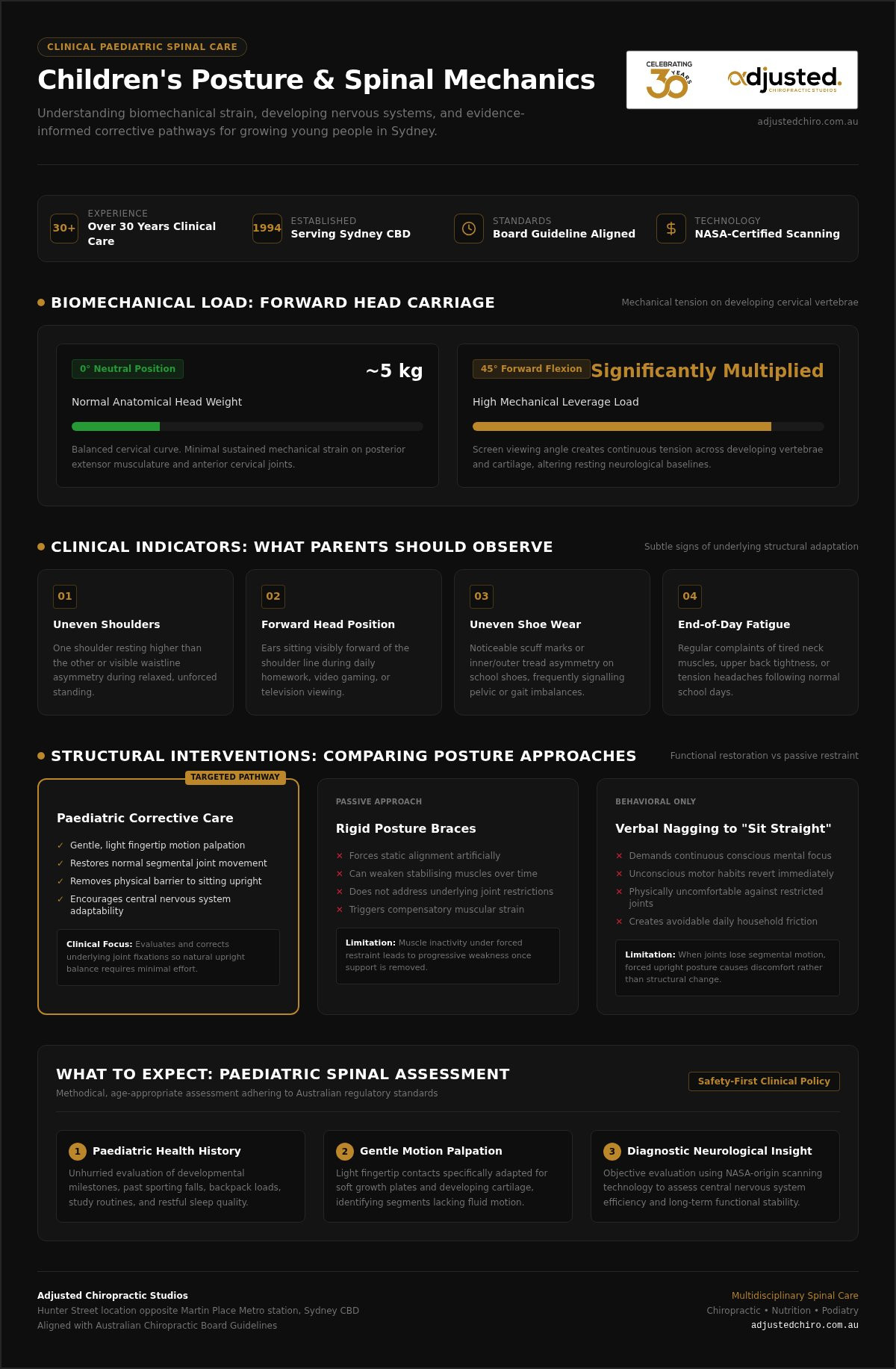
Postural stress refers to sustained mechanical strain that gradually alters spinal curvature and joint mechanics. In growing bodies, this is rarely an isolated muscle issue. When a child looks down at a handheld device for extended periods, the effective weight of their head multiplies. An adult head weighs roughly five kilograms in a neutral position, but tilting forward by 45 degrees increases the mechanical load on the cervical spine significantly. In growing children, whose ligaments and vertebrae are still developing, this forward head carriage places continuous tension on posterior neck extensors and anterior vertebral joints.
Rapid skeletal growth phases make children especially vulnerable to these forces. Bones often lengthen faster than surrounding muscle groups can adapt. This temporary imbalance creates mechanical tug-of-war across the pelvis and spine. A tired slouch after a long school day is normal and resolves with rest. Biomechanical adaptations, however, do not resolve on their own. When joints fixate or compensate over months, poor alignment becomes the body’s new neurological baseline. This is why evidence-informed Chiropractic care focuses on identifying underlying biomechanical dysfunction rather than treating static postures as simple bad habits.
Early Warning Signs Parents Should Observe
Structural adaptation often develops quietly before any discomfort is reported. Watch for these common signs at home:
- Uneven shoulder heights: One shoulder resting noticeably higher than the other, or an asymmetrical waistline during relaxed standing.
- Persistent forward head carriage: The ears sitting forward of the shoulders while studying, gaming, or watching television.
- Uneven shoe wear: Noticeable scuffing or tread wear on the inner or outer edges of school shoes, which often signals pelvic or gait asymmetry.
- End-of-day complaints: Regular remarks about tired neck muscles, shoulder tightness, or tension headaches after the school bell rings.
Why Nagging Children to Sit Up Straight Fails
Telling children to sit upright rarely produces lasting change. Conscious effort requires continuous mental focus; the moment their attention shifts back to a video game or math problem, unconscious motor patterns immediately take over. More importantly, when spinal joints lose their normal segmental motion, sitting upright is physically uncomfortable. Forcing an upright position against restricted spinal joints causes compensatory muscle strain.
A structured corrective pathway addresses the underlying joint mechanics directly. By applying gentle, age-appropriate assessment and paediatric chiropractic for children’s posture, clinicians evaluate whether mechanical restrictions are blocking healthy movement. Restoring natural joint motion removes the physical barrier to balanced posture, making upright alignment natural and sustainable without daily household arguments.
How Paediatric Chiropractic Care Assesses Young Spines
A clinical spinal assessment for a young person begins with an unhurried consultation. Rather than applying generic tests, a clinician examines the child’s developmental milestones, birth history, and physical habits. Gentle motion palpation evaluates how individual vertebrae move through their normal physiological range. In paediatric practice, this involves light fingertip contacts rather than deep pressure, checking for subtle joint restrictions along the cervical and thoracic spine.
Every step adheres strictly to Australian Chiropractic Board guidelines, ensuring care is age-appropriate, evidence-informed, and transparent. Professional associations describe well-regulated paediatric care as both safe and gentle, designed specifically around developing cartilage and open growth plates. This methodical process provides parents with clinical clarity before any care pathway begins, much like our approach to precise spinal adjustment in Sydney.
The Detailed Paediatric Health History
Understanding a child’s spine requires looking at their physical journey from infancy. Clinicians review past falls, sporting collisions, school backpack loads, and screen habits to map biomechanical strain. We also discuss secondary indicators like restless sleeping patterns or recurring growing pains, which frequently coincide with musculoskeletal tension.
Objective Neurological Precision with Digital Scanning
Subjective visual checks cannot reveal how hard postural muscles work to keep a child upright. To eliminate guesswork, advanced clinics employ non-invasive digital surface electromyography. Space Foundation-certified technology evaluates paraspinal muscle activity without radiation, revealing hidden imbalances along the vertebral column.
This data feeds directly into an objective Core Score spinal scan. By calculating neuromuscular efficiency and paraspinal coordination into a clear numerical baseline, parents can see where mechanical compensation occurs and measure measurable progress over time.
Gentle Low-Force Adjustment Techniques for Children
Many parents worry that paediatric care resembles manual adult manipulations. In reality, paediatric chiropractic for children’s posture relies on low-force interventions calibrated specifically for young bodies:
- Light fingertip pressure: Gentle, sustained contacts no heavier than testing the ripeness of a tomato, guiding joints back into motion without twisting.
- Instrument-assisted alignment: Handheld mechanical instruments delivering high-speed, micro-force impulses to specific spinal segments.
- Padded drop pieces: Specialised tables that absorb motion and allow effortless releases without rotational force.
If you’re noticing persistent slouching, booking a gentle assessment at Adjusted Chiropractic Studios can give your family objective answers and clear direction.
Comparing Solutions: Chiropractic Care, Posture Braces, and Exercise
Parents seeking to help their children often explore three paths: over-the-counter posture correctors, enrolment in extra sports, or clinical interventions. While each approach promises a straighter spine, their biomechanical effects differ fundamentally. Evaluating chiropractic for children’s posture alongside lifestyle habits clarifies why passive supports fall short and how active alignment fosters lasting resilience.
The Limitations and Risks of Commercial Posture Braces
Online marketplaces are flooded with elastic supports and posture corrector straps designed to yank rounded shoulders backward. While they provide an instant visual change, passive bracing creates hidden risks for growing bodies. Elastic braces do the mechanical work that spinal stabilising muscles should be performing naturally.
When an external brace takes over, the deep postural muscles around the spine and scapulae decondition. The body quickly adapts to the external prop, meaning children often slump with even less endurance once the support is removed. Crucially, a strap cannot resolve a restricted thoracic vertebra or restore normal segmental motion. It merely masks underlying biomechanical tension with uncomfortable external force.
Targeted Corrective Care Versus General Physical Activity
Swimming, gymnastics, and martial arts build superb cardiovascular health, coordination, and muscular stamina. Many parents assume an active weekend schedule will naturally correct poor posture. However, general physical activity cannot restore motion to a specific, hypomobile spinal segment.
When a child with a restricted vertebral joint participates in sport, their body compensates by moving excessively through adjacent joints. This dynamic reinforces asymmetrical movement patterns rather than correcting them. A clinical spinal health check isolates the exact spinal levels lacking proper motion, which general exercise inevitably misses.
Targeted corrective care pairs the restoration of joint mechanics with proper neurological feedback. Once mechanical joint restrictions are gently resolved, physical activity and active play can finally strengthen muscles in balanced alignment. This collaborative pathway equips young people with the physical freedom to sit, run, and study without tension.
Practical Ergonomic Strategies for Home and School
Clinical care restores spinal motion, but daily home and classroom habits sustain it. Just as adult desk workers benefit from structured biomechanical adjustments in our workplace injury prevention programme, school-aged children need workstations suited to their smaller proportions. Creating a supportive study environment minimises mechanical load during critical developmental windows.
Implementing a clear, five-step ergonomic framework protects growing spines against chronic strain:
- Position computer monitors directly ahead so the top third of the glass sits level with resting eye height.
- Place a sturdy footstool under feet when dining or adult study chairs leave legs dangling unsupported.
- Keep elbows and knees bent at roughly ninety degrees, resting forearms flat along the desk surface.
- Maintain total school backpack load under ten percent of your child’s body weight.
- Introduce a structured three-minute movement break every thirty minutes of focused desk work.
Study Desk and Screen Ergonomics for Students
Laptops and tablets force children to look down, which accelerates forward head carriage. Elevating devices on an angled stand or stack of books instantly neutralises cervical spine tilt. When screens are raised, pair them with an external keyboard and mouse so wrists stay relaxed. Encouraging regular standing breaks prevents prolonged static loading on deep spinal ligaments.
Backpack Safety and Spinal Load Distribution
Carrying a heavy school bag over one shoulder causes the spine to tilt sideways, generating asymmetrical muscular tension across the lumbar spine and pelvis. Ensure your child wears both padded shoulder straps adjusted snugly against the upper back. Heavy items, such as hardback textbooks or laptops, should sit closest to the spine to reduce forward rotational leverage.
Daily Restorative Movement Exercises
Active postural resets help reverse sustained flexion from classroom seating. Have your child perform these simple exercises daily:
- Brugger relief position: While seated or standing, spread fingers, rotate palms forward, drop shoulders away from the ears, and take three deep belly breaths.
- Chin tucks: Gently glide the chin backward without looking down, activating the deep cervical stabilisers.
- Unstructured outdoor play: Climbing, running, and balancing stimulate the vestibular system and restore natural proprioceptive feedback.
If you want to ensure your child’s study setup and spinal mechanics are working together harmoniously, schedule a paediatric spinal health check at our Sydney CBD studio today.
Starting a Corrective Pathway at Adjusted Chiropractic Studios
Every parent wants their child to grow, play, and learn without physical tension holding them back. At Adjusted Chiropractic Studios, our family-focused care philosophy treats developing spines with the deliberate clinical precision they deserve. Operating since 1994, our practice brings over 30 years of clinical experience to the Sydney CBD. We view paediatric spinal support as a true partnership with parents, grounded in thorough education, objective metrics, and unwavering safety.
Safety is the cornerstone of our clinical philosophy. Every assessment and gentle intervention strictly aligns with Australian Chiropractic Board guidelines, ensuring care is calibrated precisely to your child’s age and developmental stage. While many Sydney professionals initially seek our support for desk-related postural strain through adult chiropractic Sydney, they frequently introduce their school-aged children once they understand how early alignment shapes long-term wellbeing.
What to Expect at Your Child’s Initial Visit
An initial paediatric appointment is structured to feel calm, curious, and welcoming. We never rush straight to an adjustment table. Instead, your clinician takes time to explain every tool to your child, making the physical examination an engaging, stress-free experience:
- Comprehensive health history: Discussing birth details, milestone achievements, sporting activities, and daily study habits.
- Postural and functional assessment: Checking pelvic levelling, shoulder height symmetry, spinal motion, and gait mechanics.
- Digital scanning: Capturing objective, radiation-free paraspinal readings to evaluate nerve system adaptability.
Before any procedure begins, we discuss all clinical findings with you in plain language. If a gentle adjustment is recommended, you will understand exactly what is planned and why.
Collaborative Family Wellness in the Sydney CBD
Located on Hunter Street directly opposite the Martin Place Metro station, our studio offers seamless convenience for parents commuting through Martin Place, Wynyard, or Barangaroo. You can easily schedule an assessment during an after-school commute without detouring away from central transport links.
Under our multidisciplinary umbrella, we collaborate internally across podiatry and nutrition, while maintaining strong referral pathways with external paediatric specialists whenever a condition falls outside our clinical scope. Choosing chiropractic for children’s posture means giving your child an objective, supportive foundation for lifelong postural resilience and genuine physical freedom.
Giving Your Child the Foundation for Lifelong Postural Health
Navigating modern school years means balancing classroom hours, portable devices, and heavy school bags. As discussed, constantly reminding your child to sit upright cannot resolve underlying joint restrictions, nor do passive braces build natural muscular stability. By addressing mechanical tension and supporting nervous system adaptability, gentle chiropractic for children’s posture helps young bodies move with ease and resilience.
At Adjusted Chiropractic Studios, your child’s safety is our clinical priority. Operating under a strict safety-first policy aligned with Australian Chiropractic Board guidelines, our team brings over 30 years of clinical experience to the Sydney CBD community since 1994. Using Space Foundation-certified NASA-origin Core Score spinal scanning technology, we replace guesswork with objective, radiation-free insights so you feel completely confident in every step of care.
You can give your child the tools to study, grow, and thrive with lasting physical freedom. Book a paediatric spinal assessment at Adjusted Chiropractic Studios and take a proactive step toward your family’s spinal wellbeing today.
Frequently Asked Questions
Is chiropractic care safe for young children and teenagers?
Yes, paediatric care delivered by a registered practitioner is exceptionally safe and gentle. Evidence-informed chiropractic for children’s posture prioritises non-invasive, low-force techniques adapted to your child’s age and physical development. Clinical guidelines from the Australian Chiropractic Board strictly govern paediatric care. Reviews by Australian health regulators confirm an exceptionally low risk of harm, making gentle joint mobilisation a reassuring choice for growing spines.
At what age can a child have their posture assessed by a chiropractor?
Children can undergo a postural and spinal assessment at any age, from toddlers reaching walking milestones to high-school students facing heavy study loads. While Australian regulations prohibit spinal manipulation on infants under two years of age, gentle observational checks, milestone reviews, and cranial assessments are safe from early childhood. Identifying functional imbalances early prevents minor strains from setting into chronic postural patterns.
How do paediatric chiropractic adjustments differ from adult spinal adjustments?
Paediatric adjustments use sustained, feather-light fingertip pressure or calibrated instrument taps rather than the manual rotational forces sometimes used for adults. An adjustment on a child involves no more force than checking the ripeness of a tomato. There is no twisting or aggressive joint popping. Clinicians simply restore natural joint motion within the child’s comfortable physiological range to encourage proper nervous system feedback.
How many sessions are typically needed to see posture improvements in a child?
Most parents notice positive functional shifts within three to six sessions, though every child’s response depends on their age and daily habits. Longstanding mechanical strain from years of screen use requires structured retraining rather than an overnight fix. Combining clinical chiropractic for children’s posture with active movement breaks and desk ergonomic adjustments ensures stable, long-term spinal support.
Can chiropractic care help correct early signs of scoliosis?
Chiropractic care cannot cure structural scoliosis, but it plays a crucial role in early detection, postural management, and joint mobility. Regular spinal checks help distinguish between functional muscle asymmetries and progressive structural curves. If structural scoliosis is identified, we focus on maintaining spinal flexibility while coordinating directly with paediatric medical specialists for ongoing monitoring or specialised bracing.
Will my private health insurance cover my child’s chiropractic consultation in Australia?
Yes, most Australian private health funds provide rebates for paediatric chiropractic care under their standard extras cover. The exact rebate amount depends on your specific health insurer, policy tier, and annual limits. At Adjusted Chiropractic Studios in Sydney we offer comprehensive statements to allow easy online health fund claims.
What should my child wear to their posture assessment appointment?
Your child should wear loose, comfortable clothing, such as gym shorts, track pants, and a plain t-shirt or school sports uniform. Stiff denim jeans, bulky jackets, and dresses make it difficult to evaluate spinal curvature, rib cage symmetry, and pelvic levelling accurately. Your child may also be asked to remove their shoes and socks during gait and balance assessments.



