

Workplace stress isn’t simply an emotional burden; it is a physical event that anchors itself directly into your spine and nervous system. If you find yourself battling persistent neck stiffness and tension headaches by mid-afternoon, learning how to manage stress in the workplace requires far more than superficial relaxation tips or another cup of coffee.
Most professionals in Sydney know the frustration of attempting generic wellness exercises, only to discover that the underlying muscular strain remains unchanged. When professional pressures mount, sustained sympathetic nerve activity forces your body into guarded, uncomfortable postures that drain your energy. Discover practical strategies to identify physical workplace tension, regulate your nervous system, and restore daily comfort. Ahead, we outline targeted reset routines that address postural stress, counter presenteeism, and support sustainable physical freedom throughout your working week.
Key Takeaways
- Recognise early physiological warning signs, such as cervicothoracic tension and midday mental fog, before they escalate into persistent occupational burnout.
- Understand how prolonged sympathetic nervous system activation drives chronic postural stress, restricted joint mobility, and low-grade systemic inflammation.
- Distinguish between everyday tiredness that resolves with weekend rest and genuine occupational dysregulation requiring targeted physiological intervention.
- Discover practical routines for how to manage stress in the workplace, including desk-side micro-breaks and diaphragmatic breathing techniques that stimulate vagal recovery.
- Explore how structured workplace injury prevention programmes and clinical spinal health checks help restore nervous system balance and long-term physical freedom.
Recognising the Warning Signs of Occupational Strain
Workplace pressure often begins as an invisible load before settling into the body. While acute deadline pressure can temporarily sharpen focus, chronic occupational strain slowly depletes physical reserves. When demands continuously outpace recovery, the body shifts into sustained defensive holding patterns. Understanding the physiological impacts of occupational stress allows you to identify these subtle warning signals early, long before exhaustion forces unexpected time away from work.
Left unchecked, this continuous tension fuels widespread presenteeism across Sydney CBD offices. You remain at your desk, completing tasks, yet functioning well below your standard capacity due to discomfort and brain fog. Knowing how to manage stress in the workplace starts with recognising that these daily physical limitations are early warnings of nervous system overload rather than isolated inconveniences.
Physical Symptoms That Desk Workers Overlook
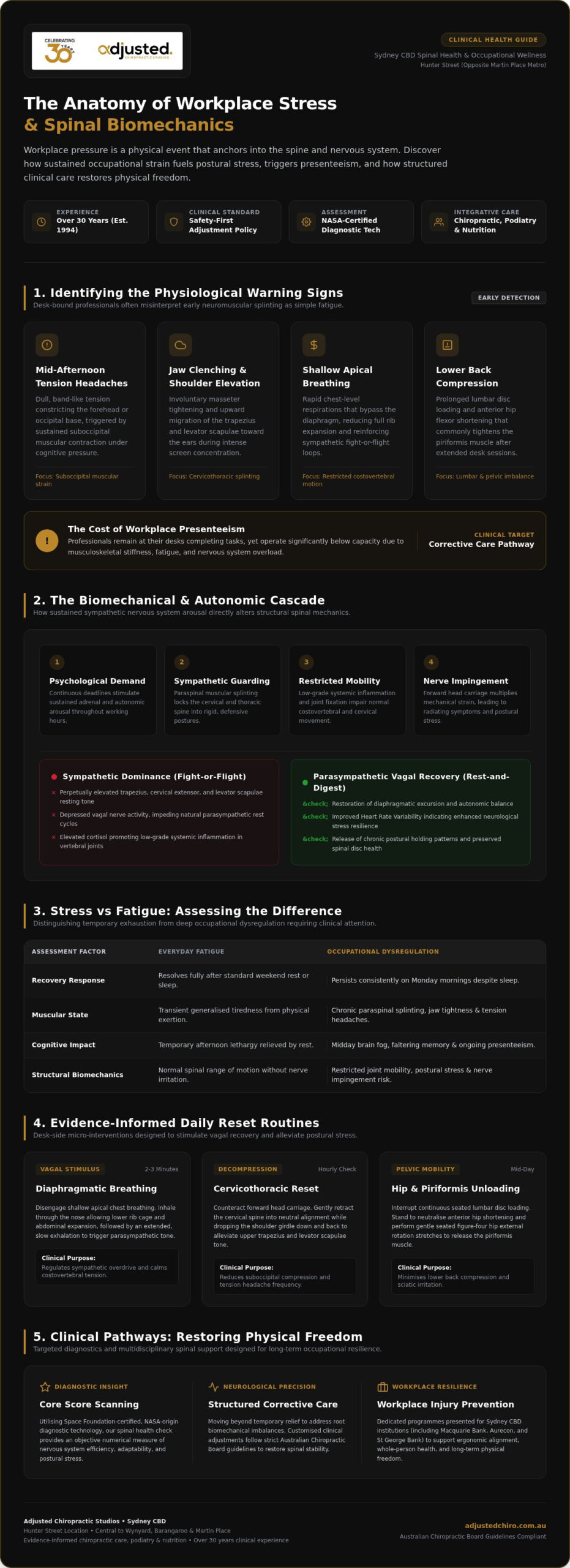
Sedentary office routines combined with cognitive pressure create clear, identifiable physical stress markers. Desk-bound professionals frequently brush off these structural warnings as ordinary office fatigue:
- Mid-afternoon tension headaches: Dull, band-like discomfort tightening around the forehead or base of the skull, often stemming from suboccipital muscular contraction.
- Jaw clenching and shoulder elevation: Unconscious upward migration of the shoulders toward the ears alongside masseter tightening during intense screen focus.
- Shallow apical breathing: Rapid chest-level breathing patterns that bypass the diaphragm, reinforcing an agitated fight-or-flight sympathetic response.
- Lower back compression: Dull, persistent lumbar stiffness or restless legs following prolonged boardroom meetings or continuous spreadsheet analysis.
Cognitive and Behavioural Signs of Overwhelm
Spinal restriction and nervous system irritation quickly influence day-to-day cognitive performance. When prolonged occupational strain exhausts neurological resources, mental clarity begins to erode.
Many professionals notice their working memory faltering, finding it difficult to sequence complex tasks or prioritise urgent client deliverables. Routine communications with colleagues can suddenly trigger outsized irritability or defensive reactions. To push through these slumps, workers routinely rely on repeated afternoon sugar hits or extra flat whites. While stimulants briefly mask fatigue, they amplify nervous system strain without resolving underlying postural stress. Recognising these behavioural adaptations provides the clarity needed to apply effective, lasting solutions for how to manage stress in the workplace.
How Prolonged Work Stress Impacts the Body and Spine
Mental pressure doesn’t remain confined to cognitive thoughts; it actively reshapes spinal biomechanics. Sustained occupational demands trigger persistent sympathetic nervous system tone, locking paraspinal muscles into protective guarding. As highlighted in Safe Work Australia’s guidance on psychosocial hazards, occupational pressures directly compound physical strain and long-term musculoskeletal risk. Prolonged elevation of cortisol promotes subtle, low-grade systemic inflammation throughout vertebral joints, reducing functional mobility and leaving surrounding tissues vulnerable to mechanical irritation.
The Autonomic Nervous System and Muscular Guarding
Under steady fight-or-flight arousal, resting muscle tone in the trapezius, levator scapulae, and cervical extensors remains perpetually elevated. This neuromuscular splinting diminishes vagal nerve activity, suppressing natural parasympathetic recovery during intervals between demanding meetings. Over time, restricted costovertebral joint movement impairs full rib cage expansion, reinforcing shallow breathing habits and upper-body rigidity. Successfully navigating how to manage stress in the workplace requires unwinding these autonomic reflex loops rather than relying on mental willpower alone.
Postural Compensations from Repetitive Computer Work
When psychological demands merge with static desk ergonomics, predictable structural deviations take hold. Forward head carriage places severe mechanical strain on cervical vertebrae, occasionally contributing to localised nerve impingement. Concurrently, prolonged slumped sitting multiplies compressive disc pressure through the lumbar spine while shortening anterior hip structures. This static positioning routinely tightens the piriformis muscle, producing deep gluteal aching and referred discomfort down the leg.
Evaluating your daily workstation makes a measurable difference in breaking this cycle. Reviewing sitting desk or standing desk setups provides practical guidance to mitigate postural stress across long computer sessions. For professionals experiencing persistent joint stiffness and muscular guarding, consulting Adjusted Chiropractic Studios offers an individualised corrective pathway designed to reduce nervous system tension and restore daily physical freedom.
Workplace Stress vs Everyday Fatigue: Assessing the Difference
Every professional experiences ordinary tiredness after an intense project or a demanding week. Normal fatigue is self-limiting; it dissipates with a weekend of restorative sleep, outdoor movement, and proper nutrition. Occupational stress operates differently. It creates deep physiological dysregulation that simple downtime cannot resolve. Learning how to manage stress in the workplace requires recognising when standard rest is no longer enough to reset your nervous system.
When the body remains trapped in chronic guarding patterns, postural muscles work continuously even while you sit motionless at your computer. This muscular hypertonicity quietly drains vital metabolic energy, leaving you exhausted before lunch. While psychological literature, such as the American Psychological Association’s review of evidence-based strategies for coping with work stress, emphasises cognitive boundaries and workload control, identifying physiological markers is equally critical for long-term health.
Evaluating Functional Indicators of Chronic Strain
Subjective feelings of exhaustion often obscure the underlying state of your nervous system. Tracking objective functional indicators provides a clearer picture of your internal recovery capacity:
- Depressed Heart Rate Variability: Consistently low Heart Rate Variability (HRV) scores upon waking indicate that the parasympathetic system is struggling to brake sympathetic arousal.
- Unrefreshing sleep: Waking up stiff, heavy, and drained despite recording seven to eight hours in bed.
- Rapid somatic return: Spinal stiffness, shallow breathing, and jaw clenching that rebound immediately upon sitting at your desk on Monday morning.
When Musculoskeletal Discomfort Signals Nerve Impingement
Discomfort that begins as a vague ache between the shoulder blades can escalate into mechanical dysfunction. When spinal joints become restricted and inflamed from sustained postural load, nearby peripheral nerve roots may become irritated.
It is vital to distinguish general muscular tightness from true nerve impingement. While muscular fatigue produces a dull, diffuse ache across the trapezius or lumbar spine, nerve involvement creates sharp, burning, or electric sensations. You might experience numbness, pins and needles, or subtle motor weakness travelling into the shoulder, down the arm, or into the fingertips. When pain alters how you turn your head, sit, or reach for your keyboard, resting on the couch is no longer an adequate intervention. Correcting these neurological symptoms requires professional clinical evaluation to pinpoint the mechanical cause and restore physical freedom.
Evidence-Informed Strategies to Reduce Workplace Stress Daily
Telling an overloaded desk worker to take a long holiday or meditate for an hour ignores the practical realities of the corporate week. Lasting change comes from micro-habits woven directly into your daily routine. When you introduce small, deliberate pauses to interrupt static postural loading and calm sympathetic overdrive, your nervous system regains the ability to self-regulate under pressure. Discovering how to manage stress in the workplace requires concrete, reproducible habits that fit cleanly between project deadlines and client presentations.
Desk-Side Postural and Movement Micro-Breaks
Remaining anchored to a task for hours locks joints into defensive positions. Implementing targeted desk-side movements preserves joint mobility and prevents chronic muscular shortening:
- Seated thoracic extensions: Every sixty minutes, interlace your fingers behind your head, gently lift your chest toward the ceiling, and extend over the back of your office chair to counter kyphotic slouching.
- Scapular retractions: Draw your shoulder blades downward and together, holding for three seconds while keeping your chin tucked to unload the levator scapulae.
- Standing hip mobilisations: Stand during phone calls or check-ins to extend the hip flexors and relieve pressure around the sacroiliac joints.
Breathing Drills to Down-Regulate Nervous System Tone
Respiratory patterns act as a direct remote control for autonomic balance. When deadline pressure triggers apical chest breathing, your brain interprets the restricted movement as an ongoing emergency.
Break this reflex with physiological sighs. Take a smooth, double inhale through the nose until the lungs are full, then follow with a long, unforced exhale through the mouth. Alternatively, adopt a steady cadence of four-second nasal inhales paired with six-second exhales. Focus on your stomach and lower ribs expanding outward rather than your upper chest rising. Lengthening the exhalation stimulates vagal motor pathways, slowing heart rate and softening muscle tone within two to three minutes.
Dietary Habits Supporting Stress Resilience
What you consume during the business day shapes physiological recovery. Chronic workplace stress elevates circulating cytokines, promoting systemic inflammation that sensitises muscles and joints. Choosing whole anti-inflammatory foods, such as oily fish, leafy greens, walnuts, and berries, gives tissues essential cellular support.
Pair anti-inflammatory nutrition with consistent hydration to maintain intervertebral disc plumpness and cellular waste clearance. Equally vital is limiting late-morning caffeine surges. Piling extra espresso onto an already elevated cortisol baseline spikes adrenal production, accelerating physical tension and afternoon energy crashes. Master practical routines for how to manage stress in the workplace by scheduling a consultation with the multidisciplinary team at Adjusted Chiropractic Studios to align your daily nutrition and spinal movement habits.
Building Organisational Resilience and Professional Spinal Support
Individual micro-habits provide immediate relief, but sustained resilience requires a broader framework. Relying solely on personal coping strategies overlooks the structural demands placed on modern office teams. Effective workplace injury prevention pairs ergonomic design with proactive clinical strategies, ensuring physical strain is addressed before it leads to chronic absenteeism or injury claims. Discovering how to manage stress in the workplace at an organisational level transforms office culture from reactive symptom management into sustainable performance.
Structured Corporate Wellness and Ergonomic Training
Workplace environments benefit significantly from structured education that teaches staff practical self-correction. Practical workshops and custom workstation assessments help teams adjust monitor heights, chair mechanics, and keyboard angles to counter sustained postural stress. Engaging a corporate chiropractor in Sydney allows businesses to bring evidence-based spinal education directly to their staff. Having delivered corporate health talks for major CBD organisations for over 30 years, Adjusted Chiropractic Studios helps Sydney teams identify mechanical risks early, reducing repetitive strain injuries across departments.
The Role of Objective Clinical Nervous System Scans
Subjective feedback often fails to capture early nervous system dysregulation. A methodical spinal health check removes the guesswork by evaluating structural alignment alongside autonomic function. Using Space Foundation-certified, NASA-origin diagnostic technology, Core Score testing maps paraspinal muscle symmetry, postural efficiency, and thermal balance.
These non-invasive sensors detect subtle changes with neurological precision long before overt pain or restricted mobility develop. When combined with a thorough health history, these diagnostic insights guide tailored corrective care pathways rather than generic adjustments. By establishing an objective baseline, an integrated workplace injury prevention programme protects corporate teams and empowers individuals with lasting physical freedom. Understanding how to manage stress in the workplace ultimately bridges personal ergonomic habits with clinical insight, keeping Sydney professionals moving comfortably throughout their careers.
Restore Physical Comfort and Longevity to Your Working Week
Managing occupational pressure isn’t simply an exercise in mental resilience. It requires releasing neuromuscular guarding, restoring postural alignment, and supporting autonomic recovery during the business day. When you understand how to manage stress in the workplace from a structural perspective, chronic neck stiffness and midday fatigue no longer need to dictate your daily productivity.
With over 30 years of clinical experience supporting Sydney CBD professionals, Adjusted Chiropractic Studios provides the methodical guidance needed for sustainable workplace wellbeing. Trusted by corporate teams at Macquarie Bank, St George Bank, and Aurecon, our practice incorporates Space Foundation-certified, NASA-origin diagnostic scanning to assess spinal adaptability and nervous system function with precision. Don’t let desk-bound tension compromise your vitality. Schedule a clinical spinal health check at our Sydney CBD studio today to rebuild your resilience and reclaim genuine physical freedom.
Frequently Asked Questions
Can workplace stress cause physical back pain and neck stiffness?
Yes, sustained workplace stress directly drives muscular bracing and joint stiffness. When mental pressure mounts, the sympathetic nervous system triggers protective guarding across the trapezius, levator scapulae, and lower back muscles. Over time, this chronic contraction compresses spinal discs, limits joint mobility, and restricts blood flow. Understanding how to manage stress in the workplace involves addressing these involuntary neuromuscular tension loops rather than simply attempting to ignore the resulting discomfort.
How do micro-breaks help manage physical stress at an office desk?
Structured micro-breaks reset static postural loading and restore paraspinal blood circulation. Stepping away from the screen for thirty to sixty seconds every hour allows contracted cervical and lumbar muscles to disengage. Brief movement drills, such as standing hip openers or seated spinal extensions, break repetitive muscular strain patterns. These micro-habits prevent cumulative physical fatigue, helping desk workers maintain focus, spinal alignment, and steady cognitive productivity throughout long office days.
What is the difference between ordinary fatigue and chronic stress?
Ordinary fatigue resolves naturally after standard weekend rest, healthy meals, and restorative sleep. In contrast, chronic occupational stress produces deeper autonomic dysregulation that downtime alone cannot repair. Workers suffering from chronic stress often wake up exhausted, experience midday mental fog, and notice that spinal stiffness rebounds immediately upon sitting at their desk. This persistent physical guarding indicates that the central nervous system remains trapped in a prolonged sympathetic fight-or-flight state.
How does breathing affect the autonomic nervous system during work hours?
Your breathing mechanics communicate directly with your autonomic nervous system. Under tight deadlines, desk workers tend to adopt rapid, shallow chest breathing that signals danger to the brain, driving heart rate up and elevating muscle tension. Practising deliberate diaphragmatic breathing or physiological sighs with elongated exhalations activates the vagus nerve. This rapid shift stimulates parasympathetic recovery, lowering heart rate and softening paraspinal muscular contraction in minutes.
What are the benefits of a spinal health check for office workers?
A clinical spinal health check pinpoints hidden biomechanical dysfunction and nervous system irritation before pain limits daily work. Using diagnostic tools like NASA-certified Core Score scanning, practitioners objectively measure paraspinal muscle tone, postural stress, and autonomic balance. For Sydney professionals, this methodical audit identifies the root causes of tension headaches and spinal stiffness, establishing an individualised corrective care pathway that restores long-term physical freedom.
How can employers reduce physical strain across corporate teams?
Employers can implement structured workplace injury prevention programmes and professional ergonomic training tailored to modern office environments. Bringing in experienced practitioners for onsite corporate workshops ensures workstations, monitor levels, and seating ergonomics support proper spinal biomechanics. Educating teams on how to manage stress in the workplace protects staff from repetitive strain injuries, combats expensive presenteeism, and supports sustained team wellbeing across busy CBD offices.
What role does nutrition play in managing workplace stress and inflammation?
Nutrition directly influences how resilient your body remains under sustained occupational demands. Chronic stress elevates circulating cortisol and triggers low-grade systemic inflammation, intensifying joint soreness and muscle tension. Consuming whole, anti-inflammatory foods like oily fish, berries, and leafy greens supports cellular recovery and helps soothe irritated tissues. Staying well-hydrated while moderating mid-morning caffeine spikes stabilises adrenal function, preventing midday energy crashes and physical fatigue during demanding projects.



