

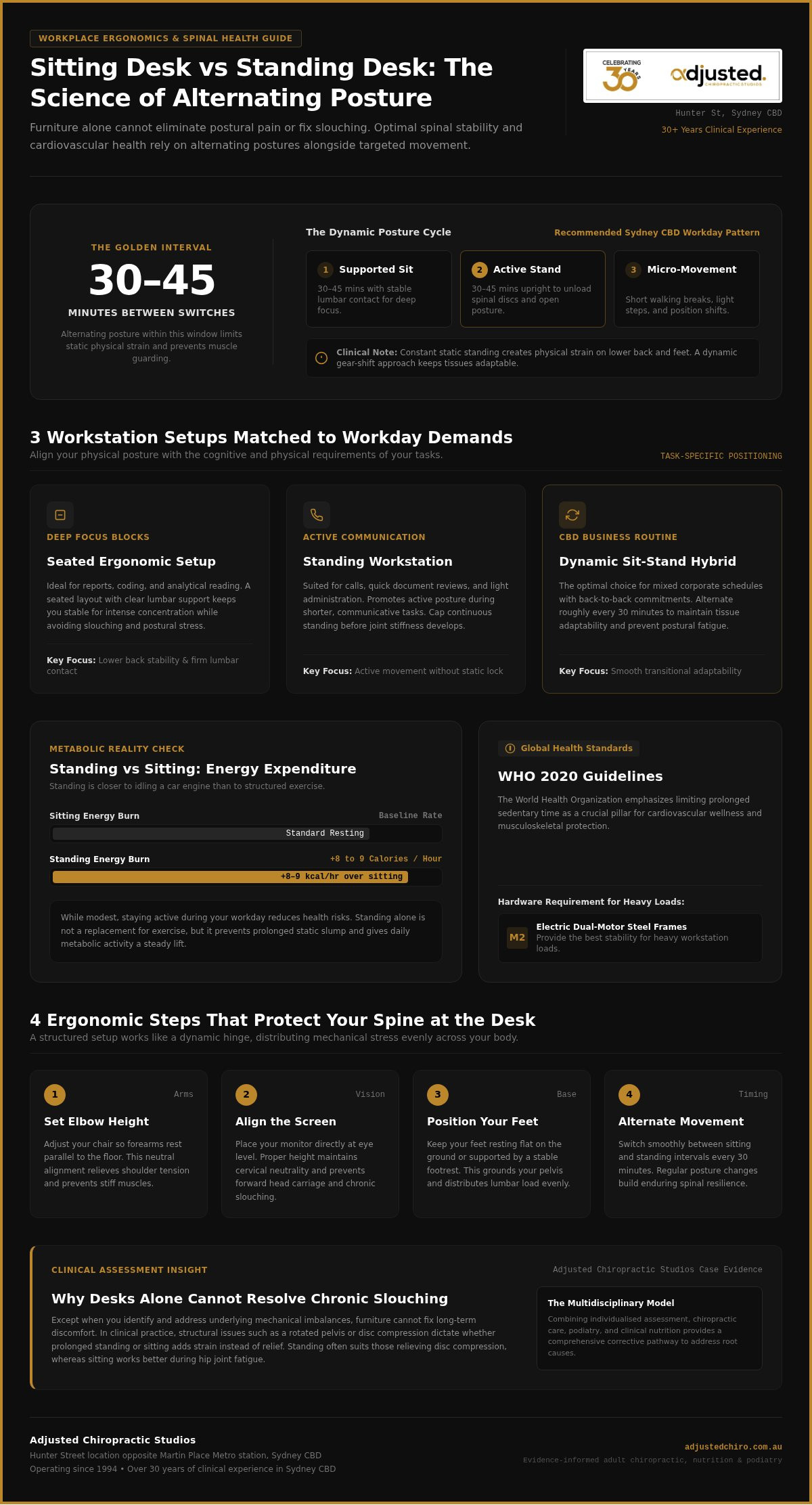
Choosing a sitting desk or standing desk will not, on its own, eliminate posture pain; optimal spinal health requires alternating between sitting and standing every 30 to 45 minutes alongside targeted movement. Constant static standing creates its own physical strain on your body. Combining regular movement with a tailored corrective pathway supports long-term spinal stability.
Key Takeaways: Alternating between sitting and standing every 30 to 45 minutes is the most effective way to reduce spinal strain and prevent postural pain.
- Standing burns only 8 to 9 additional calories per hour compared to sitting.
- Except when you have underlying mechanical imbalances, furniture alone cannot resolve chronic slouching.
- Electric dual-motor steel frames provide the best stability for heavy workstation loads.
- The World Health Organization 2020 guidelines emphasize limiting sedentary time for cardiovascular wellness.
Sitting Desk or Standing Desk: 3 Setups Matched to Your Workday
Your ideal workstation depends on how effectively it minimizes static load on your spine. Corporate health training and client work both show that switching positions through the day limits fatigue, while a locked static posture loads the back.
Typical situations and a concrete fit from the same evidence:
- Long focus blocks (reports, coding, deep reading): a seated layout with clear lumbar support keeps you stable for concentration; set the chair so your lower back stays supported and you avoid slouching (postural stress).
- Calls, quick reviews, light admin: a standing workstation suits shorter, active tasks; cap continuous standing so joint stiffness does not build, then return to a supported seat.
- Mixed Sydney CBD days with back-to-back meetings: a sit-stand hybrid lets you alternate about every thirty minutes so tissues stay adaptable rather than locked in one angle.
Check our desk ergonomics guide to refine screen height, reach zones and stance width for your room.
Think of your desk like a gear shift in a car: staying in one position burns out the engine quickly. A dynamic hybrid setup, with personalised workstation adjustments, reduces everyday physical strain and supports long-term spinal stability.
What a Standing Desk Changes in Your Workday
A standing desk is an adjustable height workstation that allows you to shift smoothly between sitting and standing while working.
Switching positions reduces slouching and boosts active movement during long hours in Sydney offices. Adjusting your setup trades a rigid chair for more options to move. Standing all day still creates new physical demands. Extended standing can cause stiff muscles (muscle guarding) in your lower back or feet if you transition too quickly without support.
A balanced approach works better for your spine. A desk-worker checklist on tailored ergonomic strategy shows how alternating your posture protects long-term health. Moving regularly outperforms static standing alone.
Standing Burns a Few Extra Calories: What That Means for You
Standing burns roughly eight to nine additional calories per hour compared to sitting. While this difference seems modest, staying active during your workday reduces health risks. The World Health Organization 2020 guidelines emphasise limiting prolonged sedentary time to protect long-term cardiovascular wellness.
Subtle posture changes lessen slouching while giving your daily metabolic rate a minor boost. Standing is closer to idling a car engine than to a training session: a little more fuel use than leaving it parked, not a substitute for structured activity.
To shape a functional workspace in Sydney, read this office ergonomics walkthrough. Our studio’s clinical nutritionist collaborates with chiropractors to coordinate care across disciplines.
Tip: Pair metabolic changes with whole-person support from our integrated clinical nutritionist to boost overall energy.
4 Ergonomic Steps That Protect Your Spine at the Desk
Setting up your workspace correctly prevents painful physical strain through your daily routines. From posture workshops in Sydney, proper desk alignment protects your spine and improves daily energy. A structured setup helps you stay active while protecting your back.
- Set elbow height: Adjust your chair so forearms rest parallel to the floor, preventing stiff muscles.
- Align the screen: Place your monitor at eye level to prevent slouching.
- Position your feet: Keep feet flat on the ground or on a supportive footrest.
- Alternate movement: Visit the Home, Adjusted Studio clinic for personalised advice, and switch between sitting and standing every 30 minutes.
This balanced routine works like a dynamic hinge, distributing mechanical stress evenly across your body. Regular posture changes build enduring physical health.
Sit/Stand Timing That Matches Your Back Condition
Your ideal sitting and standing routine depends on your specific spinal health needs and daily habits.
Standing too long can cause stiff muscles, while sustained slouching aggravates lower back issues. A structural engineer who consulted with us dealt with years of intense knee pain that restricted how far she could run. Situation: load intolerance and limited running distance. Solution: whole-body assessment identified a rotated pelvis as the root cause, then targeted care addressed that mechanical pattern. Result: she ran her first half marathon completely pain-free. Addressing underlying mechanical imbalances remains central to long-term stability.
Different spinal issues need tailored desk intervals. Standing can suit people relieving disc compression, whereas sitting often works better during hip joint fatigue. Changing positions helps comfort, yet improper alignment still needs professional assessment before you rely on furniture alone. When professional pressures mount alongside physical discomfort, learning how to manage stress in the workplace becomes equally important for preventing guarded postures that compound spinal strain.
Desk Models That Hold Alignment Under Real Loads
Desk builds vary significantly in stability, adjustment mechanisms, and overall structural durability. Selecting solid materials helps prevent desk wobbling during daily work tasks.
| Desk Type | Frame Construction | Feature Focus |
|---|---|---|
| Fixed Sitting Desk | Solid Timber or Steel | Static Height Stability |
| Manual Standing Desk | Steel Tubing with Hand Crank | Mechanical Height Adjustment |
| Electric Standing Desk | Dual-Motor Steel Frame | Programmable Height Presets |
Heavy monitor arms create extra mechanical advantage, so sturdy frame welds matter if you want less frame flex. Steel frames maintain rigidity under heavy workstation loads. High-quality electric dual-motor systems provide smooth, reliable transitions for active work environments. Poor frame alignment increases slouching over long work sessions.
A solid frame structure supports steady ergonomic positioning throughout your workday. Investing in stability reduces physical strain and helps build resilience against the daily pressures of city life. To evaluate options for your workplace ergonomics training programme, contact our Sydney CBD studio for a personalised quote with exact figures.
When Standing Desks Add Strain Instead of Relief
Standing all day creates heavy fatigue and physical strain throughout your lower back and legs. Sustained upright postures increase discomfort in the spine, hips and feet.
As noted by OSHwiki (2024), static standing over long periods significantly raises the risk of musculoskeletal disorders. Constant body weight causes stiff muscles near the joints. This static load creates excessive postural stress.
In our studio, excessive standing aggravates back discomfort for Sydney CBD workers. Uncorrected postural habits disrupt proper joint tracking. Alternating between sitting and standing offers stronger protection for your spine than upright time alone.
To protect your back, consider a professional ergonomic consultation. Our team conducts an advanced spinal assessment to pinpoint structural imbalances early. A tailored corrective pathway helps restore natural physical freedom. Contact our Sydney team to book your thorough assessment.
Why Furniture Alone Cannot Correct Postural Stress
A new desk cannot resolve chronic slouching without addressing your underlying movement habits. Ergonomic furniture provides support, but active care targets the root biomechanical issues. Clinical experience shows that using only a desk leaves deep spinal tension untreated.
Adjusted Chiropractic Studios maintains a strict policy: we do not perform adjustments until we have fully analysed your results and confirmed that chiropractic care is the appropriate path for your specific health history. We view a desk as a supportive prop, while true spinal health requires active personal habit changes. Proper desk setup works best alongside structured clinical support to build lasting resilience against daily office strain.
Client experiences highlight why tailored, professional guidance matters when improving long-term spinal function.
Among the studio’s Google reviews, Love (5★) wrote:
"I’ve been visiting Ned for over five years, and during that time, I’ve tried other chiropractors, but I always return to him because he truly is the best at what he does. His intuition is excellent, and I’ve recommended him to many others. I highly recommend!"
Long-term clinical relationships show that personalised assessment creates consistent physical resilience beyond temporary furniture changes.
Frequently asked questions
What is a standing desk?
A standing desk is a height-adjustable workspace that allows you to alter your position throughout the workday. Switching your posture reduces slouching and supports healthier movement patterns. At Adjusted Chiropractic Studios, these desks are a helpful tool for Sydney professionals who want to protect their spine during long desk shifts.
What if you don’t have a standing desk?
You can maintain solid spinal health without a height-adjustable workstation by taking regular movement breaks and setting up a clear corrective pathway. Simple habits like walking during calls or stretching gently can reduce stiff muscles and protect your nervous system. Internal wellness still supports your physical structure while you work at a conventional desk.
Do standing desks help with weight loss?
Standing desks assist slightly with energy expenditure, but they are primarily designed to support proper body alignment and reduce physical strain. Changing your daily posture promotes better movement, yet long-term stability requires a holistic approach to lifestyle and nutrition. Dr Eloise Henderson became pain-free and went on to run her first half marathon after addressing her underlying physical limitations, showing how comprehensive care can reshape movement goals.
How many calories does a standing desk burn per hour?
Standing burns only a small number of extra calories per hour compared to sitting down. While it is not a primary solution for weight management, alternating your stance relieves pressure on your spinal joints and nervous system. Small positional shifts build better daily habits over time.
How often should I alternate sitting and standing?
You should change your posture roughly every 30 to 45 minutes to prevent physical strain and keep your spine mobile. Staying in any static position for too long can create discomfort, so moving regularly matters for comfort and joint load.
Finding Lasting Postural Stress Relief in Sydney
Choosing between a sitting desk or standing desk is only the first step toward managing daily spinal strain. Slouching often persists regardless of your workstation setup, which is why the same through-line applies from the opening: alternate every 30 to 45 minutes, add targeted movement, and pair the furniture with a corrective pathway when tissues stay irritable.
In our Sydney CBD clinic, operating on Hunter Street opposite Martin Place Metro station, dynamic movement matters far more than remaining in one rigid position. Operating since 1994, our integrated allied-health team combines over 30 years of clinical experience from Dr Adrian Couzner with holistic guidance from Nutritional Medicine Practitioner Mandy Rancev. Guided by our safety-first clinical adjustment policy, we help you build long-term stability in 2026.
If desk adjustments fail to resolve your back stiffness, book a postural stress assessment at Adjusted Chiropractic Studios.



