
Numbness or tingling in your hands or feet is a symptom, not a diagnosis. Peripheral neuropathy is damage to nerves outside the brain and spinal cord. It can cause pins and needles, burning, numbness or weakness. Diabetes is the most common cause, but pressure on a nerve and other health conditions can also play a part. Identifying the cause is the first step towards numbness and tingling relief in Sydney.
If these sensations affect your work, movement or everyday tasks, it’s understandable to want a clear explanation and a practical way forward. This guide explains how peripheral neuropathy and nerve pain can feel, why symptoms may affect your hands or feet, and how clinicians assess possible causes.
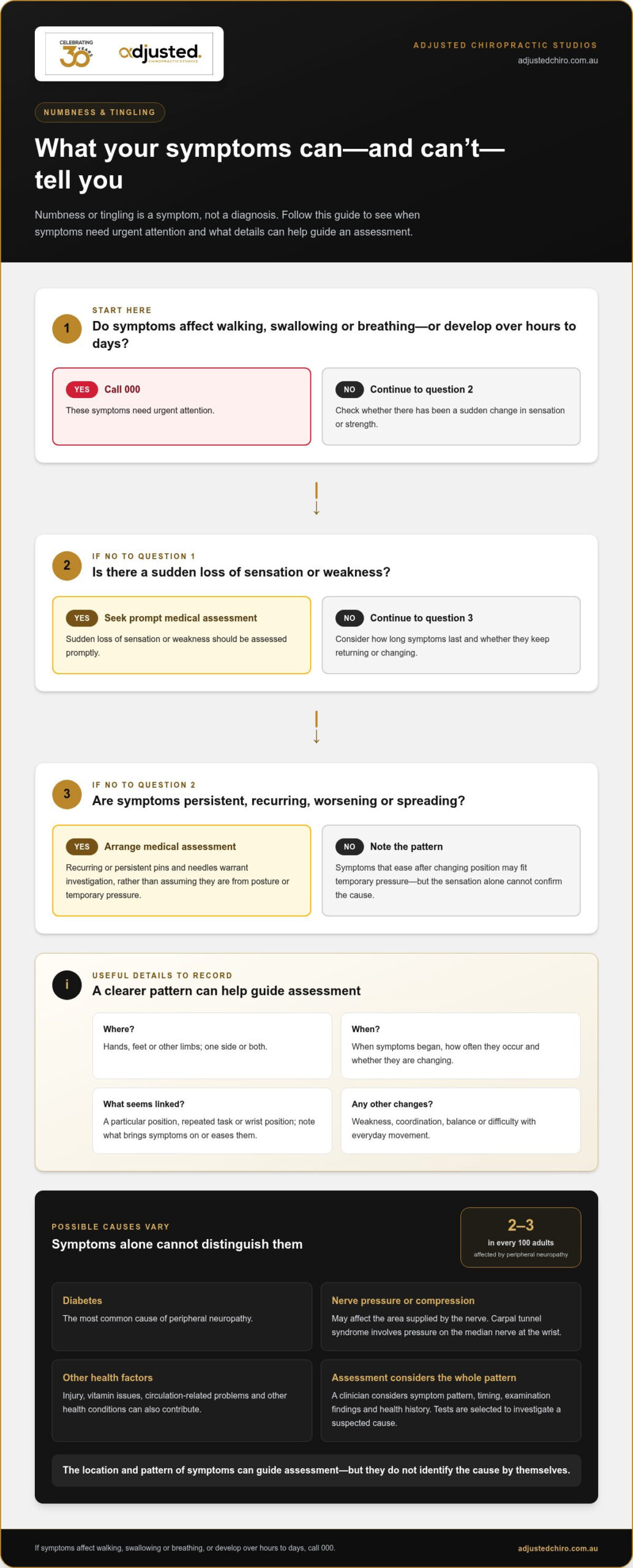
You’ll also learn when symptoms need urgent attention and how care can be guided by the underlying cause. If numbness or weakness affects your walking, swallowing or breathing, or develops over hours to days, call 000.
Key Takeaways
- Peripheral neuropathy involves damage to nerves outside the brain and spinal cord, and may cause tingling, numbness, burning or weakness.
- Diabetes is a common cause, but nerve pressure, injury, vitamin issues and other health conditions can also contribute.
- Notice whether symptoms affect one or both hands or feet, when they occur and whether they’re changing; this can help guide assessment.
- Recurring or persistent numbness and tingling should be medically assessed, rather than assumed to be caused by posture or temporary pressure.
- Call 000 if symptoms affect walking, swallowing or breathing, or develop over hours to days.
What is peripheral neuropathy?
Peripheral neuropathy means damage to nerves outside the brain and spinal cord. It can affect sensation, movement or automatic functions, depending on which nerves are involved.
Peripheral Neuropathy Symptoms
Symptoms may include pins and needles, numbness, burning, painful or electric sensations, and sensitivity to touch. Some people also experience weakness, muscle cramps or aching in their hands and feet. Symptoms vary: one person may feel burning on the soles, while another may struggle to sense temperature.
Peripheral nerves carry messages between the central nervous system and the body, helping muscles move and skin register sensation. When a nerve is damaged, those messages may change or be interrupted. Peripheral neuropathy affects about 2 to 3 in every 100 adults. The location and pattern of symptoms can help guide an assessment, but they don’t identify the cause by themselves.
Distinguishing Causes of Tingling
Nerve compression often causes symptoms in the area supplied by the affected nerve, sometimes after a position or repeated task puts pressure on it. Diabetes-related tingling may affect nerves in the hands or feet, while circulation-related problems can also change sensation. Symptoms alone can’t reliably distinguish these causes; a clinician considers their pattern, timing and your health history.
Notice whether tingling follows a particular position, affects one or both sides, or keeps returning. Symptoms that ease after you change position may fit temporary pressure, while persistent or spreading symptoms need investigation. Diabetes is a common cause of peripheral neuropathy, but the sensation itself isn’t enough to make a diagnosis.
Carpal tunnel syndrome is a type of nerve compression at the wrist. Pressure on the median nerve can cause tingling or numbness in the hand, making tasks like typing or handling tools harder as symptoms worsen. Repetitive wrist positions may be relevant, so note which tasks bring symptoms on and where you feel them.
Weakness can accompany nerve symptoms, even without pain. Peripheral neuropathy may also affect coordination or balance, making walking less steady or everyday movement more difficult. Record when these changes began, whether they’re progressing, and which limbs are affected. This information can help a health professional assess the pattern and decide what further investigation may be appropriate.
Seek prompt medical assessment for sudden loss of sensation or weakness. In Australia, call 000 if symptoms affect walking, swallowing or breathing, or develop over hours to days. Persistent or recurring pins and needles also warrant medical investigation, rather than being assumed to result from sitting awkwardly or repetitive work.
What is Nerve Pain?
Nerve pain occurs when nerves send altered pain signals. It is often experienced as burning, stabbing or electric-shock sensations. It differs from pain caused by a strain or bruise because the nervous system itself may be involved. The affected area, symptom pattern and changes in movement can help a clinician assess possible contributing factors.
Seek medical advice if pain persists for weeks, worsens, spreads or disrupts daily activities. New numbness, tingling or weakness alongside pain also needs assessment. Note whether symptoms make it difficult to grip a mug, fasten buttons or walk steadily. Record when symptoms occur and what changes them, then share that information with your treatment team.
Tests are chosen to investigate a suspected cause, rather than following the same pathway for everyone. A clinician may consider your symptom pattern, health history and examination findings when deciding what to investigate. The aim is to answer a clinical question, such as whether a health condition or nerve compression could be involved.
Medicines for nerve pain aim to reduce abnormal nerve signalling, but don’t necessarily address the underlying cause. Prescription options can include gabapentin, pregabalin, amitriptyline, nortriptyline, venlafaxine or duloxetine. A prescriber considers your symptoms, health history and other medicines when deciding whether a treatment is appropriate. Tell them about side effects or changes in your daily function.
Some treatments are applied to the painful area. Capsaicin cream or lignocaine may be considered for localised symptoms, while lidocaine patches are another topical option. These treatments aren’t interchangeable, and the affected area and symptom pattern matter. Discuss their use with a health professional, particularly if reduced sensation makes it harder to notice skin irritation.
For peripheral neuropathy, duloxetine may be considered, although evidence about its benefit is mixed. Pregabalin, gabapentin, amitriptyline and topical capsaicin or lignocaine may also be used for symptoms, but responses vary. Track changes in pain, sleep and everyday function so your prescriber can review whether the approach is helping.
Paracetamol, ibuprofen and opioids may be less effective for nerve pain because they mainly target inflammation or tissue injury, rather than altered nerve signals. Don’t increase a dose or combine medicines without advice from a prescriber or pharmacist. If symptoms remain difficult to manage, explain how they affect work, sleep and movement to support a review of your care.
Access to rebates depends on the service and your circumstances. Keep any referral details and relevant records together, and ask the treating practice how the consultation process works. Clear information about your symptoms and treatment plan can help you understand the next steps while keeping the clinical reason for care in focus.
Common causes, including diabetes
Identifying why nerve symptoms occur helps determine which steps may address their cause. For people seeking numbness and tingling relief in Sydney, an assessment can consider health conditions, medicines, nutrition and lifestyle together.
Common Causes of Peripheral Neuropathy
Diabetes, including type 1 and type 2, is the most common cause of peripheral neuropathy. In Australia, about 1.3 million people were living with diabetes in 2022-24. Poorly controlled diabetes can worsen nerve pain, so managing blood glucose is part of addressing related symptoms. Other causes include nerve injury, long-term heavy alcohol use, vitamin deficiencies or toxicity, toxins, chemotherapy and some medicines.
Possible Underlying Causes
Peripheral nerves may also be affected by autoimmune diseases, infections, chronic kidney disease, thyroid disease and some cancers. Liver disease and lower-back nerve compression are other possible contributors. The distribution and progression of symptoms can offer useful clues, but can’t establish a diagnosis on their own. Tell your doctor about changes in your health, medication or alcohol use when discussing symptoms.
Vitamin B6 is one example where both too little and too much may matter. Excess B6 can contribute to nerve damage, and labels may list it as pyridoxine, pyridoxal or pyridoxamine. It can also appear in magnesium supplements, migraine medicines, protein powders, diet powders and energy drinks. Bring supplement labels or a written list to an appointment so the ingredients can be reviewed.
When investigating possible causes, clinicians consider the full picture rather than relying on one symptom. They may review your health history, medication and supplement use, known conditions, and when symptoms occur. Tingling that develops after starting a supplement, for instance, provides different information from symptoms that occur alongside a known health condition. Record changes like these and share them during your assessment.
Treatment depends on what is contributing to the nerve symptoms. Managing diabetes or addressing a vitamin deficiency may help reduce peripheral neuropathy symptoms. If excess vitamin B6 is the cause, a doctor may advise stopping supplements containing it. Nerve inflammation associated with chronic overconsumption of alcohol generally improves when the person stops drinking. Don’t stop prescribed medicine without discussing it with a health professional.
Gentle, regular exercise may help reduce peripheral neuropathy pain symptoms, but it doesn’t replace care for an underlying condition. If you’re seeking numbness and tingling relief in Sydney, bring a clear account of your symptoms, medicines and supplements to an assessment. This information can help focus investigation on relevant causes and guide decisions about care.
Numbness and tingling in the hands or feet
Symptoms in your hands or feet can affect grip, walking and awareness of touch. Their location, timing and effect on daily tasks can help a doctor investigate the underlying cause. Note whether symptoms appear while typing, after a walk or at rest, and whether they affect one side or both.
An assessment may begin with your symptoms, health history, lifestyle and possible toxin exposure. Depending on the findings, investigations may include blood tests, MRI, ultrasound or nerve conduction studies. Each test looks for different clues, such as changes in nerve signals or a possible structural cause. The symptom pattern helps determine which investigations may be useful.
For hand symptoms, notice whether wrist position or repetitive activity makes tingling worse. Carpal tunnel syndrome affects the median nerve at the wrist and can interfere with typing, fastening buttons or using tools. During prolonged repetitive tasks, frequent breaks to stretch and move your hands and wrists may help. A supportive wrist brace or splint may keep the wrist neutral and reduce pressure on the nerve.
Foot symptoms need attention because reduced sensation can make it harder to notice heat, pressure or minor injuries. More extensive peripheral neuropathy can increase the risk of wounds, infection and delayed healing. Check your feet regularly for changes, and test bath or washing water with your elbow if sensation in your feet is reduced. This helps avoid relying on sensation that may have changed.
Movement and everyday habits can also support safer function. Gentle, regular exercise may help reduce peripheral neuropathy pain symptoms, while stretching breaks can interrupt prolonged hand and wrist tasks. If your balance feels affected, make your walking environment safer by removing loose rugs and clutter. A non-slip mat in the shower or bath can also help reduce fall risk.
Match the next step to your symptoms. Persistent or frequent numbness needs medical investigation, while changes in hand dexterity or foot sensation should be recorded and discussed with a doctor. Note when symptoms occur, where they spread and whether movement changes them. These details can help a clinician assess your symptoms alongside examination findings.
Care depends on the cause. Carpal tunnel symptoms may be managed with rest, splinting or medicines, while an irritated nerve may need assessment of the pressure affecting it. A clinician can consider your symptom pattern and test results before discussing treatment options. For nerve pain, the aim is to address relevant causes and support safer movement, not simply mask altered sensation.
What causes numbness and tingling in the hands, feet, or limbs?
A change in sensation can occur when a nerve’s messages are reduced, blocked or altered. A pinched nerve is one possible cause, but symptoms can also relate to peripheral neuropathy, diabetes or other health conditions. The affected area and changes over time help shape the investigation.
Pressure on a nerve may cause tingling or numbness along the part of the body it supplies. Lower-back nerve compression, for example, can cause symptoms down a leg, while pressure in the neck may affect an arm. Sitting in one position can temporarily press on a nerve. If pressure is the cause, changing position often restores normal feeling quickly.
Long-lasting or recurring symptoms need a broader assessment. Diabetes can damage peripheral nerves, while nerve injury, vitamin problems, some medicines, toxins and heavy, long-term alcohol use are other possible contributors. Autoimmune conditions, infections, kidney or thyroid disease and some cancers can also be involved. A symptom pattern alone can’t reliably distinguish these causes.
Circulation-related problems may also affect sensation, but tingling alone doesn’t identify a blood-flow problem. Note whether the affected limb also feels unusually cold or changes colour, and whether symptoms begin during activity or at rest. Share those observations with a doctor, along with any health conditions and medicines. Avoid treating a suspected cause without an assessment.
Age can be relevant to assessment, without explaining an individual’s symptoms on its own. A general-practice study found peripheral neuropathy in roughly 8 in 100 people over the age of 55. This finding describes a group, not a diagnosis. For an individual, the distribution of numbness, changes in strength and health history help guide further investigation.
A clinician may review symptom timing, medical history, lifestyle and possible toxin exposure before selecting tests. Blood tests can investigate causes such as diabetes or vitamin deficiency. MRI, ultrasound or nerve conduction studies may be considered when findings point towards nerve compression or damage. Each test answers a different clinical question, so assessment findings guide the next step.
Keep a simple symptom record: where tingling starts, where it spreads, what triggers it and whether it affects walking or hand function. Include relevant injuries, medication changes and known conditions. This helps distinguish a position-related episode from persistent symptoms requiring investigation. Sudden weakness or loss of sensation needs prompt medical attention; call 000 if symptoms affect walking, swallowing or breathing.
If persistent symptoms are affecting your movement, discuss an assessment pathway to help consider possible nerve-related causes.
Adjusted Chiropractic Studios: Adult Chiropractic
Adjusted Chiropractic Studios provides Adult Chiropractic for people whose discomfort may involve spinal or musculoskeletal factors. If tingling occurs alongside neck or back discomfort, an individual assessment can help clarify how movement, posture and daily activities relate to your symptoms.
Care is guided by your health history and clinical findings. Where appropriate, Spinal Adjustments form part of a personalised approach to spinal and musculoskeletal concerns, with safety guiding decisions about care. Numbness can have causes that need medical investigation, so sudden or progressive symptoms need prompt medical attention rather than chiropractic care alone.
To discuss whether Adult Chiropractic may suit your movement concerns, contact Adjusted Chiropractic Studios.
Take a considered next step towards comfortable movement
Ongoing changes in sensation can make ordinary tasks feel less predictable. A useful next step is to connect what you notice with how your body moves during work, exercise and daily routines. For people seeking numbness and tingling relief in Sydney, care should be guided by the cause of the symptoms and the findings of an appropriate assessment.
Adjusted Chiropractic Studios provides Adult Chiropractic and Spinal Adjustments for spinal and musculoskeletal concerns, alongside Core Score Testing. These services may be relevant when symptoms occur with movement or spinal discomfort; they don’t replace medical investigation of possible nerve damage or other health conditions. The right pathway depends on your symptoms and assessment.
If you’d like to discuss whether chiropractic care fits your concerns, contact Adjusted Chiropractic Studios. A thoughtful next step can help you make informed decisions and move forward with greater confidence.
Frequently Asked Questions
When should I see my doctor?
Arrange a medical appointment when symptoms keep returning, interfere with sleep or work, or change over time. Before your visit, note when they began, what you were doing, and whether they affect one or both sides. Bring a list of medicines, supplements and relevant health conditions. These details can help your doctor understand the pattern and decide what needs further assessment.
Which doctor should I see in Sydney for persistent numbness and tingling?
A GP is a practical starting point for persistent symptoms in Sydney. They can review your health history and coordinate appropriate next steps. If you’re referred for a specialist consultation or nerve conduction study, a GP referral is valid for 12 months in Australia. Bring previous test results and a short symptom record, so your appointment can focus on what has changed and how it affects you.
What treatments can relieve numbness and tingling, including physiotherapy and medication?
The care plan depends on the cause, the affected nerves and how symptoms limit your daily activities. A physiotherapist, exercise physiologist or occupational therapist can tailor an activity plan to your situation. Medication decisions are made with a prescriber, who considers your health history, other medicines and response over time. Track changes in sleep, work tasks and movement to help guide reviews.
Are there safe home remedies or exercises for numbness and tingling?
Choose gentle activities that fit your current ability, and stop if they bring on new or worsening symptoms. Ask a health professional to tailor exercises if you have weakness or balance concerns. Check with your doctor before trying massage for nerve pain, as the cause and affected area matter. A regular sleep routine may also help, since poor sleep and stress can make pain feel worse.
What are the risks of ignoring persistent numbness and tingling?
Putting off assessment can leave an underlying condition unidentified and delay care directed at its cause. Neuropathy can also affect autonomic nerves, which help control functions such as digestion, bladder activity and heart rate. Changes may include digestive problems, dizziness or an unusual heart rate. Tell your doctor about these symptoms as well as sensations in your limbs, since they can change the clinical picture.
What tests diagnose the cause of numbness and tingling, and how much do they cost in Sydney?
Assessment may include blood tests, MRI, ultrasound or nerve conduction studies, selected based on symptoms, health history and examination findings. Access to rebates depends on the service and your circumstances; ask the treating practice about the consultation process.