
If you’re considering gentle adjustments for seniors in Sydney, you can book chiropractic care without a GP referral. Gentle techniques may use controlled pressure and rhythmic movement rather than abrupt, forceful actions. The chiropractor should first review your health history and consider which approach may suit you.
It’s understandable to want care that respects your comfort, mobility and health needs. Age alone doesn’t explain what technique is appropriate; your symptoms, medical history and response to movement all matter. This guide explains what a careful assessment involves, how gentle manual adjustments and joint mobilisation work, and what to discuss if you have a condition or take medication that could affect treatment. You’ll also learn how private health cover may apply and what to expect when exploring chiropractic care in Sydney, so you can make a more informed decision about your next step.
Key Takeaways
- A GP referral isn’t needed to book chiropractic care in Australia, though your health history helps guide a safe approach.
- Osteoporosis and blood-thinning medication are important to discuss before treatment, as they can affect technique choices and pressure used.
- Gentle care may involve controlled manual adjustments, joint mobilisation or an instrument-assisted technique, selected to suit your comfort and needs.
- Learn what can influence treatment fees and how private health cover may apply to chiropractic care.
- Consider how an individual assessment can connect your symptoms, movement and health goals to a practical care plan.
Is chiropractic care safe for seniors?
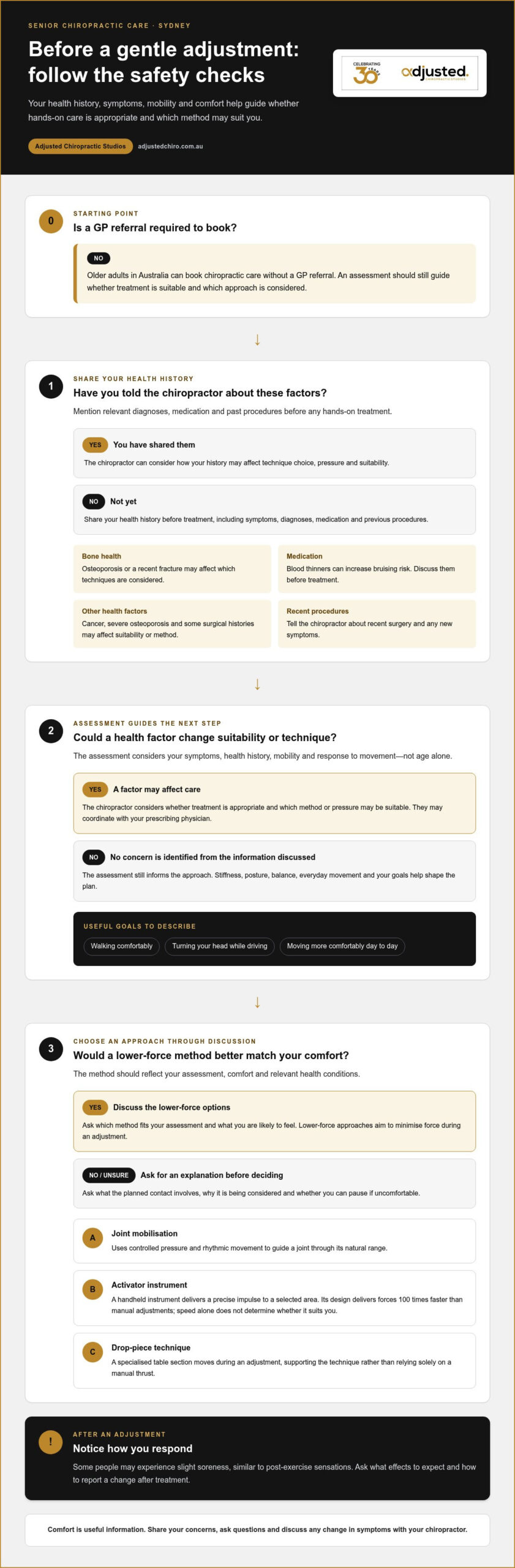
Older adults in Australia don’t need a GP referral to book chiropractic care. Suitability depends on health history, symptoms, mobility and the approach selected, so an assessment should guide any hands-on treatment.
Assessing osteoporosis and blood thinner considerations
Tell the chiropractor if you have osteoporosis, take blood thinners, or have had a recent fracture or surgery. Bone density can affect which techniques are considered for someone with osteoporosis. Blood-thinning medication can increase bruising risk, so discuss it before treatment. Your chiropractor may also coordinate with your prescribing physician as part of your care.
Tailoring assessments and treatment plans
A personalised assessment starts with your health history, including current symptoms, diagnoses, medication and past procedures. The chiropractor can then consider how stiffness, posture, balance and everyday movement affect your goals, such as walking comfortably or turning your head while driving. Ask how the proposed method fits your needs and what changes would prompt a reassessment. For older adults, chiropractic care, physiotherapy and osteopathy are distinct approaches with overlapping musculoskeletal aims; ask how each proposed plan addresses your movement goals and health history.
Using low-force and instrument-assisted methods
Low-force techniques aim to minimise force during an adjustment. Joint mobilisation, for example, uses controlled pressure and rhythmic movement to guide a joint through its natural range. An Activator is a handheld instrument that delivers a precise impulse to a selected area. These options may suit people who prefer less force, but the choice should reflect your assessment, comfort and relevant health conditions.
Checking suitability, risks and side effects
Chiropractic treatment isn’t suitable for every person or condition. Severe osteoporosis, cancer, recent fractures and some surgical histories may affect whether treatment is appropriate or which method is considered. Mention new symptoms and relevant diagnoses before any adjustment, rather than assuming age alone determines suitability.
Some people may experience slight soreness after an adjustment, similar to post-exercise sensations. Ask what effects to expect and how to report a change after treatment. To find a qualified chiropractor in Sydney, identify a practitioner regulated by the Chiropractic Board of Australia, then ask about their experience assessing older adults and adapting care for osteoporosis or blood-thinning medication. Check their registration, qualifications and experience with the specific concerns you want addressed before agreeing on a plan.
Activator technique for seniors and sensitive patients
An Activator instrument and a drop-piece table offer different ways to deliver gentler chiropractic techniques. The suitable method depends on your comfort, movement and treatment goals.
Using Activator and drop-piece techniques
The Activator Technique uses a handheld instrument to deliver a precise impulse to a selected area. Its design delivers forces 100 times faster than manual adjustments, offering a distinct way to apply an adjustment. The instrument’s speed doesn’t determine whether it suits you; your symptoms, health history and response to assessment matter. Ask which area is being treated and why this method fits your needs.
A drop-piece technique uses a specialised table section that moves during an adjustment. The table’s movement supports the technique rather than relying solely on a manual thrust. These are different methods, not interchangeable labels. Discuss what you’ll feel, how the table or instrument will be used, and whether you can pause if uncomfortable. Clear explanations help you make an informed choice.
Before treatment, describe sensitivity to pressure, difficulty changing position, or discomfort when lying face down. For example, restricted shoulder movement may mean your positioning needs adapting before an instrument or table technique is considered. The chiropractor can explain the planned contact and invite feedback during treatment. Comfort is useful information, not something to ignore.
Supporting mobility and active ageing
Mobility matters in everyday tasks, such as reaching a shelf, turning to check traffic, or getting up from a chair. An Activator adjustment may form part of care focused on movement, but it isn’t a substitute for regular activity. Discuss how spinal stiffness affects your routine and what practical movement goals matter to you. A plan should make room for activities you can manage safely.
Walking can be built up gradually: start with short distances, then increase them as comfortable. For balance practice, try standing on one leg while holding a stable surface, or walking heel-to-toe with support nearby. Chair yoga uses seated poses or a chair for support. These examples let you match movement to your balance, confidence and mobility.
Water-based activities can reduce pressure on joints, making pool movement an option to discuss if land-based activity feels uncomfortable. Gentle movement in water may let you practise range of motion while supporting your body. Ask how activity can fit alongside treatment, rather than treating an adjustment as the whole plan. Posture, balance and regular movement all matter to staying active.
For a clearer picture of hands-on care options, explore spinal adjustments and discuss which approach aligns with your movement needs.
Back and neck pain, stiffness, and reduced movement
Back or neck discomfort can make everyday movements harder, from standing at the kitchen bench to turning your head. A useful first step is identifying which movements trigger symptoms and how they affect your routine.
Addressing age-related pain, arthritis and stiffness
Arthritis, muscle tension and joint stiffness can make reaching overhead or getting dressed uncomfortable. Soft tissue therapy may help older adults with arthritis, muscle stiffness and joint pain. Gentle stretching, especially around the shoulders and hips, can improve joint range of motion, ease muscle tension and support general wellbeing.
Notice when stiffness appears: after sitting, during a walk, or when rising from a chair. Share these examples alongside your health history and current medication during an assessment. That context helps clarify what limits movement and whether hands-on care or another approach may suit your needs.
Keep movement within a comfortable range rather than forcing a stretch. For example, slowly raising your arms only as far as comfort allows may be more manageable than reaching overhead quickly. A chiropractor can discuss suitable shoulder and hip movements based on your mobility and symptoms.
Managing back pain and sciatica
Lower-back pain may affect standing, walking or turning in bed. Sciatica describes radiating symptoms that travel from the lower back towards the leg; nerve impingement means compression or irritation of a nerve that can cause radiating symptoms. Describe where discomfort travels, when it starts, and whether movement changes it.
Spinal adjustments may relieve pain by reducing pressure on nerves and restoring spinal alignment. The assessment should consider your symptoms and movement before selecting a method. For example, difficulty standing for meal preparation gives more useful context than simply saying your back hurts.
Pain management can combine appropriate hands-on care with practical movement changes. Note which daily tasks are affected, such as walking to the bus stop or carrying groceries. Gentle shoulder and hip stretches may support range of motion and reduce muscle tension, while changes to how you sit or stand can help you manage postural stress.
Keep a brief record of symptom patterns, activities and medication use to discuss at appointments. This can help you notice whether walking, rest or a particular movement changes your comfort. If symptoms change or begin affecting new activities, include that detail in your next health discussion.
Consider relief alongside function: can you stand more comfortably, turn your neck, or manage a familiar walk? These practical markers help you and your chiropractor review progress without relying only on a single pain rating. Your plan can then be discussed in light of your response and everyday goals.
What does it cost, and does private health cover it?
Many private health funds provide rebates for chiropractic services, depending on your policy. Check whether chiropractic is included, which services qualify, and whether waiting periods or annual limits apply. Fund rules vary, so the benefit available depends on your level of cover and the service received.
Before an appointment, review your fund’s claiming requirements. Some policies specify how claims are lodged or what information a receipt must contain. Keeping your membership details handy and understanding your fund’s process can make it easier to manage a claim after care.
Your first appointment usually includes discussion of your concerns and a clinical assessment before treatment is recommended. Bring a current medication list and relevant information about conditions such as osteoporosis. Mention other health professionals involved in your care, including a GP or specialist. With your consent, communication between practitioners can help keep decisions informed by relevant aspects of your health.
Useful questions include: “What will the assessment involve?” and “How does my health history affect the approach you recommend?” You can also ask how the plan will be reviewed and what changes in your symptoms should be reported. These questions clarify the clinical process without assuming that one technique suits everyone.
For example, explain if neck stiffness affects turning while driving, or if discomfort makes a regular walk harder. Describe when the issue occurs and which activities you want to manage more comfortably. Those details connect your care discussion to day-to-day function and support communication with your healthcare team.
The clinic states that chiropractic care in Australia may be covered by private health insurance, Medicare or the NDIS in some cases. Confirm the applicable fee and any coverage directly with the clinic and your insurer or relevant program, as eligibility can depend on individual circumstances.
Gentle manual adjusting
Gentle manual adjusting doesn’t have to mean a quick, forceful movement. Techniques for older adults can use light, precise contacts or controlled pressure, with the method shaped by assessment findings and your comfort. The key question is what the practitioner plans to do, where they’ll apply contact, and how you can communicate if discomfort arises.
Joint mobilisation uses controlled pressure and rhythmic movements to help restore normal joint movement patterns. A practitioner might guide a stiff shoulder through a comfortable range rather than apply an abrupt movement. This hands-on method can be adapted to the joint and your response. Ask which area is being addressed and what sensation to expect before treatment begins.
Some approaches use light contacts along the spine. Network Spinal, for example, is described as using precise, light contacts, while SOT does not require forceful manipulation. These are named approaches, not a guarantee of a particular result. Your assessment should connect the proposed technique to your concerns, such as stiffness when turning your head or discomfort while standing.
Gentle myofascial release applies pressure to fascia, the connective tissue around muscles, to address tension and support function. For example, a practitioner may use gentle pressure around a tense area rather than direct force on a sensitive joint. Explain what feels tender and whether pressure changes your symptoms. Clear feedback helps guide the amount and location of contact during a session.
Manual care should fit into a wider plan for daily movement and quality of life. If discomfort makes reaching a cupboard or getting out of a chair difficult, describe that specific task during assessment. The chiropractor can relate the movement limitation to the area being examined and explain how treatment may support your goals. Care should not be presented as reversing age-related structural changes.
Before agreeing, ask what the adjustment involves, why that method was chosen, and what alternatives may suit your needs. You can also agree on a simple signal to pause, such as raising your hand, and request a change in position if lying down causes discomfort. These practical steps keep communication clear throughout hands-on care.
For an individual discussion of gentle spinal adjustment options, share your movement concerns and ask how manual care could fit your goals.
Adjusted Chiropractic Studios: Adult Chiropractic
Adjusted Chiropractic Studios provides Adult Chiropractic for older adults seeking individualised support with spinal and musculoskeletal concerns. Care begins with an assessment of your health history, symptoms and movement goals, helping guide whether Spinal Adjustments are appropriate and which approach may suit your needs.
If stiffness or discomfort affects everyday activities, such as walking, reaching or turning your head, share those specific challenges during your appointment. Core Score testing is also available as part of assessment. Your care plan is shaped around your circumstances and clinical assessment.
Contact Adjusted Chiropractic Studios in Sydney CBD to discuss your concerns and book an appointment.
Take a considered next step towards easier movement
Choosing care can begin with a practical goal, rather than a particular technique. Think about the movement you’d most like to manage more comfortably, whether that’s getting out for a walk, turning with ease or handling daily tasks. This gives your next conversation a clear focus and keeps attention on what matters in your routine.
If you’re considering gentle adjustments for seniors in Sydney, bring your questions and describe what you hope to do more comfortably. A thoughtful discussion can help you understand the proposed approach and decide whether it feels right for your needs. You’re entitled to take time to consider your options and speak up about your comfort throughout care.
For a personal conversation about your next step, contact Adjusted Chiropractic Studios. A clear goal and an open discussion can help you move forward with greater confidence.
Frequently Asked Questions
Do I need a referral from my GP?
No, you can book directly with a chiropractor in Australia without a GP referral. If your GP already manages a chronic condition, bringing relevant notes or a current medication list can help explain your health needs. For example, mention recent changes in mobility or treatment so your chiropractor can consider them during your assessment. A referral isn’t required to start a conversation about chiropractic care.
Why Chiropractic Care for Mature Adults?
Chiropractic care assesses and manages conditions affecting the spine, nervous system and musculoskeletal system. For mature adults, this may be relevant when discomfort affects tasks such as walking, dressing or turning to look over a shoulder. The practical value is a focused assessment and discussion of options around your needs, rather than assuming that age alone explains a symptom or determines suitable care.
Can Chiropractic Care Help with Posture Correction?
Chiropractic care may form part of a plan addressing posture-related discomfort and movement. An assessment can consider how your usual positions, such as leaning over a kitchen bench or sitting for long periods, relate to your concerns. Care may combine hands-on adjustments with posture correction and lifestyle guidance. The aim is to address your functional concerns, not promise a permanently “perfect” posture.
Does Chiropractic really help lower back pain?
Chiropractic care may help manage lower-back pain, but the right approach depends on your symptoms and assessment. Explain what makes it worse, such as standing to prepare dinner, and whether it travels into your hip or leg. Back pain and sciatica are among the conditions chiropractors manage. Share changes in your symptoms and daily function so these can inform discussions about care.
Does it involve cracking or manipulation?
Not every chiropractic adjustment involves an audible crack. Techniques vary, and some use gentle contact or controlled movement rather than a forceful thrust. Ask the chiropractor to describe the proposed method in plain language before treatment, including what you might feel and whether another approach is available. You can also say if you prefer not to have a technique involving a quick movement.
How Many Chiropractic Sessions Will I Need?
There isn’t one set number of sessions for every person. The recommended care depends on your symptoms, health history, goals and response over time. Ask how progress will be reviewed and what changes would affect the plan. For instance, if your goal is walking to local shops with less difficulty, discuss whether that activity changes between appointments and use it as a practical marker.
What are gentle chiropractic adjustments for seniors?
For seniors considering gentle adjustments in Sydney, the phrase generally describes chiropractic techniques adapted to a person’s comfort, health history and mobility. Options may include controlled manual contact or an instrument-assisted approach. Gentle care does not mean using one standard method for everyone. Ask how a proposed technique relates to your particular concern, such as neck stiffness when checking traffic or discomfort when reaching.
Are chiropractic adjustments safe for older adults?
Chiropractic adjustments are generally considered safe, but they can carry risks that should be discussed before treatment. A thorough history and examination help identify relevant concerns, including osteoporosis, recent fractures, medication use or previous surgery. Temporary soreness can occur after treatment. Ask the chiropractor to explain the possible risks and benefits for your situation, and make sure your questions are answered before deciding whether to proceed.