Chiropractic care can be considered during pregnancy when the approach is adapted to your changing body and informed by an individual assessment. Whether chiropractic is safe during pregnancy depends on your health history, symptoms and the techniques used, rather than a one-size-fits-all adjustment. Gentle care may include positioning and equipment designed to support your abdomen and avoid unnecessary pressure.
It’s understandable to want reassurance before adding hands-on care to your pregnancy routine. This guide explains what to discuss if you have pregnancy complications or other medical concerns, how a chiropractor’s training and pregnancy-specific equipment can shape your care, and which gentle techniques may be used. It also looks at breech presentation and the limits of claims about helping a baby turn, so you can approach that discussion with clear expectations.
Key Takeaways
- Learn how the Webster Technique, Activator Method and pelvic blocking differ, and why breech care should not be presented as a guaranteed way to turn a baby.
- Understand which pregnancy-related changes can affect the back, pelvis and joints, and what mild reactions may follow an adjustment.
- Know when pregnancy complications or medical concerns make a discussion with your healthcare provider an important part of planning care.
- See how a chiropractor can adapt positioning, pressure and techniques to your changing body and comfort.
- Discover what pregnancy-specific equipment and additional training can contribute to a more considered prenatal appointment.
What about chiropractic care and breech deliveries?
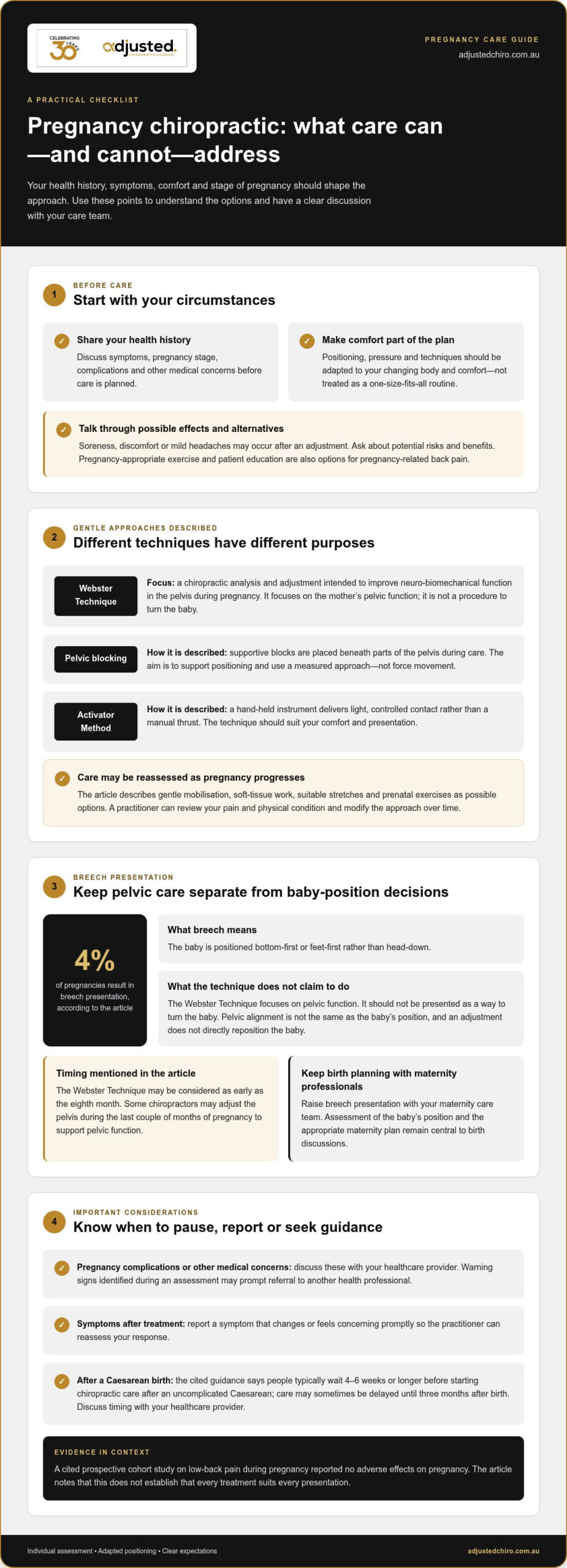
Breech presentation means a baby is positioned bottom-first or feet-first rather than head-down. Chiropractic approaches such as the Webster Technique focus on pelvic function, but should not be presented as a way to turn a baby.
For pregnancy-related back pain, alternatives include pregnancy-appropriate exercise and patient education. Discuss these options with your maternity care team, who can consider your symptoms and pregnancy circumstances.
Pelvic balance and the Webster Technique
Pelvic balance describes the relationship between pelvic structures and the muscles and ligaments that support them. The Webster Technique is a chiropractic analysis and adjustment intended to improve neuro-biomechanical function in the pelvis during pregnancy. Its focus is the mother’s pelvic function, not manually turning the baby. This distinction clarifies what the technique aims to address when breech presentation is part of the discussion.
Pelvic alignment and intrauterine constraint
Intrauterine constraint describes the idea that limits around the uterus may affect a baby’s space and movement. Some chiropractic explanations link pelvic alignment and ligament tension with those limits. However, pelvic alignment is not the same as the baby’s position, and an adjustment does not directly reposition the baby. Claims about alignment should not replace assessment of breech presentation by maternity professionals.
Pregnancy changes the body’s demands. As the baby grows, the mother’s centre of gravity shifts, while relaxin softens pelvic ligaments in preparation for birth. These changes can contribute to instability, lower-back discomfort and pelvic girdle pain. Pain around the pubic symphysis may make walking, climbing stairs or turning in bed difficult.
After an assessment, gentle chiropractic care may be considered for musculoskeletal discomfort. Pelvic blocking uses supportive blocks beneath parts of the pelvis during care. The aim is to support positioning and use a measured approach, not force movement. An Activator Method adjustment uses a hand-held instrument with light, controlled contact rather than a manual thrust. The technique should suit the patient’s comfort and presentation.
Around 4% of pregnancies result in breech presentation. The Webster Technique may be considered as early as the eighth month, but this does not make it a breech-turning procedure. Some chiropractors may adjust the pelvis during the last couple of months of pregnancy to support pelvic function. A baby’s position and the appropriate maternity plan remain central to birth discussions.
If breech presentation concerns you, raise it with your maternity care team and ask how it affects birth planning. Chiropractic care may address associated back or pelvic discomfort, while the Webster Technique, Activator Method and pelvic blocking describe different approaches. Understanding their purposes helps distinguish pain care from decisions about the baby’s position.
Is chiropractic care during pregnancy safe?
Many people ask, “Is chiropractic safe during pregnancy?” Whether chiropractic care is appropriate during pregnancy depends on the individual’s health and circumstances. That does not mean every technique suits every person. A suitable approach considers your health history, symptoms, comfort and stage of pregnancy, then adapts positioning and treatment to those factors.
Pregnancy changes how the body carries load. As the baby grows, the mother’s centre of gravity moves forwards, increasing the lower-back curve and pressure on joints and ligaments. Chiropractic care may address related musculoskeletal discomfort, including pregnancy-related low-back pain. Treatment should be adapted to your changing body, not delivered as the same routine adjustment to everyone.
Research has examined chiropractic treatment for pregnancy-related low back pain. A systematic review appeared in the Journal of Manipulative and Physiological Therapeutics, 31(6), pages 447-454. A prospective cohort study on low back pain during pregnancy appeared in the same journal, 37(6), pages 418-425. The cited study reported no adverse effects on pregnancy. These findings inform the discussion, but they do not establish that every treatment suits every presentation.
Soreness or discomfort can occur after an adjustment. Mild headaches have also been reported; available information describes them as short-term and not serious. Know these possible effects before care begins, and ask your chiropractor to explain potential risks and benefits before proceeding. If a symptom changes or feels concerning after treatment, report it promptly so the practitioner can reassess your response.
Safety also means recognising when chiropractic treatment is not the immediate priority. Discuss pregnancy complications and other medical concerns with your healthcare provider. Warning signs identified during an assessment may prompt referral to another health professional. Screening helps distinguish musculoskeletal concerns, such as back discomfort, from symptoms that need a different clinical response.
Care can be adapted at different stages of pregnancy, from early pregnancy through the final weeks. A practitioner can reassess your pain and physical condition as pregnancy progresses, then modify the approach. Gentle mobilisation, soft-tissue work, suitable stretches and prenatal exercises are options described for pregnancy care. A considered plan does not assume one technique suits everyone.
Postnatal care also needs to account for recovery. After an uncomplicated Caesarean birth, the cited guidance says people typically wait 4-6 weeks or longer before starting chiropractic care; care may sometimes be delayed until three months after birth. These timelines are not interchangeable rules for every birth. The type of birth, healing and symptoms shape the assessment, and manual therapy is described as safe before, during and after pregnancy.
Importance of discussing care with a healthcare provider
Pregnancy complications and other medical concerns should inform decisions about chiropractic care. Discussing them with your healthcare provider helps put your symptoms and treatment options in context.
Choosing an experienced pregnancy chiropractor
A chiropractor should assess your health history, current discomfort and physical changes before planning treatment. Tell them about your pregnancy, symptoms and any advice from your maternity care team. This context helps guide screening and an adapted approach. If an assessment identifies warning signs, chiropractors can refer patients to other healthcare professionals rather than treating symptoms outside their scope.
Some conditions need specific discussion before treatment. If you have placenta previa, vaginal bleeding, an ectopic pregnancy or a history of premature labour, get approval from your healthcare provider before chiropractic care. Pregnancy complications and other medical concerns also warrant discussion. Sharing these details supports informed decisions and helps distinguish routine musculoskeletal discomfort from symptoms needing another clinical response.
Care tailored to trimester and comfort
Trimester-aware care adapts techniques to your changing body, symptoms and comfort at each stage. As pregnancy progresses, your centre of gravity can affect posture and joint loading. A practitioner can reassess your physical condition and adjust positioning or techniques. Speak up if a position causes discomfort; that feedback is relevant to the assessment, not something to ignore.
Chiropractic care may be considered from the first trimester through the final weeks, with techniques adapted to each stage of pregnancy. Care can also begin before conception. There is no single start point that suits everyone: symptoms, health history and pregnancy circumstances inform the discussion. In Australia, you do not need a GP referral to see a chiropractor, though medical concerns still merit discussion with your healthcare provider.
Before an appointment, prepare a clear account of your symptoms and relevant pregnancy concerns. Note, for example, whether back discomfort changes with walking, sitting or turning in bed. Include any known complication, such as placenta previa, and advice from your maternity care team. These details help the chiropractor assess your presentation and decide whether referral or coordinated care is appropriate.
Evidence about chiropractic care can inform a conversation, but it cannot replace individual assessment. A chiropractor screens for warning signs, considers your health history and reassesses your response as care continues. If a new concern arises during pregnancy, update both your chiropractor and healthcare provider. This keeps decisions grounded in your changing circumstances rather than a technique or schedule that may no longer suit you.
Prenatal chiropractor qualifications and gentle techniques
Suitable care uses gentle, adapted techniques, such as mobilisation and soft-tissue work; positioning should avoid unnecessary pressure on the abdomen. A technique that causes discomfort should be changed, and care should reflect your health history and assessment.
Pregnancy-specific qualifications and gentle care
Pregnancy-specific training builds on chiropractic knowledge by focusing on the changing needs of pregnant patients. Chiropractors are trained to adapt techniques for pregnancy, while additional credentials can indicate advanced study. The International Chiropractic Pediatric Association (ICPA) describes CACCP as a certification reflecting advanced training, and DACCP as a diplomate designation reflecting its highest level of advanced training. These distinctions help explain what further education may involve.
For breech presentation, the Webster Technique is a chiropractic analysis and adjustment intended to improve neuro-biomechanical function in the pelvis. It addresses pelvic function, not direct turning of the baby. The technique’s name or a practitioner’s training should not be taken as a promise of a particular birth position.
Low-force techniques and positioning
Low-force care uses measured contact and positioning to reduce unnecessary strain on the pregnant body. A practitioner may choose gentler mobilisation or soft-tissue techniques instead of a stronger adjustment. Pregnancy pillows or a specially adjusted table can support the abdomen, while a seated approach may suit someone who finds lying down uncomfortable. Positioning should respond to the individual, not follow a fixed routine.
Comfort provides practical feedback during an appointment. If lying face-down or turning onto one side causes discomfort, for example, the practitioner can change your position or choose another technique. A pregnancy pillow with a hollow centre may allow face-down positioning without pressure on the baby. Your response helps guide changes to the session.
Adapted manual therapy techniques
Adapted manual therapy means changing hands-on care to suit your health history, examination and current comfort. During pregnancy, this may involve gentler mobilisation and soft-tissue work to address musculoskeletal concerns while limiting unnecessary pressure. The practitioner should explain the approach clearly, so you understand what area it targets and can describe how it feels.
A useful appointment includes reassessment rather than automatically repeating one technique. The chiropractor can ask about your symptoms, observe how a position feels and modify the plan when needed. For example, a seated procedure may be more comfortable than lying down later in pregnancy. Changes in symptoms or comfort help guide adapted care.
For breech concerns, keep the purpose of chiropractic techniques distinct from maternity assessment and birth planning. The Webster Technique addresses pelvic function; it does not replace care that considers the baby’s position. Understanding this difference supports informed discussion about both musculoskeletal discomfort and pregnancy care.
Chiropractor training and pregnancy-specific equipment
Pregnancy changes spinal loading, joint movement and comfortable treatment positions. A chiropractor should adapt assessment and equipment to those changes, rather than treating every pregnant woman in the same way.
Chiropractors are trained to adapt techniques for pregnant patients. Pregnancy-specific education can add knowledge about changing anatomy, pelvic function and suitable positioning. A technique that feels comfortable early in pregnancy may not suit you later, as your abdomen grows and gravity shifts forward. Training supports thoughtful decisions about both the method and your position.
Equipment is part of that decision. A pregnancy pillow with a hollow centre can support face-down positioning without pressure on the baby. An adjustable table can accommodate a pregnant person’s changing body, while seated procedures offer another option when lying down feels uncomfortable. The key is how the practitioner adapts the setup to your comfort and assessment.
For example, if back discomfort makes it difficult to lie face-down, discuss side-lying or seated positioning. Support under the abdomen or hips can help reduce strain during an examination. The practitioner should explain your position before treatment and respond if you feel pressure, discomfort or difficulty breathing. Adjusting the setup can make the assessment more comfortable.
Pregnancy-specific equipment does not replace clinical judgement. The chiropractor still needs to consider your health history, symptoms and stage of pregnancy before choosing an approach. If a position increases discomfort, say so; your feedback helps guide changes to the table, pillow support or technique. Reassessment matters as your centre of gravity and spinal loading change.
Training also includes recognising when a concern needs a different response. Chiropractors can screen for warning signs and refer pregnant patients to other healthcare professionals when necessary. Unusual symptoms alongside back pain, for example, should not automatically be treated as a spinal issue. This distinction keeps equipment and hands-on care within a considered plan; a specialised table does not mean every concern is suitable for adjustment.
At an appointment, notice whether the practitioner asks about your comfort, explains positioning and adapts the setup before treatment. A hollow-centre pillow, adjustable table or seated procedure can support different needs, but the person’s response remains central. If pregnancy-related spinal discomfort is affecting daily movement, discuss spinal care options as part of a considered approach.
Adjusted Chiropractic Studios: Adult Chiropractic
Adjusted Chiropractic Studios offers Adult Chiropractic in Sydney for people seeking support with spinal and musculoskeletal concerns. If pregnancy-related discomfort affects everyday movement, an individual assessment can help clarify your symptoms, health history and care needs. Spinal Adjustments may form part of care when appropriate, with the approach guided by assessment rather than a standard routine.
Share relevant pregnancy information and any advice from your maternity care team during the discussion. This helps place your concerns in context and identify whether chiropractic care is suitable for your circumstances. If you’re looking for a considered discussion about spinal health and care options, contact Adjusted Chiropractic Studios or visit adjustedchiro.com.au.
Take a considered next step for your wellbeing
If you’re weighing whether chiropractic is safe during pregnancy, focus your next conversation on your symptoms, health history and comfort. Whether care is appropriate depends on your circumstances. Share pregnancy-related concerns with your healthcare provider, then discuss them with your chiropractor before treatment.
For ongoing spinal or musculoskeletal concerns, Adjusted Chiropractic Studios offers Adult Chiropractic, Spinal Adjustments and Core Score Testing. These services can support an assessment-led discussion of your needs and possible care options, without assuming the same approach suits everyone.
When you’re ready to discuss your spinal health, contact Adjusted Chiropractic Studios. A clear conversation is a constructive first step towards care that respects your health and goals.
Frequently Asked Questions
Are there any restrictions on adjustments at the chiropractor?
Yes. Treatment should be adapted or postponed when your health history or pregnancy circumstances make an adjustment unsuitable. Before care, explain any new symptoms, pregnancy complications, previous premature labour, or advice you’ve received from your maternity team. The chiropractor can use this information to assess whether a technique is appropriate, modify the plan, or refer you for further medical assessment. You should also be able to pause treatment if you feel uncomfortable.
Does the chiropractor affect the baby?
Chiropractic treatment is directed at the pregnant patient’s musculoskeletal system, not at applying force to the baby. A careful appointment considers positioning and avoids unnecessary pressure on the abdomen. If lying face-down feels uncomfortable, for example, the practitioner can change your position or choose another approach. Breech presentation requires separate maternity assessment; chiropractic techniques should not be understood as directly moving or turning the baby.
How does pregnancy affect your body?
Pregnancy changes load, balance and the way muscles and joints work together. Fluid retention and weight gain can increase susceptibility to muscle cramps, carpal tunnel syndrome and other nerve-compression problems. Wrist tingling or hand discomfort, for example, can have a different cause from lower-back pain. Describing where symptoms occur, when they begin and which activities affect them helps a clinician assess the concern more precisely.
What are the most common musculoskeletal (MKS) conditions during pregnancy?
Common musculoskeletal concerns include low-back pain, pelvic girdle pain, pubic symphysis dysfunction, sacroiliac joint pain and upper thoracic pain. Sciatic pain can also occur, as can carpal tunnel syndrome and muscle cramps. Symptoms affect daily tasks differently: pelvic pain can make stairs or turning in bed difficult, while upper-back discomfort may become noticeable during sustained sitting. The pattern and location help guide assessment.
When can you start and what happens?
Chiropractic care may be considered at different stages, including the first trimester and later pregnancy. An initial consultation typically begins with your health history and a discussion of symptoms, followed by an examination to inform a treatment plan. Mention whether discomfort changes with walking or sitting, for example, and share relevant advice from your maternity care team. The practitioner can explain the proposed approach and adapt it to your comfort.
Is chiropractic treatment safe during pregnancy according to Australian health authorities?
In Australia, you do not need a GP referral to see a chiropractor, but access does not mean every approach is safe for every pregnancy. Discuss treatment with your healthcare provider if you have complications or other medical concerns. The chiropractor should assess your circumstances, screen for warning signs and refer you when another professional’s input is needed. This separates access to care from the decision about which approach is appropriate.
What does research say about the safety and effectiveness of chiropractic care during pregnancy?
Research includes a systematic review of chiropractic treatment for pregnancy-related low-back pain in the Journal of Manipulative and Physiological Therapeutics, 31(6), pages 447-454. A prospective cohort study in that journal, 37(6), pages 418-425, reported no adverse effects on pregnancy. A cited study also found that a high percentage of participants reported significant pain improvement. These findings are encouraging, but they don’t establish the same outcome for every patient.
What are the risks or side effects of chiropractic adjustments during pregnancy?
Soreness or discomfort can follow an adjustment, and mild headaches have also been reported. Available information describes these headaches as short-term and not serious. Before treatment, ask the chiropractor to explain the proposed technique and its potential risks and benefits, then report any symptoms that arise afterwards. Your feedback helps the practitioner review your response and decide whether to adapt the approach at a later session.