

Does the frequency of your treatment depend solely on your pain levels, or is there a deeper biological requirement at play? For many professionals navigating the high-pressure environment of the Sydney CBD, the persistent ache of "tech neck" often leads to the critical question: how often should I see a chiropractor to achieve lasting results? You might worry that you’re being recommended too many sessions, or perhaps you’re concerned that a single visit won’t be enough to correct years of postural strain.
It’s completely natural to seek clarity on your care plan, especially when balancing a busy corporate schedule with the desire for genuine physical freedom. This clinical guide will help you move beyond guesswork by detailing the evidence-based factors that dictate your ideal treatment schedule. We’ll explore how we use NASA-certified Core Score technology to objectively measure your nervous system, allowing us to distinguish between immediate symptom relief and the long-term corrective care needed for sustained vitality. You’ll discover how to organise a maintenance programme that fits your lifestyle while ensuring every visit serves a specific, data-backed purpose in your health journey.
Key Takeaways
- Learn why chiropractic care is a cumulative biological process rather than a one-off event, helping you overcome the body’s natural tendency to revert to old, painful postural habits.
- Discover the clinical factors that determine how often should I see a chiropractor, moving away from guesswork to a schedule based on your specific recovery phase and spinal health goals.
- Understand how the unique stressors of a Sydney CBD corporate lifestyle, such as prolonged desk work and “tech neck,” influence the intensity and frequency of your personalised care plan.
- Explore how NASA-certified Core Score technology provides an objective, data-driven map of your nervous system to ensure your visit frequency is medically necessary and results-oriented.
- Identify the subtle physical cues, such as a reduced range of motion or persistent “niggles,” that indicate your body requires a professional adjustment between scheduled visits.
Understanding Chiropractic Frequency: Why One Visit Is Rarely Enough
When you start a fitness journey, you don’t expect a single gym session to transform your physique. Chiropractic care operates on a similar biological principle. It’s a cumulative process where each adjustment builds upon the previous one to create lasting change. Many patients arrive at our studio asking, "how often should I see a chiropractor?" The answer depends largely on your body’s "spinal memory." Years of slouching over a desk in the Sydney CBD creates deep-seated patterns that your nervous system considers normal. Initially, your muscles and ligaments will try to pull your spine back into these old, dysfunctional positions.
Think of this process like wearing braces. An orthodontist uses consistent, gentle pressure to move teeth over time. If you wore braces for just one day, your teeth would simply shift back. In Understanding Chiropractic Care, we recognise that the frequency of visits is dictated by the severity of spinal subluxation and the level of stress your nervous system is currently carrying. We aren’t just moving bones; we’re influencing the master controller of your entire body. Determining how often should I see a chiropractor involves assessing your nervous system’s capacity for change rather than just looking at a calendar.
The Science of Neuroplasticity and Spinal Alignment
Neuroplasticity is the brain’s ability to reorganise itself by forming new neural connections in response to consistent stimuli. In the context of spinal health, we’re using this mechanism to "rewire" how your brain perceives and maintains your posture. Chronic tension patterns aren’t just stored in your muscles; they’re hardwired into your nervous system. Breaking these cycles requires repetitive, positive input to overwrite the old data. By providing consistent adjustments, we help your brain adopt a new, healthier baseline for spinal alignment and overall function.
Relief vs. Correction: The Misconception of Feeling "Fine"
A common pitfall for many busy professionals is stopping care the moment the pain vanishes. While relief is our first priority, feeling "fine" is often a deceptive milestone. Pain is usually the last symptom to appear and the first to disappear. However, the underlying structural cause, the subluxation, may still be present and unstable. If you stop too early, you’re merely patching a leak rather than fixing the plumbing. Corrective care focuses on stabilising the spine so that the "tech neck" doesn’t return the moment you return to your workstation. We want to ensure you’re not just out of pain, but truly resilient against the daily stressors of city life.
The Three Clinical Phases of Care: A Roadmap for Your Recovery
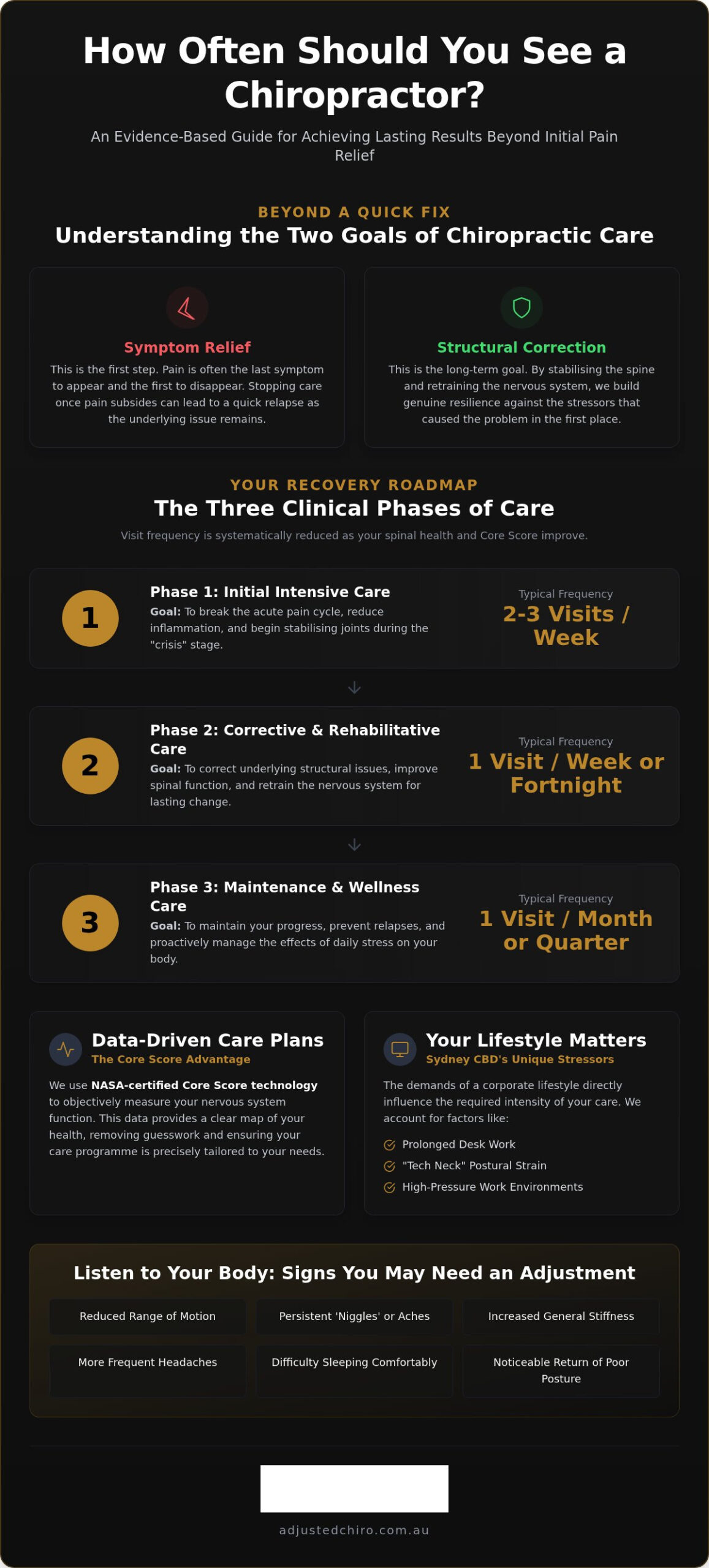
Navigating the path to recovery requires more than just intuition; it demands a structured, clinical approach. At Adjusted Chiropractic Studios, we utilise the core score spinal scan to remove the guesswork from your treatment plan. This NASA-certified technology provides an objective baseline of your nervous system function, allowing us to categorise your care into three distinct Clinical Phases of Care. Understanding these stages helps answer the question, "how often should I see a chiropractor?" by aligning your visit frequency with your body’s specific biological needs at each step of the journey.
Phase 1: Initial Intensive Care (The "Crisis" Stage)
When you first visit us, you’re often in the "crisis" stage, characterised by acute pain, inflammation, or significant restricted movement. During this phase, a typical frequency is 2 to 3 times per week for the first few weeks. This intensive schedule is vital to break the existing pain cycle and reduce the inflammatory markers surrounding the affected spinal segments. By providing frequent, gentle input, we begin to stabilise the joints and restore basic mobility, ensuring that your body doesn’t immediately revert to its previous state of dysfunction.
Phase 2: Corrective and Rehabilitative Care
As your symptoms subside and your Core Score improves, we transition into the Corrective Phase. Here, the focus shifts from mere pain relief to long-term structural stability and muscle memory. Visit frequency usually reduces to once a week or once a fortnight. During this stage, a precise spinal adjustment sydney professional provides helps retrain the supporting soft tissues to hold the spine in its correct alignment. This is where we address the underlying functional issues that caused the initial pain, ensuring your recovery is built on a solid foundation rather than a temporary fix.
Phase 3: Maintenance and Lifestyle Wellness
The final phase is about protecting your investment in your health. Just as you service your car to prevent a breakdown or visit the dentist for a scale and clean, maintenance care involves regular check-ups, typically once a month or every two months. For those living the high-intensity Sydney CBD lifestyle, these visits are essential for managing the ongoing stressors of desk work and corporate pressure. Staying ahead of minor misalignments ensures they don’t develop into chronic issues. If you’re ready to move beyond temporary relief and build a sustainable plan for your health, you might consider starting your assessment with our experienced team today.
Lifestyle Factors That Influence Your Personalised Schedule
Your biological age, injury history, and daily environment are the primary architects of your treatment plan. While two people might present with similar lower back discomfort, a 25-year-old athlete and a 55-year-old corporate executive will require vastly different approaches. When determining how often should I see a chiropractor, we must account for Lifestyle Factors That Influence Your Schedule and your body’s inherent ability to recover. Chronic emotional stress, often manifesting as "adrenal fatigue," keeps the nervous system in a state of high alert. This leads to persistent muscle guarding and spinal misalignments that may require more frequent intervention to resolve effectively.
The "Sydney CBD Desk Worker" Factor
For those spending 40 hours a week in a high-pressure office, the spine faces a unique set of challenges. Prolonged sitting leads to "postural creep," a phenomenon where the soft tissues gradually deform under constant, low-grade stress. This is often exacerbated by dual-monitor setups that force the neck into repetitive rotation or sustained "Tech Neck" positions. These micro-traumas accumulate over time, necessitating consistent corrective input to prevent permanent structural changes. Many local businesses now utilise our workplace injury prevention programme sydney to address these ergonomic risks before they lead to long-term health issues.
Physical Activity and Athletic Demands
Conversely, high-impact athletes or those with physically demanding hobbies face different stressors. While these individuals may have better muscle tone, the sheer force of their activities can lead to acute spinal subluxations. For these patients, how often should I see a chiropractor depends on their training volume and recovery cycles. We often find that spinal stability is significantly influenced by lower limb mechanics. Because of this, our studio integrates podiatry and foot alignment assessments into our care model. Ensuring your foundation is level prevents compensatory patterns from travelling up the kinetic chain and affecting your spinal health. Whether you’re managing a previous trauma or navigating the demands of a modern career, your schedule must be as dynamic as your life.
Objective Measurement: How the Core Score Determines Your Plan
At Adjusted Chiropractic Studios, we believe your health journey should be guided by objective data rather than subjective sensation. This is why we utilise the Core Score, a NASA-certified diagnostic suite that provides a comprehensive window into your autonomic nervous system. The question of how often should I see a chiropractor is no longer a matter of opinion; it’s a calculation based on three precise metrics: Surface EMG, Thermal Scanning, and Heart Rate Variability (HRV). By measuring these biological markers, we see exactly how your body is coping with the demands of your environment. This data allows us to adjust your visit frequency as your internal systems begin to stabilise, ensuring your care is always necessary and targeted.
Surface EMG and Muscle Efficiency
Surface Electromyography (sEMG) allows us to measure the electrical energy your muscles use to maintain your posture. It’s a common misconception that high muscle tension equals strength. In reality, sEMG measures the efficiency of your spinal support rather than just muscular strength. When we identify areas of extreme overwork or exhaustion on your scan, it indicates that your body is struggling to stay upright against gravity. These high-tension readings often necessitate more frequent initial visits to calm the nervous system and redistribute the workload more effectively across your frame. As your efficiency improves, we can safely reduce the frequency of your adjustments.
Heart Rate Variability (HRV) and Stress Resilience
HRV is perhaps the most significant indicator of your overall health and your body’s ability to adapt to environmental stress. In the high-pressure corporate landscape of the Sydney CBD, many professionals present with a low HRV score, suggesting their nervous system is stuck in a chronic "fight or flight" state. A low score indicates that your resilience is compromised, which may require more supportive chiropractic care to restore balance to your autonomic functions. We track your progress through regular re-scans to see your nervous system becoming more adaptable. This objective improvement is the signal that we can transition you into less frequent, maintenance-based care. To see how your nervous system is currently performing, you can book your comprehensive Core Score assessment at our CBD studio today.
Signs You Need an Adjustment: Listening to Your Body Between Visits
While the objective data of a Core Score provides the clinical foundation for your treatment plan, your body also offers daily feedback through subtle functional cues. Learning to interpret these signals helps you understand how often should I see a chiropractor during the transition between the corrective and maintenance phases. It’s often the small, persistent "niggles" rather than acute pain that indicate your nervous system is struggling to adapt to its environment. These minor discomforts are your body’s way of requesting a "tune-up" before a more significant issue develops.
One of the most common early indicators of spinal subluxation is a reduced range of motion. You might notice this while driving, perhaps finding it slightly more difficult to check your blind spot, or feeling a sense of stiffness when reaching for a high shelf. For many professionals, tension headaches or a persistent "brain fog" often stem from underlying neck stiffness and postural strain. Even your footwear can provide a diagnostic clue; uneven wear on the soles of your shoes often points to a pelvic or spinal misalignment that is altering your gait. You might also feel a general sense of being "off-balance" or notice a slight dip in your athletic performance and recovery times.
The Red Flags: When to Call Your Sydney CBD Chiropractor
Certain symptoms require more immediate attention and should never be ignored. Sharp, radiating pain such as sciatica, or a sensation of numbness and tingling in your arms or legs, are clear indicators that your spinal health needs an urgent review. If you find the frequency of your headaches increasing after long sessions at your computer, or if you notice significant postural changes when looking in the mirror, it’s time to contact your Sydney CBD chiropractor. These "red flags" suggest that your body’s compensatory mechanisms are no longer able to manage the structural stress of your daily life.
Proactive Care: Why We Look for "Sub-Clinical" Signs
Our goal at Adjusted Chiropractic Studios is to identify joint dysfunction before it evolves into a painful condition. We look for "sub-clinical" signs, which are issues that are present and affecting your function but haven’t yet triggered a pain response. This is the true value of a regular health evaluation. By catching these minor misalignments early, we can prevent the cycle of injury and relapse that often plagues busy corporate workers. Determining how often should I see a chiropractor becomes a proactive strategy for maintaining vitality rather than a reactive response to crisis. Ready for an objective assessment? Book your Core Score scan at our Sydney CBD studio today to gain a clear, data-backed understanding of your body’s needs.
Secure Your Long-Term Vitality
Understanding the biological requirements of your nervous system transforms chiropractic care from a reactive fix into a proactive lifestyle choice. We’ve explored how your ideal visit frequency is shaped by your specific recovery phase and the unique stressors of a Sydney CBD career. Rather than wondering how often should I see a chiropractor, you can now rely on objective data and clinical milestones to guide your progress. This shift from guesswork to precision ensures that every adjustment serves a clear purpose in your journey toward health.
With 30 years of clinical experience, our team combines seasoned expertise with NASA-certified diagnostic technology to create personalised, evidence-based care plans. We’re committed to helping you move beyond temporary relief toward long-term stability and physical freedom. By listening to your body’s subtle signals and monitoring your Core Score, we can maintain your peak performance together.
Book Your Initial Health Evaluation and Core Score Scan in Sydney CBD to start your journey with clarity and confidence. Your body has the innate potential to thrive, and we’re here to help you unlock it.
Frequently Asked Questions
Is it possible to see a chiropractor too often?
Yes, it’s possible if the adjustments aren’t clinically indicated by your nervous system’s current state. While intensive care is necessary for acute injuries, "over-servicing" occurs if frequency isn’t reduced as your spine stabilises. We use the Core Score to ensure every visit is biologically necessary. If your spine is holding its alignment and your nervous system is adapting well, we naturally extend the time between your appointments.
How many sessions does it usually take to see results for back pain?
Most patients notice symptomatic relief within 4 to 6 sessions, though this varies based on your lifestyle and injury history. While the initial pain often subsides quickly, achieving structural stability usually takes longer. We monitor your progress through regular re-scans to verify that your nervous system is actually healing rather than just masking the discomfort temporarily. Your recovery speed depends on how your body integrates each adjustment.
Why do I feel sore after my first few chiropractic adjustments?
Post-adjustment soreness is a common physiological response as your body adapts to new spinal positions and improved nerve flow. It’s similar to the "delayed onset muscle soreness" you might experience after starting a new exercise programme. This temporary discomfort typically resolves within 24 to 48 hours as your muscles and ligaments begin to accept their corrected, healthier alignment. It is a sign that your body is actively reorganising itself.
Can I just go to the chiropractor once when I have a "crick" in my neck?
While a single visit might provide temporary relief for a "crick," it rarely addresses the underlying structural cause. Most acute neck issues are the result of accumulated micro-traumas from desk work or poor sleep posture. When considering how often should I see a chiropractor, it’s vital to remember that one adjustment cannot overwrite months of postural strain. We aim for long-term correction and stability rather than a quick, superficial fix.
Does my age affect how often I should get an adjustment?
Age influences the speed of your body’s cellular repair and the flexibility of your spinal tissues. Younger patients often respond faster to corrective care, while older adults may require a more gradual, supportive frequency to manage degenerative changes. Regardless of your age, your schedule is always tailored to your specific Core Score results and your daily activity levels. We focus on individualised care that respects your body’s unique healing timeline.
If I start going to a chiropractor, do I have to go forever?
No, the duration of your care is entirely dependent on your personal health goals. Some patients choose to stop once their acute pain is gone, while many Sydney professionals opt for ongoing maintenance to combat the daily physical stress of office life. We provide the data and clinical recommendations based on your scans, but you always decide whether you want short-term relief, structural correction, or long-term wellness.
Will my private health insurance cover multiple visits per week?
Most Australian private health funds provide a yearly limit for chiropractic services rather than a weekly cap. This means you can typically claim for multiple visits during an intensive relief phase until you reach your annual "extras" ceiling. We recommend checking your specific policy details with your provider, as coverage varies significantly between different funds and levels of cover.
What happens if I miss a scheduled adjustment in my treatment plan?
Missing a visit can slow your progress, especially during the initial intensive phase where repetition is required to "rewire" your posture. When you’re trying to determine how often should I see a chiropractor, consistency is the most important factor for long-term success. If you miss an appointment, we simply aim to get you back on track as soon as possible to maintain your momentum and prevent your spine from reverting to old patterns.